





 Thursday, 15-10-26








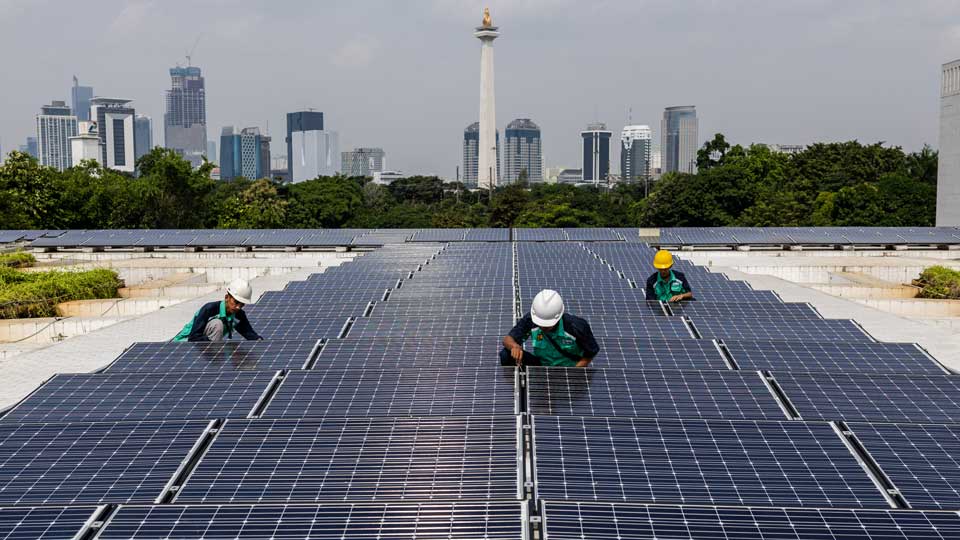
As Washington recalibrates its global engagement under renewed America First rhetoric associated with Donald Trump, Beijing is quietly deepening its footprint in one of the world’s most strategically vital regions. The China Southeast Asia energy transition is no longer a peripheral development. It is becoming a defining feature of regional geopolitics, infrastructure investment, and climate diplomacy.
Across Southeast Asia, governments are balancing energy security, economic growth, and decarbonization targets. With financing gaps widening and Western commitments appearing less predictable, China has moved decisively to position itself as a primary partner in the region’s energy transition. The implications extend far beyond renewable installations. They touch on supply chains, grid modernization, electric mobility, and long term strategic alignment.
Shifting Global Leadership In Clean Energy Finance
The China Southeast Asia energy transition story begins with a vacuum. In recent years, US climate financing and multilateral engagement in emerging markets have faced political headwinds. Policy signals tied to America First narratives have raised concerns in parts of Southeast Asia about the durability of Western climate partnerships.
This recalibration has opened space for Beijing to expand bilateral energy cooperation under its broader infrastructure diplomacy. Through policy banks, state owned enterprises, and green investment vehicles, China has scaled up its involvement in renewable energy projects, transmission infrastructure, and battery manufacturing facilities across ASEAN economies.
China already dominates key clean energy supply chains. It leads in solar photovoltaic manufacturing, battery production, and critical mineral processing. As Southeast Asian countries accelerate renewable deployment, the integration of Chinese technology becomes almost inevitable due to cost competitiveness and established production capacity.
In Indonesia, Vietnam, Thailand, and Malaysia, Chinese firms are involved in solar farms, hydropower dams, wind projects, and grid upgrades. This pattern reinforces the China Southeast Asia energy transition dynamic, where Beijing’s industrial ecosystem supports both project delivery and equipment supply.
At the same time, China’s energy diplomacy has evolved. Earlier Belt and Road projects were heavily associated with coal power plants. In recent years, Beijing has signaled a pivot toward greener overseas investments. That shift aligns with Southeast Asia’s own decarbonization strategies and strengthens China’s narrative as a climate partner.
Infrastructure, Influence, And Strategic Leverage
Energy infrastructure is not neutral. It shapes long term economic dependencies and political relationships. The China Southeast Asia energy transition therefore carries strategic weight beyond megawatts installed.
Grid interconnections, for example, are central to ASEAN’s ambition of a regional power market. If Chinese engineering firms and technology providers become deeply embedded in national grids, Beijing’s influence over standards, maintenance ecosystems, and future upgrades increases substantially.
Electric vehicle supply chains present another dimension. Southeast Asia is emerging as a major manufacturing base for electric vehicles and batteries. Chinese companies, already global leaders in battery chemistry and EV production, are investing in local assembly plants and mineral processing facilities. This strengthens vertical integration between Chinese upstream capacity and Southeast Asian downstream markets.
Indonesia offers a clear illustration. With vast nickel reserves essential for battery production, the country has attracted significant Chinese investment in smelting and battery manufacturing. The China Southeast Asia energy transition thus intersects with industrial policy, not just power generation.
This expansion also interacts with geopolitical competition. As the United States reexamines trade relationships and climate commitments under the influence of figures like Donald Trump, regional governments hedge by diversifying partnerships. For many Southeast Asian policymakers, China’s financial agility and rapid project execution offer practical advantages even if strategic caution remains.
The net result is a more multipolar energy transition landscape. The China Southeast Asia energy transition is not occurring in isolation but in the context of US China rivalry, regional development goals, and global climate urgency.
Financing Gaps And Development Realities
One of the core drivers behind China’s expanding role is financing. Southeast Asia requires hundreds of billions of dollars in clean energy investment over the coming decades to meet climate targets and rising electricity demand.
Domestic fiscal capacity is often constrained. Multilateral development banks provide partial support, but project pipelines frequently stall due to risk perception, currency volatility, and regulatory uncertainty. Chinese policy banks and state backed lenders are often more willing to assume these risks, especially when projects align with strategic priorities.
The China Southeast Asia energy transition therefore reflects a pragmatic alignment of supply and demand. Southeast Asian governments need capital and technology. China has both at scale.
However, this dynamic is not without criticism. Some analysts caution about debt sustainability and the transparency of certain financing arrangements. Others question whether Chinese backed projects consistently meet high environmental and social standards. These debates form part of a broader reassessment of infrastructure governance in emerging markets.
Yet the reality remains that renewable deployment in the region is accelerating. Solar installations are expanding rapidly. Wind power pipelines are growing. Cross border transmission discussions are gaining momentum. Chinese participation is visible across many of these segments.
Climate Goals Versus Geopolitical Competition
The China Southeast Asia energy transition sits at the intersection of climate imperatives and geopolitical rivalry. On one hand, increased renewable capacity contributes to global emissions reduction. Southeast Asia is among the regions most vulnerable to climate change impacts, including rising sea levels and extreme weather events. Faster decarbonization is an economic and humanitarian necessity.
On the other hand, energy infrastructure influences strategic autonomy. Countries must weigh the benefits of rapid renewable deployment against concerns about overreliance on any single external partner.
For Washington, the evolving landscape poses a policy challenge. If US engagement in climate finance weakens, space for Chinese influence expands. Conversely, renewed US commitment to clean energy cooperation could intensify competition for projects and partnerships.
For ASEAN states, flexibility is key. Most governments seek to avoid binary alignment. They aim to secure investment from multiple sources while safeguarding national interests. The China Southeast Asia energy transition thus unfolds within a careful balancing act.
Long Term Outlook For Regional Energy Transformation
Looking ahead, the China Southeast Asia energy transition is likely to deepen rather than reverse. Demand fundamentals are strong. Urbanization, industrialization, and digital infrastructure expansion are driving electricity consumption upward across the region.
Renewables increasingly offer the lowest cost generation option. As technology prices continue to decline, project economics improve further. China’s manufacturing scale and export capacity will remain central to global clean energy markets for the foreseeable future.
However, the structure of engagement may evolve. Greater emphasis on joint ventures, local content requirements, and technology transfer could reshape project models. Southeast Asian governments are becoming more sophisticated negotiators, seeking to capture higher value within domestic economies.
Ultimately, the China Southeast Asia energy transition represents more than a response to shifting US policy. It reflects structural trends in global energy markets and China’s industrial strategy. While geopolitical tensions frame the narrative, the underlying driver is the race to build resilient, low carbon energy systems. For Southeast Asia, the challenge is to harness external partnerships without compromising strategic autonomy. For China, the opportunity lies in demonstrating that its overseas energy investments can deliver sustainable, transparent, and mutually beneficial outcomes. In this evolving landscape, energy is both a climate solution and a currency of influence. The trajectory of the China Southeast Asia energy transition will shape not only regional decarbonization pathways but also the broader balance of power in the Indo Pacific.
Read More