





 Friday, 16-10-26








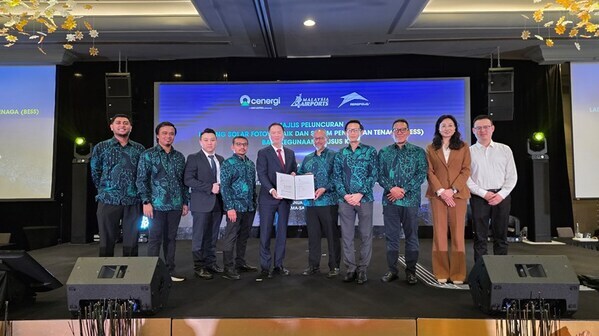
The deployment of the EVE Energy big battery system at Kuala Lumpur International Airport marks a significant step forward in large scale energy storage infrastructure across Southeast Asia. As airports evolve into highly digitized and energy intensive ecosystems, ensuring reliable power supply has become both a strategic and operational priority. The integration of advanced battery energy storage solutions reflects a broader regional shift toward resilient, efficient, and sustainable infrastructure.
The EVE Energy big battery installation demonstrates how utility scale storage can stabilize airport operations, enhance energy security, and support decarbonization goals. In an era defined by rising electricity demand and renewable integration challenges, large capacity battery systems are increasingly viewed as critical infrastructure assets rather than supplementary components.
Why Energy Storage Matters For Modern Airports
Airports rank among the most complex infrastructure systems in any national economy. From runway lighting and air traffic control to baggage handling, terminal cooling systems, and data centers, uninterrupted power is non negotiable. Even short disruptions can cascade into operational delays, financial losses, and safety risks.
Kuala Lumpur International Airport, one of the busiest aviation hubs in the region, faces growing energy demands driven by passenger traffic recovery, digitalization, and sustainability initiatives. The integration of the EVE Energy big battery enhances grid reliability by providing backup power, peak shaving capability, and load balancing functions.
Battery energy storage systems serve several operational purposes. First, they ensure continuity during grid disturbances. Second, they reduce peak demand charges by storing electricity during low demand periods and discharging during high demand windows. Third, they facilitate renewable energy integration by smoothing out fluctuations from solar or other intermittent sources.
The EVE Energy big battery installation at KLIA highlights how large format lithium battery technology can be deployed at critical infrastructure sites. By improving resilience and efficiency, the system strengthens KLIA’s ability to maintain seamless operations while advancing sustainability commitments.
Technology Behind The EVE Energy Big Battery
EVE Energy is recognized as a major global manufacturer of lithium battery technology, supplying solutions for electric vehicles, grid storage, and industrial applications. The EVE Energy big battery deployed at KLIA reflects advancements in high density lithium iron phosphate chemistry, safety design, and modular scalability.
Modern big battery systems are engineered with layered safety mechanisms, including thermal management controls, fire suppression systems, and intelligent battery management software. These features are essential in high traffic environments like airports, where operational safety standards are exceptionally strict.
The EVE Energy big battery solution incorporates real time monitoring systems that track temperature, voltage, and performance metrics. This digital oversight enhances reliability and extends battery lifecycle, reducing long term operational costs.
Another key advantage lies in modular architecture. Utility scale battery energy storage systems can be expanded incrementally as demand grows. For KLIA, this ensures that the energy storage capacity can evolve alongside passenger growth and terminal expansion plans.
By deploying the EVE Energy big battery, airport operators are effectively future proofing infrastructure against rising power loads and volatility in electricity markets.
Supporting Energy Transition In Southeast Asia
The installation at KLIA is not an isolated development. Southeast Asia is undergoing a structural energy transition as governments pursue renewable targets and decarbonization pathways. However, integrating solar and wind power into national grids presents technical challenges due to intermittency.
Battery energy storage is increasingly recognized as the bridge technology that enables higher renewable penetration. The EVE Energy big battery contributes to this broader shift by demonstrating how storage can stabilize demand profiles and reduce dependence on fossil fuel based peaking plants.
Malaysia has articulated long term sustainability goals that include expanding renewable generation capacity. Airports, as highly visible public infrastructure, often serve as flagship sites for clean energy innovation. The KLIA deployment signals that large scale storage is commercially viable in mission critical facilities.
Across the region, energy storage projects are gaining momentum in industrial parks, commercial buildings, and utility substations. The EVE Energy big battery case at KLIA provides a reference model for other airports and transport hubs evaluating similar upgrades.
The strategic importance of battery energy storage will only increase as electric mobility adoption rises. Charging infrastructure for electric ground support vehicles and passenger transport systems will add new layers of electricity demand within airport ecosystems.
Economic And Operational Implications
Investments in big battery infrastructure extend beyond environmental benefits. They carry tangible economic implications. Airports operate on tight performance metrics, and downtime translates directly into financial impact.
The EVE Energy big battery improves operational predictability by mitigating grid disruptions. This reliability enhances airline scheduling efficiency, passenger satisfaction, and airport brand reputation.
From a financial perspective, battery systems can reduce energy procurement costs through demand response participation and time shifting strategies. As electricity tariffs fluctuate, storage systems allow operators to optimize energy purchasing patterns.
Additionally, integrating advanced storage enhances investor confidence in infrastructure resilience. Institutional investors increasingly evaluate environmental, social, and governance criteria when assessing infrastructure assets. Demonstrating the adoption of innovative clean technology strengthens long term asset valuation.
The EVE Energy big battery also supports Malaysia’s broader ambition to position itself as a regional hub for sustainable infrastructure and green technology adoption.
Safety, Standards, And Long Term Viability
Deploying large scale battery systems in aviation environments requires strict adherence to international safety standards. Engineering design must account for fire risk mitigation, system redundancy, and emergency response coordination.
The EVE Energy big battery incorporates multiple protective layers to address these concerns. Lithium iron phosphate chemistry, often favored for its thermal stability, reduces the likelihood of runaway incidents compared to other chemistries.
Long term viability also depends on lifecycle management. Battery degradation, recycling strategies, and second life applications are increasingly important considerations. As Southeast Asia expands its battery storage footprint, establishing circular economy pathways will be essential.
At KLIA, the installation represents a forward looking commitment to sustainable infrastructure planning. It aligns operational reliability with climate responsibility, a balance that is becoming central to infrastructure governance worldwide.
The Future Of Big Battery Deployment In Critical Infrastructure
The success of the EVE Energy big battery project at KLIA could accelerate adoption across airports, ports, rail systems, and industrial zones throughout ASEAN. As power systems become more decentralized and digitalized, energy storage will function as a stabilizing backbone.
Energy resilience is no longer optional. Climate related disruptions, grid instability, and demand surges necessitate flexible solutions. Large capacity battery installations provide that flexibility.
Looking ahead, integration between battery systems, renewable generation, and artificial intelligence driven energy management platforms will likely define the next phase of infrastructure modernization. Airports may evolve into semi autonomous energy ecosystems capable of generating, storing, and optimizing their own power flows.
The EVE Energy big battery stands as a tangible example of this transformation in action. It reflects the convergence of technology innovation, sustainability ambition, and operational necessity.
As Southeast Asia accelerates infrastructure development and decarbonization efforts, battery energy storage will play an increasingly strategic role. Projects like the KLIA installation demonstrate that reliability and sustainability are not competing objectives. With the right technology and planning, they reinforce each other.
The EVE Energy big battery deployment at Kuala Lumpur International Airport therefore represents more than a technical upgrade. It signals a shift in how critical infrastructure approaches energy security in a low carbon future.
Read More