





 Thursday, 15-10-26








Amazon’s recent capital allocation announcement has sent shockwaves through the financial markets, underscoring the scale and ambition of the company’s long-term strategy for artificial intelligence and cloud computing. By unveiling a gargantuan Amazon AI spending plan capex of $200 billion for the fiscal year 2026, the Seattle-based technology and retail giant has clearly signaled its commitment to lead in artificial intelligence infrastructure at the cost of short-term investor sentiment. This move, which far exceeded Wall Street expectations by more than $50 billion, triggered a sharp sell-off in Amazon shares and prompted renewed discussions about how aggressive capital expenditure strategies might affect corporate valuations and profitability.
The significance of this announcement goes beyond the headline capex number. It encapsulates the shifting landscape of the global technology sector, where AI is no longer an exploratory frontier but the central axis around which future growth, competition, and infrastructure build-out revolve. In this article, we will examine the components of Amazon’s capex strategy, why investors reacted so strongly, how this fits into broader industry trends, and what the long-term implications could be for Amazon and the wider tech ecosystem.
Amazon’s Massive Commitment to AI Infrastructure
At the heart of the Amazon AI spending plan capex is an intention to invest heavily in AI-enabled computing infrastructure. This includes expansion of data centers, development of proprietary AI hardware, enhancements to cloud services via Amazon Web Services (AWS), and support for adjacent technology areas like robotics, semiconductors, and satellite connectivity. Many of these investments are directly tied to the rapid growth of AI workloads, which require exponentially more computing power, energy, and physical capacity than traditional cloud services.
The capex figure represents a roughly 50 to 60 percent increase from Amazon’s 2025 capital expenditures, which were already historically high. Analysts and investors had expected capex in the vicinity of $150 billion, but the $200 billion forecast shattered conventional expectations for corporate spending outside of infrastructure-heavy industries like energy and telecommunications.
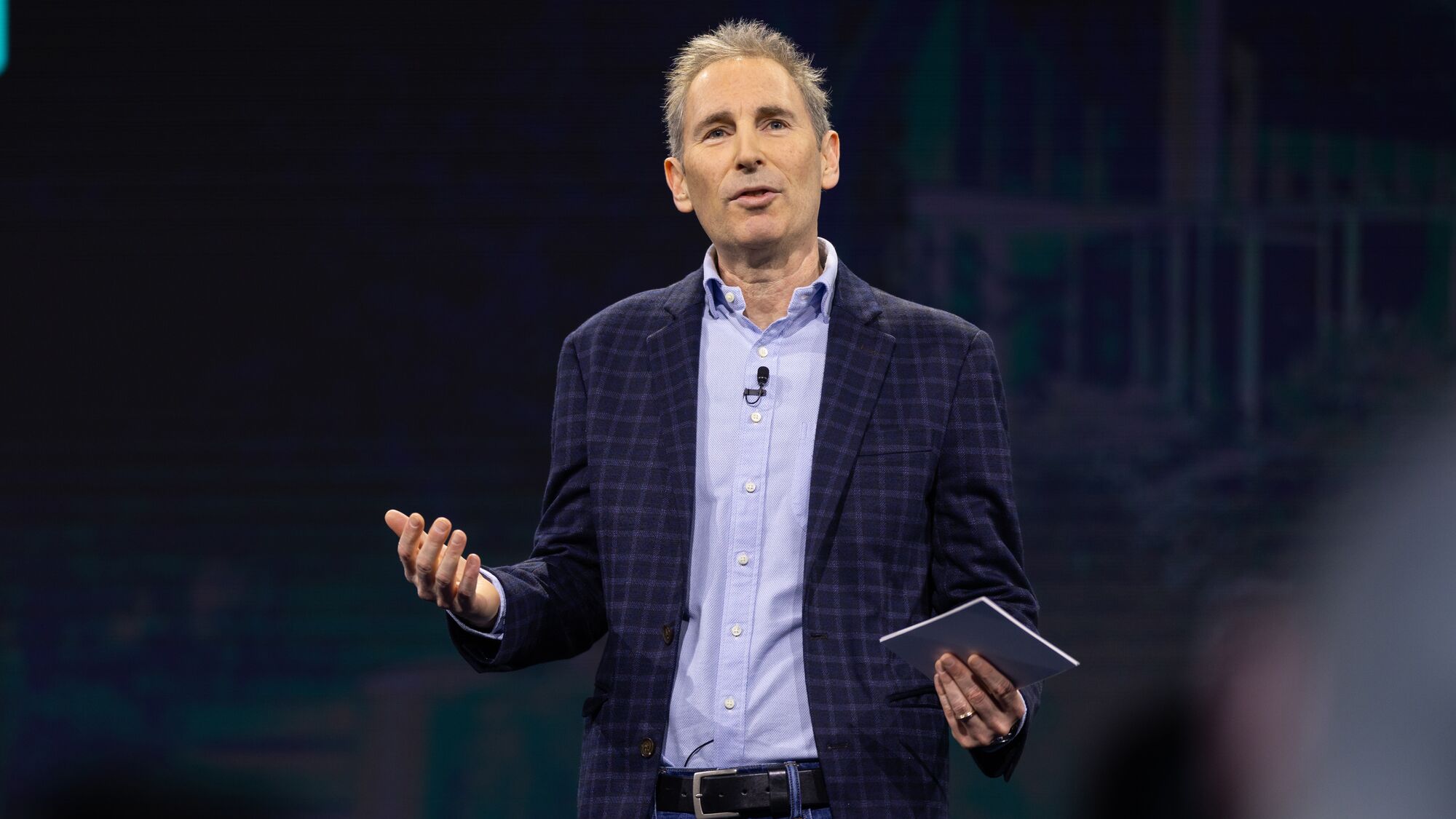
CEO Andy Jassy defended the plan during Amazon’s fourth-quarter earnings call, describing AI as an “extraordinarily unusual opportunity” that justifies unprecedented levels of investment. He argued that as AI capacity is installed, it is monetized almost as quickly as it is deployed, particularly through AWS and its suite of cloud services. AWS remains the primary profit engine for Amazon, and its momentum in AI-driven cloud demand is a key driver behind the large capex figure.
Why Wall Street Was Stunned
Despite the strategic logic behind the investment, the initial market reaction was overwhelmingly negative. Shares of Amazon slumped more than 10 percent in after-hours trading following the announcement, erasing hundreds of billions in market value. Several factors explain this reaction:
- Scale of the Commitment: Few investors had anticipated capex to escalate to $200 billion, a figure that dwarfs what most companies allocate in normal years and even surpasses many national infrastructure budgets. This scale raised immediate questions about whether Amazon could sustain such spending without materially affecting free cash flow and margins.
- Profitability Concerns: While AWS continues to grow – recording a year-over-year revenue increase of 24 percent in the most recent quarter – the broader profitability outlook was tempered by a profit forecast for the upcoming quarter that fell short of consensus. Wall Street investors often prioritize near-term earnings stability, and the juxtaposition of strong revenue growth with a conservative profit outlook and a record capex plan triggered discomfort.
- Return on Investment Uncertainty: Massive capital deployment in unproven markets or technologies has historical precedent, but the returns are often long-dated. For AI infrastructure, much of the revenue potential stems from future adoption trends that are still forming. Questions about when and how the $200 billion investment would translate into sustainable profit contributed to investor skepticism.
- Comparisons with Competitors: Other Big Tech companies such as Google, Meta, and Microsoft have also increased AI-related capex, but Amazon’s spending stood out because it significantly overshot expectations. While those peers face similar long-term strategic imperatives, Amazon’s sheer scale of projected investment spotlighted the competitive intensity of the AI arms race and the risks involved.
These market reactions speak volumes about how financial markets digest uncertainty. Capital markets reward predictability and penalize ambiguity, and a multi-year, multi-billion dollar outlay that lacks immediate returns can be a hard sell to short-term-focused investors. The massive capex announcement effectively forced a reevaluation of Amazon’s risk profile in the near term, even as it reinforced the company’s long-term growth thesis.
Strategic Rationale Behind the Investment
Despite the negative market response, there are several strategic rationales that justify Amazon’s aggressive AI spending plan capex:
1. Securing Leadership in the AI Era
As artificial intelligence permeates all facets of technology, holding a leading position in AI infrastructure is tantamount to controlling foundational computing layers of future industries. AWS is already a dominant cloud provider; investing heavily in AI infrastructure further entrenches its role as the primary platform for enterprises and research organizations that need vast computational resources.
2. Proprietary AI Hardware Development
Amazon has been building its custom AI chips, including the Trainium and Graviton series. These chips are designed to optimize performance and cost efficiency for Amazon’s data centers and cloud services. As demand for AI workload increases globally, owning and optimizing as much of the hardware stack as possible can lead to both performance advantages and reduced dependence on external suppliers.
3. Data Center Expansion and Global Footprint
AI applications require massive data center capacity with specialized infrastructure such as power, cooling, and network connectivity. Amazon’s capex will fund expansion in multiple geographic regions, enhancing AWS edge presence, reducing latency, and enabling compliance with data sovereignty regulations that demand localized infrastructure.
4. Diversification Into New Technology Domains
Significant portions of Amazon’s capex extend beyond pure AI compute to areas like robotics (for logistics and automation), satellites (via Project Kuiper) to improve global connectivity, and next-generation digital services. This diversified approach spreads risk and positions the company across multiple high-growth technology vectors.
Broader Industry Implications
Amazon’s capex announcement should not be seen in isolation. It is part of a broader trend of Big Tech companies doubling down on AI infrastructure. Collective estimates suggest that major technology firms will spend well over $600 billion on capex in 2026, a massive escalation compared to previous years.
This surge reflects a shift from software-centric growth models to more capital-intensive infrastructure competition. Tech companies now find themselves competing not just on algorithms and software innovation, but on physical infrastructure, custom silicon, global data center footprints, and energy-intensive compute capacity. This shift has important implications:
- Infrastructure winners may define future market power: Whoever controls the largest, most efficient, and geographically diverse AI infrastructure stands to dominate the future digital economy.
- New competitive pressures: Traditional cloud rivals such as Microsoft and Google are also investing heavily, creating a high-stakes environment where differentiation requires not only software prowess but physical scale and operational excellence.
- Potential consolidation: Smaller players that cannot match infrastructure investments may consolidate or seek partnerships, reshaping the competitive landscape.
Balancing Risk and Reward
Amazon’s bold strategy carries both significant risk and potential reward. On one hand, deploying such a large capital base without immediate returns could pressure earnings, free cash flow, and investor sentiment. On the other hand, if AI adoption accelerates as anticipated, owning the infrastructure backbone could yield decades of sustainable revenue and market leadership.
For long-term investors and strategic analysts, the question will be whether this era of capital intensity ultimately leads to disproportionate returns or whether the market will demand more measured investment pacing tied to clear short-term profitability. Amazon’s ability to demonstrate some early returns from its AI infrastructure — either through AWS growth acceleration, higher operating margins, or monetization of new services — will be critical to regaining investor confidence.
Conclusion
The Amazon AI spending plan capex announcement represents a defining moment not only for Amazon but for the broader tech industry. It signals a strategic pivot toward intense infrastructure investment driven by the demands of artificial intelligence and cloud computing. While initial reactions from Wall Street have been negative due to concerns over profitability and cash flow, the long-term implications could solidify Amazon’s position as a leading platform in the next generation of digital services.
The announcement has sparked important questions about how companies balance visionary investments with shareholder expectations. Regardless of short-term market volatility, Amazon’s aggressive capex strategy reflects its deep conviction that the future of computing and digital services hinges on AI-ready infrastructure — and that the era of modest capital spending in tech is now a thing of the past.
Read More