





 Saturday, 24-10-26








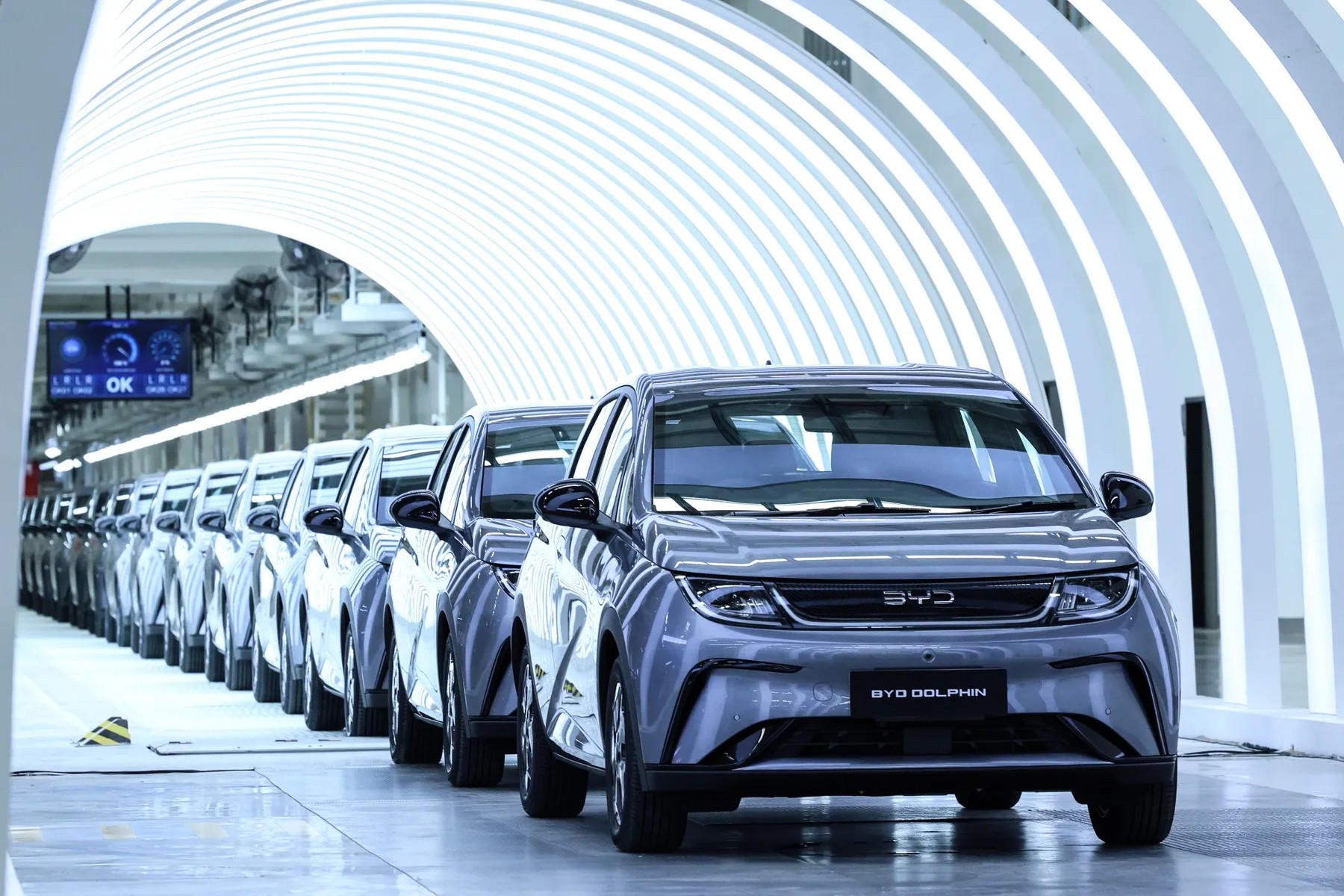
China’s Electric Vehicle Industry: From Global Underdog to Market Leader
Two decades ago, China’s automotive industry faced a hard reality: it could not compete with the US, Europe, or Japan in gasoline-powered vehicles. Legacy automakers had an overwhelming technological lead, making it nearly impossible for Chinese brands to catch up.
Electric vehicles offered China a strategic reset. By investing early in EVs, Beijing targeted a new market where global competition was still limited, while also addressing energy security and reliance on imported oil.
The government began prioritizing EVs in national planning as early as 2001, accelerating support after 2009 through subsidies, tax breaks, cheap credit, and public procurement. This consistent backing enabled the rise of domestic EV brands and a nationwide charging ecosystem.
Companies such as BYD, CATL, Geely, and later newcomers like Xiaomi Auto emerged alongside global players such as Tesla, which was actively courted to manufacture in China. The result was a highly competitive EV ecosystem built on scale, battery innovation, and aggressive pricing.
BYD’s Rise as the World’s Largest EV Seller
BYD stands as the clearest symbol of China’s EV success. In 2025, the Shenzhen-based automaker overtook Tesla to become the world’s largest seller of battery electric vehicles, delivering more than 2.25 million units globally.
The company’s growth was driven by vertically integrated operations, competitive pricing, and close cooperation with local governments, including early projects such as fully electrifying Shenzhen’s public bus fleet. BYD also benefited from China’s advances in battery technology, particularly lithium iron phosphate (LFP) batteries.
Despite slowing sales growth in 2025 due to intense domestic competition, BYD remains a global EV powerhouse, expanding rapidly across Southeast Asia, Latin America, and Europe, while preparing overseas factories scheduled to ramp up production in 2026.
Why EV Profit Margins in China Remain Thin
Behind record sales volumes, profitability remains a major challenge for China’s EV industry. From January to November 2025, the automotive sector’s average profit margin fell to 4.4%, the second lowest level on record.
Data from the China Passenger Car Association shows average gross profit per vehicle at around $2,000, pressured by rising costs and relentless price wars. Battery raw material price volatility and higher labor expenses have pushed costs to grow faster than revenues.
Competition has intensified not only among EV makers but also between electric and gasoline vehicles, spreading discounting across the entire market. More than half of dealers are reportedly operating at a loss, while over 70% of models are sold below cost.
China EV Trends and Survival Challenges Heading Into 2026
Analysts expect 2026 to be a survival test for China’s electric vehicle industry rather than a growth boom. Domestic demand is approaching saturation, with new energy vehicles accounting for nearly 60% of new passenger car sales in late 2025.
Price wars are expected to persist for years, while policy changes, including reduced subsidies and reintroduced purchase taxes, are likely to weigh on growth. Market concentration is increasing rapidly, with the top ten manufacturers controlling about 95% of sales.
As growth slows at home, Chinese automakers are accelerating overseas expansion to protect margins. Exports and localized production abroad are becoming essential strategies, even as global trade barriers and tariffs present new risks.
Outlook for Chinese EVs in Indonesia in 2026
Indonesia is set to become a key test market for Chinese EV brands in 2026 as government incentives evolve. Jakarta has confirmed that major fiscal incentives, including import duty exemptions and VAT subsidies for fully imported EVs, will end by 2026.
Only models produced locally with at least 40% domestic content will remain eligible for VAT incentives. This policy shift places pressure on Chinese brands that currently rely on imports, including several BYD and premium EV models.
Industry observers expect sales momentum to slow as prices rise, pushing the market into a consolidation phase. Brands with long-term investment plans and local manufacturing commitments are more likely to endure, while import-only players face growing challenges.
PHOTO: BLOOMBERG/VALERIA MONGELLI
This article is a summary of several original articles. The full versions can be read at the following links:
https://www.cnbc.com/2025/12/30/china-electric-car-2026-price-war-evs-sales-global-expansion-slowdown-price-war-2025.html
https://carnewschina.com/2025/12/27/profit-margin-of-chinas-auto-industry-was-4-4-2000-usd-per-vehicle-second-lowest-in-history-jan-to-nov-2025/
https://otomotif.kompas.com/read/2025/12/30/070200815/insentif-mobil-listrik-berakhir-2026--apa-dampaknya-?page=all#page2
https://www.inilah.com/pakar-itb-industri-mobil-listrik-indonesia-melambat-di-2026
https://www.bbc.com/news/articles/cj9rjwpvmpzo
https://edition.cnn.com/2025/01/23/climate/china-evs-growth-oil-market
https://www.technologyreview.com/2023/02/21/1068880/how-did-china-dominate-electric-cars-policy/
This article was created with AI assistance.
We make every effort to ensure the accuracy of our content, some information may be incorrect or outdated. Please let us know of any corrections at [email protected].
Read More