





 Tuesday, 15-09-26








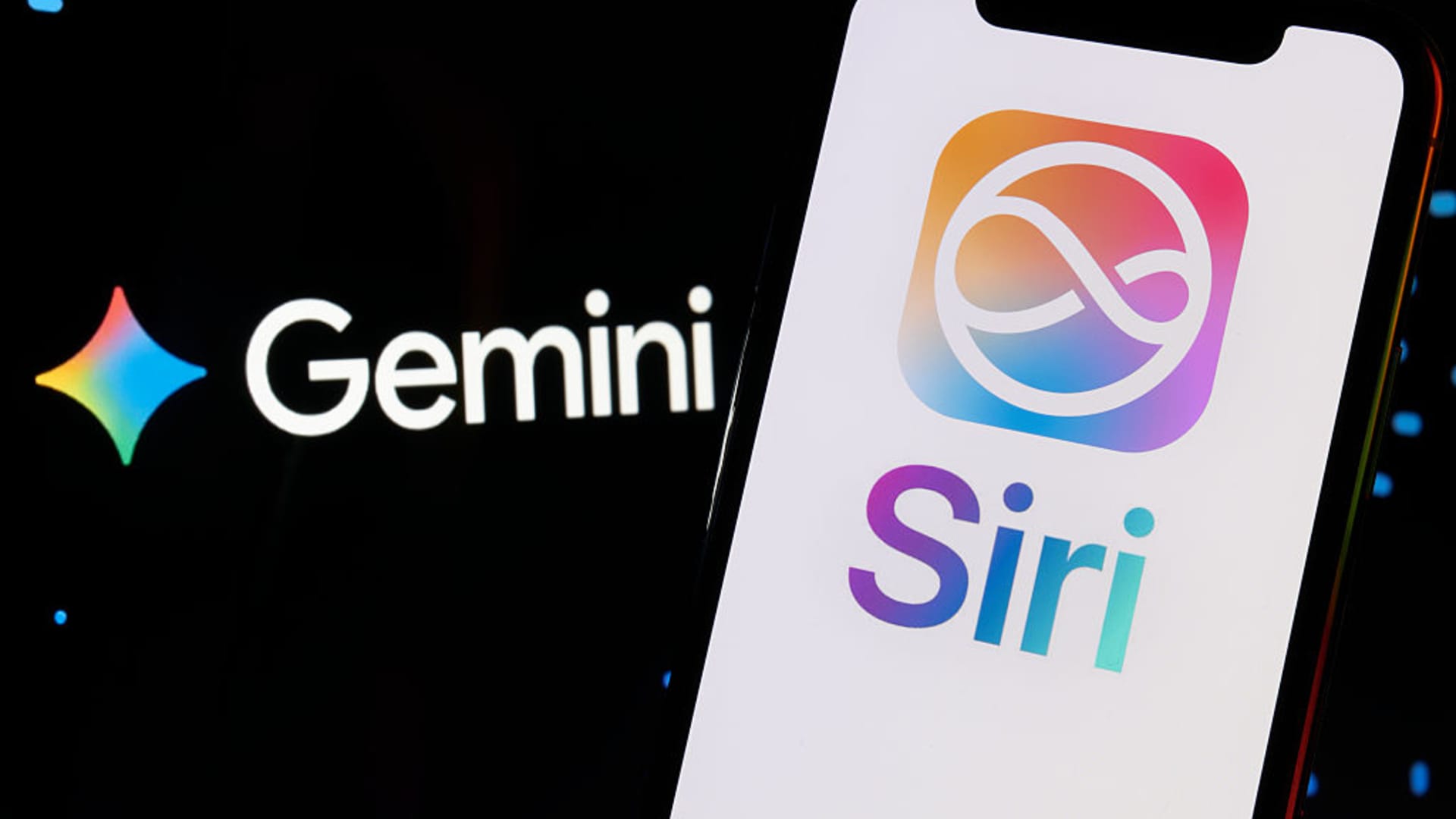
In a landmark moment for the technology industry, Apple and Google have announced a strategic collaboration that sets the stage for a major transformation of Apple’s flagship voice assistant, Siri. The Apple Google Gemini Siri partnership marks a rare convergence between two of the world’s largest tech companies in artificial intelligence (AI) development. While Apple has long championed its proprietary technologies and privacy standards, this agreement signals a pragmatic shift toward leveraging external expertise to accelerate innovation in AI. The collaboration is designed not only to enhance Siri’s capabilities but also to ensure that user privacy remains central to the experience.
AI Evolution and the Strategic Rationale Behind the Partnership
For years, artificial intelligence has become a defining competitive battleground in consumer technology. Apple’s introduction of Apple Intelligence — a suite of generative AI tools built into iOS, iPadOS, and macOS — marked a significant step forward for its ecosystem. However, despite progress in areas such as context-aware responses and on-device processing frameworks, Siri’s AI capabilities continued to lag behind competitors like Google Assistant and Amazon Alexa.
Facing mounting competitive pressure and internal delays in developing foundation models, Apple made a pivotal decision to partner with Google. Rather than continuing to build every element of its AI stack in-house — a strategy that can be resource-intensive and slow — Apple opted to integrate Google’s highly capable Gemini AI models as the foundation for future AI features, including the next generation of Siri.
According to a joint statement released by both companies, after careful evaluation, Apple determined that Google’s AI technology offers the most capable foundation for its future AI ambitions. This marked a shift from previous integrations, including Apple’s earlier adoption of ChatGPT for certain complex queries. Under the new arrangement, Google’s Gemini models and cloud infrastructure will support Apple’s foundational AI systems, enabling features that are more personalized, contextually aware, and capable of handling complex conversational tasks.
This shift demonstrates Apple’s commitment to delivering advanced AI quickly and efficiently, while still preserving core principles of privacy and user control. The arrangement also benefits Google by expanding the reach of its Gemini technology to hundreds of millions — and potentially billions — of iPhone and Apple device users.
What the Partnership Means for Siri and Apple Intelligence
The most visible outcome of the Apple Google Gemini Siri partnership will be a significantly enhanced version of Siri, which is expected to launch later in 2026 as part of a major software update. This upgrade is designed to move Siri beyond simple voice commands to more sophisticated conversational interactions, deeper contextual understanding, and better integration with personal data stored on the device — such as calendars, messages, and user preferences — all while maintaining Apple’s privacy framework.
Under the new model, many AI-driven tasks will be processed using Google’s Gemini AI via Apple’s infrastructure. Apple has stated that Apple Intelligence will continue to run on Apple devices and within its Private Cloud Compute environment, so sensitive user information remains protected. This hybrid approach — combining cloud-based AI processing with strong on-device controls — is central to Apple’s argument that privacy will not be compromised even as AI responsiveness and intelligence improve significantly.
Specifically, the integration with Gemini could enable:
- Enhanced Conversational Capability: Siri may better understand and respond to complex user requests that involve multi-step reasoning or nuanced context.
- Improved Personalization: By leveraging machine learning models optimized for diverse contexts, Siri could offer more customized suggestions and be more proactive in assistance.
- Cloud-Backed Intelligence: Gemini’s deep learning models provide capabilities for large-scale language understanding that far exceed what on-device AI can currently offer on its own.
- Seamless Integration Within Apple Ecosystem: From iPhone and iPad to Mac and HomePod devices, the enhanced Siri experience may be more unified, intuitive, and capable across Apple hardware.
The impact of these capabilities will not be limited to Siri alone. The foundational models powered by Gemini are expected to underpin future Apple Intelligence features beyond voice assistance, such as generative text summarization, advanced contextual search, and improved natural language tools across Apple’s operating systems.
Privacy, Control, and Competitive Balance
One of the most critical aspects of the partnership is privacy. Apple has consistently emphasized that user data privacy is a core differentiator of its products. In light of this, Apple has made explicit assurances that user data processed through AI features will continue to benefit from the company’s industry-leading privacy standards. This means limiting how data flows to external servers and protecting it through encryption and on-device controls wherever possible.
This stance acknowledges that while powerful AI models often benefit from cloud-based processing, users’ expectations around data privacy must not be compromised. By managing AI computations through Apple’s Private Cloud Compute and local device processing, Apple aims to strike a balance between dynamic AI performance and data protection — a challenge that many companies in the AI space are still grappling with.
However, the collaboration has not been without criticism. Some industry voices, including high-profile tech leaders, have expressed concerns that this partnership could lead to an “unreasonable concentration of power” in Google’s favor, given its already significant market presence through Android, Chrome, and AI services. Critics argue that such deep integration across competitive ecosystems may require closer scrutiny from regulators to ensure fair competition and consumer choice.
Market Dynamics and Strategic Implications
The announcement of the Apple Google Gemini Siri partnership has had notable effects beyond product innovation. Investors and market analysts have interpreted the deal as a validation of Google’s AI leadership. In fact, reports indicate that Alphabet — Google’s parent company — surpassed a market valuation of $4 trillion following the news, reflecting investor confidence in the commercial potential of Gemini and its expanded reach through Apple devices.
For Apple, the partnership represents a strategic pivot in its approach to AI. Rather than attempting to build every component of its AI ecosystem internally, Apple is embracing a hybrid model that leverages third-party excellence while retaining control over key user experience elements. This may set a precedent for how major tech companies approach AI development in the future, particularly in environments where rapid innovation is essential to stay competitive.
Moreover, the integration with Gemini could reshape competitive dynamics in the AI assistant market. With enhanced capabilities and broader distribution, Siri could become a more formidable rival to other AI assistants, giving Apple stronger footing in consumer AI experiences. Meanwhile, Google gains increased influence across devices that have historically been outside its direct control, strengthening its broader ecosystem presence.
Future Outlook and What Users Can Expect
Users can expect to see incremental rollouts of the upgraded Siri and associated Apple Intelligence features beginning in 2026, likely tied to major software updates such as iOS 26.4. These updates may introduce enhanced voice responsiveness, contextual understanding, and tighter integration with personal device data — all powered by the Gemini AI core.
From a broader perspective, the Apple Google Gemini Siri partnership reflects the evolving landscape of artificial intelligence. The era of isolated, proprietary AI stacks may be giving way to collaborative ecosystems where companies pool resources, expertise, and infrastructure to deliver more sophisticated and capable AI experiences. For users, this could mean smarter, more intuitive digital assistants that better understand context and deliver value across everyday tasks — all while preserving the privacy and data protections that users expect.
As AI continues to drive innovation across technologies and platforms, partnerships like this one may become more common. The key for consumers and industry watchers alike will be how these collaborations balance innovation, privacy, and competitive equity in a rapidly evolving digital ecosystem.
Read More