





 Tuesday, 13-10-26








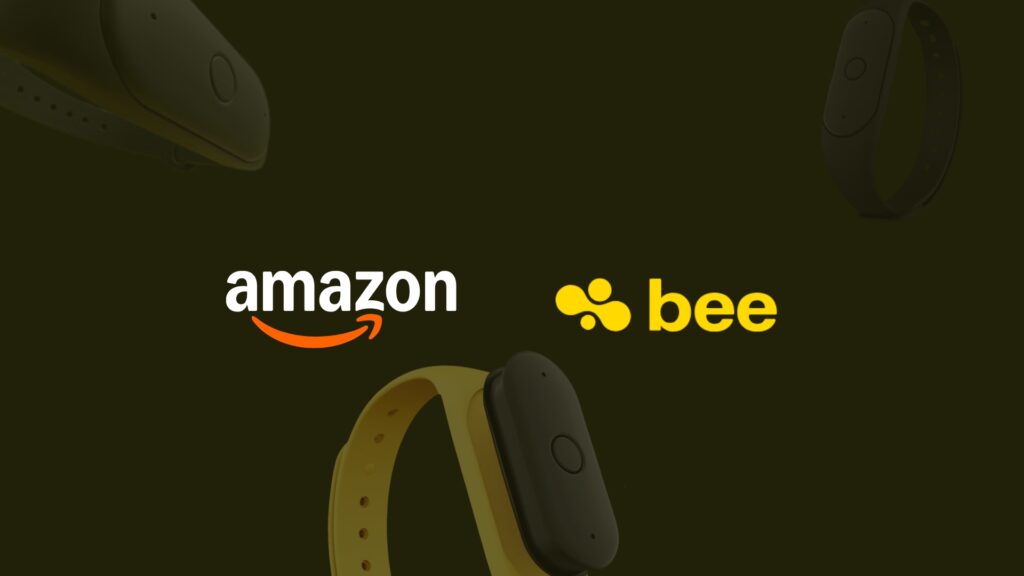
Amazon’s decision to acquire Bee, a small startup building an AI-powered wearable, may appear modest at first glance. Bee is not a household name, and its product is not yet a mass-market device. Yet the move carries strategic weight. The Amazon AI wearable acquisition reveals how the company is thinking about the next phase of human computer interaction, one that moves beyond screens, keyboards, and even voice assistants anchored to homes.
According to TechCrunch, Bee has been developing a wearable device designed to listen to conversations throughout the day, summarize key moments, extract tasks, and act as a personal memory layer powered by artificial intelligence. For Amazon, this acquisition is less about hardware sales and more about positioning AI closer to human life, context, and intent.
This article examines why Amazon bought Bee, how the technology fits into Amazon’s broader AI strategy, and what it signals about the future of wearables, privacy, and ambient computing.
What Bee Built and Why It Matters
Bee’s core idea is simple but ambitious. The company created a wearable that continuously listens, processes speech locally and in the cloud, and produces summaries, reminders, and insights about a user’s day. Rather than requiring explicit commands, Bee’s system is designed to work passively in the background.
This approach aligns with a growing trend in AI toward context-aware systems. Instead of waiting for users to ask questions, these systems aim to anticipate needs based on ongoing signals such as conversations, locations, and routines.
The Amazon AI wearable acquisition matters because Bee is not competing directly with smartwatches or fitness trackers. It occupies a different category. Its value lies in being an always-on intelligence layer that understands human interactions in real time.
For Amazon, which already operates Alexa, AWS, and a growing portfolio of AI services, Bee’s technology offers a way to extend intelligence beyond fixed devices like Echo speakers. It opens the possibility of AI that travels with users, learns continuously, and integrates deeply into daily life.
How This Fits Amazon’s Broader AI Strategy
Amazon has spent more than a decade building voice-based interfaces through Alexa. While Alexa achieved widespread adoption, its evolution has been constrained by hardware form factors and usage patterns. Voice assistants work well in kitchens and living rooms, but far less so in meetings, commutes, or social settings.
The Amazon AI wearable acquisition suggests that the company wants to overcome those limitations. By acquiring Bee, Amazon gains access to a form factor and usage model that enables persistent context gathering.
This move complements Amazon’s recent emphasis on generative AI across its ecosystem. AWS is positioning itself as a backbone for enterprise AI workloads. Alexa is being retooled with large language models. Amazon is also investing heavily in AI-driven productivity tools and commerce experiences.
Bee fits neatly into this puzzle. A wearable that understands conversations could feed into task management, calendar systems, shopping reminders, enterprise workflows, and personal knowledge management. Over time, this could turn AI into a continuous companion rather than an on-demand assistant.
The Rise of Ambient Computing
The Bee acquisition highlights Amazon’s interest in ambient computing, a concept where technology fades into the background while remaining constantly available. In this model, devices are less intrusive but more aware.
Ambient computing depends on sensors, context, and AI working together. Wearables are particularly well suited to this vision because they can collect data throughout the day without requiring active engagement.
The Amazon AI wearable acquisition positions the company alongside other tech giants exploring similar ideas. Apple has pushed health and context through the Apple Watch. Meta has experimented with smart glasses. Startups are exploring AI pendants, pins, and earbuds.
Amazon’s advantage lies in its ecosystem. It can connect a wearable AI to shopping, entertainment, cloud services, and smart home infrastructure. Bee’s technology provides a missing piece: a personal data stream grounded in everyday human interaction.
Privacy and Trust Challenges
Any wearable that listens continuously raises serious privacy concerns. Bee’s product concept touches on sensitive areas such as recording conversations, storing personal data, and potentially capturing information about people who did not consent.
The Amazon AI wearable acquisition therefore places Amazon in a delicate position. The company has faced privacy scrutiny in the past over Alexa recordings, Ring cameras, and data usage practices. Adding an always-on AI wearable intensifies those concerns.
According to TechCrunch, Bee emphasized on-device processing and user control. Whether those principles will remain intact under Amazon’s ownership is an open question. Regulatory expectations around consent, transparency, and data minimization are likely to shape how this technology evolves.
Trust will be a key determinant of success. If users believe that such devices compromise privacy, adoption will stall. If Amazon can demonstrate strong safeguards and clear value, ambient AI could gain acceptance.
Competitive Implications for Wearables and AI Assistants
The acquisition of Bee also signals increased competition in the AI wearable space. While smartwatches focus primarily on health metrics, AI wearables aim to become cognitive extensions.
The Amazon AI wearable acquisition could accelerate consolidation in this emerging category. Large platforms may choose to acquire startups rather than build from scratch, especially when it comes to specialized AI models and hardware expertise.
For traditional wearable makers, Amazon’s move raises the stakes. The future of wearables may not be about step counts or heart rates alone, but about memory, productivity, and decision support.
This also reshapes the competitive landscape for AI assistants. A wearable assistant that understands context continuously has an advantage over assistants that rely on explicit prompts. This could redefine how users interact with AI across platforms.
Commercial and Enterprise Opportunities
Beyond consumers, Bee’s technology has potential enterprise applications. Professionals spend much of their day in meetings and conversations. Automatically capturing action items, summaries, and follow-ups could significantly boost productivity.
The Amazon AI wearable acquisition could eventually feed into enterprise offerings via AWS. Imagine AI-generated meeting summaries integrated directly into collaboration tools, customer relationship management systems, or project management platforms.
This aligns with Amazon’s broader push to monetize AI not only through consumer products but also through enterprise services. Wearable-generated data could become another input into enterprise AI workflows, provided privacy and compliance requirements are met.
Long Term Strategic Significance
Viewed in isolation, Bee is a small startup. Viewed in context, the acquisition is a strategic signal. Amazon is betting that the next major shift in computing will be driven by AI that understands people continuously, not intermittently.
The Amazon AI wearable acquisition reflects a belief that intelligence should be portable, contextual, and proactive. This represents a departure from the traditional app-based model of interaction.
Whether this vision succeeds depends on execution, trust, and societal acceptance. Always-on AI challenges cultural norms around privacy and attention. It also raises philosophical questions about how much of our lives we want mediated by machines.
Amazon’s acquisition of Bee is not about entering the wearable market for the sake of hardware. It is about owning a new interface between humans and artificial intelligence. The Amazon AI wearable acquisition underscores Amazon’s ambition to move AI from devices we interact with occasionally to systems that accompany us throughout the day.
If successful, this approach could redefine personal computing, productivity, and digital assistance. If mishandled, it could reinforce fears about surveillance and loss of control. Either way, the acquisition marks a meaningful step in the evolution of AI toward ambient intelligence.
Read More