





 Thursday, 28-05-26








Will Indonesia Hit 5.2% GDP?
The Indonesian government has set a target of 5.2% economic growth for 2025. By the third quarter, GDP growth had reached 5.04%, following 4.87% in Q1 and 5.12% in Q2, indicating that authorities must accelerate growth in the final quarter to meet the target.
Coordinating Minister for Economic Affairs Airlangga Hartarto said, “Government spending, various social assistance programs, and additional initiatives to leverage the Nataru momentum make us optimistic that fourth-quarter growth will be around 5.4%–5.6%.”
Despite this optimism, economists are cautious. Faisal Rachman, Head of Macro & Financial Market Research at Bank Permata, projected that GDP growth in 2025 will likely average 5%–5.1%, below the government target, citing several structural challenges. Similarly, Dian Ayu Yustina, Head of Macroeconomics and Financial Market Research at Bank Mandiri, emphasized the need to accelerate government spending in productive sectors to drive growth in Q4.
The Organisation for Economic Co-operation and Development (OECD) also projected Indonesia’s GDP at 5% in 2025 and 2026, with a slight increase to 5.1% in 2027. OECD noted that low inflation and improved financial conditions could support consumption and private investment, but global trade tensions may slow exports.
Stimulus and BLT Programs to Strengthen Household Spending
To boost economic activity, the government has rolled out various stimulus measures. The 8+4+5 policy package and BLT Kesra aim to support purchasing power. BLT Kesra provides IDR 300,000 per family per month for three months in Q4-2025, disbursed in a lump sum of IDR 900,000 per family, with a total allocation of IDR 30 trillion.
Airlangga Hartarto explained that transportation incentives will also support consumer spending. “Discounts cover railway tickets, maritime transport, crossing services, air transport, and toll tariffs,” he said.
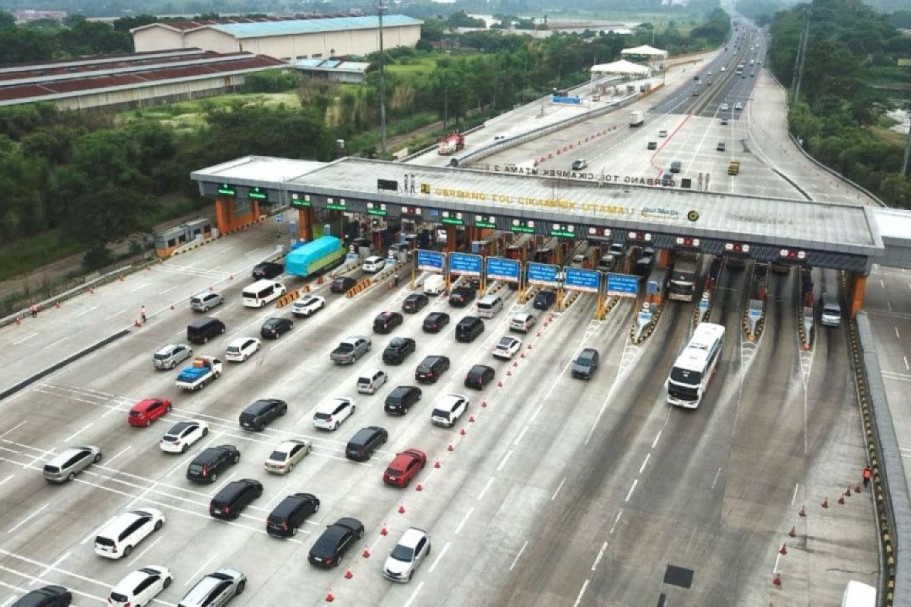
The government has scheduled travel discounts from December 22, 2025, to January 10, 2026, except for maritime travel starting December 17. Toll road discounts range from 10%–20% on 26 strategic routes across Jabodetabek, Trans-Java, Trans-Sumatra, and non-Java regions.
Year-End Travel Set to Boost Economic Activity
Holiday travel is expected to drive regional economies. Sarman Simanjorang, Vice Chairman of Kadin Indonesia for Regional Autonomy, projected total spending during the Nataru holiday at IDR 107.56 trillion. This is based on 119.5 million travelers, equivalent to 29.875 million families, spending an average of IDR 3.6 million per family.
Sarman highlighted that the stimulus, including transportation and toll discounts, encouraged high participation despite the proximity to the 2026 Ramadan period. He noted that sectors such as malls, F&B, hotels, regional crafts, tourism services, and logistics are expected to benefit significantly.
Digital Transactions Surge During Holiday Season
Digital payments are also expected to rise sharply during Nataru. Ario Tejo Bayu Aji, President Director of PT Jalin Pembayaran Nusantara, projected a 50% year-on-year increase in transactions, reaching around 90 million at the holiday peak.
Ario explained, “With increased mobility, transactions are concentrated in sectors supporting travel, such as F&B, accommodation, transport, retail, and other services. Approximately 80% of this surge will be through QRIS payments, showing the maturity of digital adoption.”
Argabudhy Sasrawiguna, COO of Jalin, emphasized that physical infrastructure remains critical. ATM networks operated by Himbara, BRI, BNI, Bank Mandiri, and BTN will ensure cash availability alongside digital channels, with operational readiness from December 20, 2025, to January 5, 2026. The peak is expected on December 31, 2025.
The Forum Link 2025 also highlighted cybersecurity risks amid rising digital transactions. Fraud Management Systems and cross-industry collaboration will monitor and mitigate AI-based fraud, ensuring transaction security without disrupting service.
Sumatra Floods May Impact GDP Growth
Natural disasters in Sumatra have affected economic prospects. Andry Asmoro, Chief Economist at Bank Mandiri, estimated that floods in Aceh, North Sumatra, and West Sumatra, which together contribute 7.8% of national GDP, could reduce growth by 0.08%–0.12%.
Economic losses from the floods are estimated at IDR 32.6 trillion, with Aceh accounting for roughly half. Andry noted that the impact on national inflation would be limited, as Sumatra and Aceh contribute around 7% of total inflation, compared with Jakarta and West Java’s 55%.
He added that timely assistance, particularly in food-producing areas like West Sumatra, could help contain inflation, but the overall effect on national GDP growth remains a potential concern for the final quarter of 2025.
This article is based on three original reports from Kontan.co.id, CNBC Indonesia, and Katadata.co.id, titled “Stimulus Jelang Nataru, Mampukah Bikin Ekonomi 2025 Melaju?”, published on December 5, 2025, “Pengusaha Proyeksi Perputaran Uang pada Libur Nataru Capai Rp107,56 T”, published on December 18, 2025, and “Transaksi Nataru 2025/2026 Diprediksi Naik 50% Seiring Mobilitas Warga”, published on December 18, 2025.
PHOTO: TVRI
This article was created with AI assistance.
Read More