





 Monday, 12-10-26








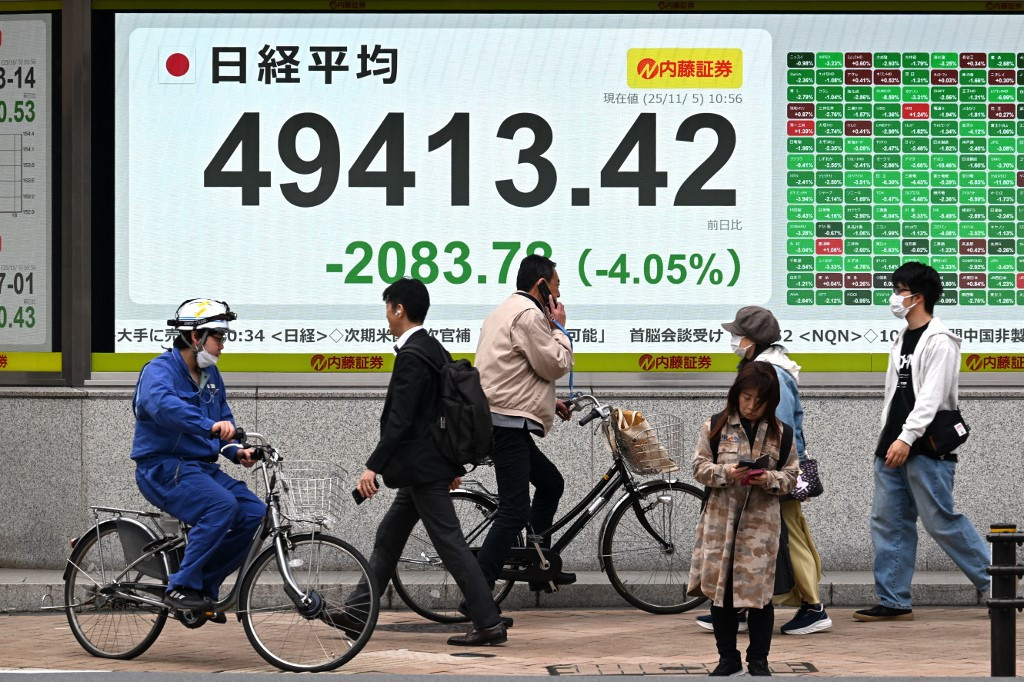
Asian equity markets moved higher this week as renewed momentum in artificial intelligence (AI)-related stocks reignited investor appetite for technology shares across the region. From Tokyo to Seoul and Taipei, tech-heavy indexes posted gains, tracking a rebound in U.S. markets led by AI chipmakers and data-center infrastructure players.
The rally highlights how deeply Asian markets are now intertwined with the global AI investment cycle. While optimism around AI-driven growth remains strong, investors are also becoming more selective, weighing valuation risks, monetary policy expectations, and the sustainability of earnings growth in the sector.
AI-Driven Optimism Fuels Asian Equity Gains
Major Asian stock indexes advanced as technology shares outperformed broader markets. Japan’s Nikkei 225 climbed as semiconductor and automation stocks rebounded, while South Korea’s KOSPI gained on renewed buying interest in memory chipmakers. Taiwan’s equity market, heavily exposed to global semiconductor supply chains, also benefited from improved sentiment toward AI hardware demand.
The immediate catalyst was a rebound in U.S. technology stocks, where AI leaders posted strong gains following upbeat investor sentiment around continued data-center investment and cloud infrastructure expansion. Asian markets, which trade earlier in the global cycle, reacted swiftly as futures tied to U.S. indexes moved higher during Asian trading hours.
This pattern underscores a familiar dynamic: when AI optimism strengthens in the U.S., Asian markets—home to many of the world’s most critical chip manufacturers and component suppliers—tend to amplify that momentum.
Market participants also cited expectations of a more accommodative interest rate environment in 2026 as a supporting factor. With inflation pressures showing signs of easing in major economies, investors are increasingly positioning for potential rate cuts, a scenario that typically favors growth-oriented sectors such as technology.
Semiconductor Stocks Lead the Rally
Semiconductor and AI hardware stocks were the primary drivers of gains across Asian markets. In Japan, shares of chip-equipment makers and factory automation firms rose as investors rotated back into companies leveraged to AI-related capital expenditure. South Korea’s SK Hynix, a key supplier of high-bandwidth memory used in AI servers, benefited from expectations that demand for advanced memory chips will remain robust into next year.
Taiwan Semiconductor Manufacturing Company (TSMC), the world’s largest contract chipmaker, continued to serve as a bellwether for the region. TSMC’s strategic role in producing advanced chips for AI applications has made it a focal point for global investors seeking exposure to the AI value chain.
Beyond pure semiconductor plays, technology conglomerates and platform-adjacent firms also participated in the rally. In Japan, SoftBank-linked stocks drew attention as investors reassessed the group’s exposure to AI-focused investments after a period of volatility.
The breadth of gains suggests that investors are not only betting on individual winners but are also expressing confidence in the broader AI ecosystem, including hardware, software, and infrastructure providers.
Global AI Spending Signals Support Market Sentiment
Underlying the rally is the continued expansion of global spending on AI infrastructure. Major technology companies have repeatedly signaled plans to increase capital expenditure on data centers, specialized chips, and cloud computing capacity to support generative AI and large language models.
Industry estimates suggest that global AI-related capital spending could exceed hundreds of billions of dollars annually over the next few years, with a significant portion flowing through Asian supply chains. Semiconductor fabrication, chip packaging, and advanced manufacturing—areas where Asia plays a dominant role—stand to benefit directly from this trend.
For Asian economies, this has broader implications. Strong demand for AI hardware supports export revenues, industrial production, and employment in high-value manufacturing sectors. It also reinforces the strategic importance of Asia, particularly East Asia, in the global technology ecosystem.
Valuation Concerns Linger Beneath the Surface
Despite the upbeat tone, not all signals are unequivocally positive. Valuation remains a persistent concern for AI-linked stocks, many of which trade at elevated multiples relative to historical averages. Analysts warn that while AI demand is real, expectations may be running ahead of near-term earnings growth for some companies.
Previous episodes of AI-driven rallies have shown that sentiment can shift quickly if companies fail to meet lofty projections or if broader market conditions deteriorate. In recent months, Asian tech stocks have experienced sharp pullbacks during periods of global risk aversion, highlighting the sector’s sensitivity to changes in macroeconomic outlook.
Investors are therefore increasingly differentiating between companies with clear earnings visibility and those whose valuations are driven primarily by long-term narratives. Firms with strong order books, pricing power, and exposure to mission-critical AI infrastructure are generally viewed more favorably than speculative plays.
Monetary Policy and Macro Risks Shape the Outlook
Beyond valuations, macroeconomic factors continue to shape market sentiment. Central bank policy remains a key variable, particularly in the United States, where interest rate expectations influence global capital flows. Any shift in the outlook for rate cuts could quickly alter investor positioning in growth stocks.
Geopolitical risks also remain relevant. Ongoing tensions related to technology supply chains, export controls, and cross-border trade policies could affect Asian tech companies, especially those operating at the cutting edge of semiconductor manufacturing.
At the same time, currency movements add another layer of complexity. A weaker yen, for example, can support Japanese exporters in the short term but may also signal broader concerns about economic stability. For foreign investors, currency volatility can amplify gains, or losses, in equity markets.
What This Means for Southeast Asia
While the current rally has been most visible in Northeast Asia, the implications extend to Southeast Asia as well. Countries such as Singapore, Malaysia, and Vietnam are increasingly integrated into the global tech supply chain, particularly in areas like chip assembly, testing, data-center operations, and digital infrastructure.
Stronger AI investment cycles can translate into increased foreign direct investment, higher demand for skilled labor, and greater momentum in the region’s digital economy. For Southeast Asian markets, the challenge will be capturing more value beyond manufacturing, including software development, AI services, and platform innovation.
A Rally Built on Opportunity and Caution
Asian markets’ reaction to renewed AI momentum reflects both optimism and restraint. On one hand, the structural drivers supporting AI adoption remain intact, with strong demand for chips, data centers, and digital infrastructure. On the other, investors are acutely aware of the risks associated with stretched valuations, shifting monetary policy, and geopolitical uncertainty.
For now, AI continues to act as a powerful anchor for tech sentiment across Asia. Whether this momentum evolves into a sustained rally will depend on companies’ ability to translate technological promise into consistent earnings growth—and on policymakers’ success in navigating an increasingly complex global economic environment.
Sources
- Associated Press – Asian markets and tech stock performance
- Investing.com – Asia market movements, tech sector analysis
- Reuters – Global technology and semiconductor market coverage
- Regional exchange data from Japan, South Korea, and Taiwan stock markets
