


 Friday, 27-11-26


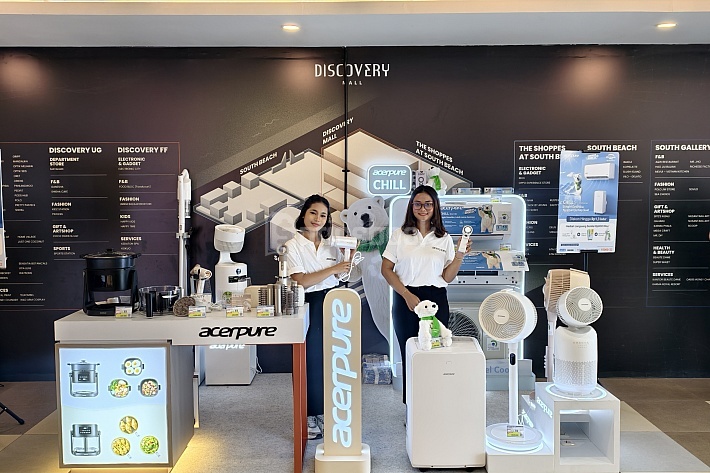
Acerpure, the home appliance subsidiary operating under the Acer Group umbrella, is setting its sights on high-double-digit growth in 2027 by concentrating on two of Asia's largest consumer markets: India and Indonesia. Reported by DIGITIMES Asia on November 25, 2026, the push pairs new product rollouts, including washing machines in India, with plans to deepen local corporate infrastructure and tap rising household demand across South and Southeast Asia.
For years, technology brands outside traditional white-goods giants treated household appliances as a secondary extension of personal computing or consumer electronics. Acerpure has taken a more deliberate route, building a dedicated portfolio spanning air purifiers, water purifiers, vacuums, fans, televisions, air conditioners, and connected AIoT controls.
Moving aggressively into major appliances across India and Indonesia tests how well a tech-rooted brand can translate early momentum into durable market share. The numbers behind Acerpure's recent revenue performance, India's expanding laundry and cooling markets, and Indonesia's massive household replacement cycle explain why these two markets sit at the center of its 2027 roadmap.
Why India and Indonesia Anchor Acerpure's 2027 Expansion
India and Indonesia combine large, young populations with rising middle-class incomes and steady urban housing growth. In both markets, first-time appliance ownership and upgrades to modern household equipment are reshaping how families manage indoor air quality, temperature control, and daily chores.
Acerpure enters 2027 with strong recent momentum in the region. According to financial coverage of Acerpure's third-quarter 2026 results, consolidated revenue reached NT$422 million in Q3 2026, up 23.8 percent quarter on quarter and 44.6 percent year on year. Over the first nine months of 2026, cumulative revenue hit NT$1.022 billion with net income after tax up 38.5 percent, surpassing full-year 2025 revenue ahead of schedule.
India has become an especially vital growth engine for the company. Acerpure's official corporate milestones note that India accounted for 35 percent of its revenue share by 2025, establishing the brand as a major regional player. In 2026, strong demand for air conditioners in India even stretched installation technician schedules during peak periods, showing how fast customer appetite can scale once product-market fit clicks.
Expanding into washing machines in India and establishing a local subsidiary footprint builds directly on that momentum. A local subsidiary can help streamline regulatory compliance, shorten distribution lead times, support regional warranty and service networks, and tailor marketing to local household habits. In August 2026, Acer also teamed up with actor Akshay Kumar as brand ambassador across India, uniting Acer devices and Acerpure appliances under a single household narrative.
In Indonesia, Acerpure has been laying parallel groundwork. Following the rollout of the Acerpure Chill smart air conditioner and air purifier combination in July 2026, the company continues to build out its presence across air treatment, purification, and smart home devices in one of Southeast Asia's most populous consumer markets.
How Smart Home Appliances Are Reshaping Consumer Demand
As consumers upgrade from basic, single-purpose equipment to connected devices, expectations around energy efficiency, air quality, and automated convenience are rising. Modern smart home appliances combine physical hardware with sensors, inverter motors, and mobile app or voice controls that help households cut power bills and simplify daily routines.

Broader industry data confirms that connected household gear is moving from niche gadgetry into everyday life. According to Grand View Research, the global smart home market was valued at USD 127.0 billion in 2025, estimated at USD 147.5 billion in 2026, and projected to reach USD 338.3 billion by 2030, expanding at a 22.8 percent compound annual growth rate between 2026 and 2030.
Smart home appliances benefit from two powerful trends at once: rising awareness of indoor health and tighter focus on electricity efficiency. In tropical and humid climates across South and Southeast Asia, air purifiers, smart air conditioners, and high-efficiency laundry appliances address tangible daily pressures, from urban dust and seasonal haze to rising utility bills.
Market Dynamics in India's Washing Machine and Appliance Sector
Entering India's washing machine category puts Acerpure into one of the country's most competitive and fast-evolving household segments. Market sizing varies depending on scope and pricing definitions, but industry forecasts point to steady multi-year expansion. IMARC Group estimates India's washing machine market grew from USD 1.96 billion in 2025 to USD 2.04 billion in 2026 on its way toward USD 2.85 billion by 2034, while Research and Markets projects broader market value rising from USD 3.99 billion in 2025 and USD 4.14 billion in 2026 to USD 5.27 billion by 2031.
Several structural shifts define how brands win in India:
- Shift Toward Automatic and High-Capacity Units: Busy urban households and dual-income families increasingly favor semi-automatic upgrades and fully automatic top-load or front-load washers over manual washing.
- Energy and Water Efficiency: Rising electricity and water costs make inverter motors, smart load sensing, and eco-wash cycles major selling points.
- After-Sales Service and Installation Speed: As Acerpure already saw with air conditioners in India, strong sales quickly expose service bottlenecks. Reliable installation and repair coverage is essential for large appliances that cannot easily be shipped back in a parcel.
- Omnichannel Retail Reach: Indian shoppers research specifications online but still rely heavily on trusted modern retail chains, brand stores, and local dealers for major home appliances.
For Acerpure, pairing its established brand recognition in air purifiers and air conditioners with washing machines creates a natural cross-selling opportunity. Customers who already trust the brand to clean indoor air or cool a living room are more receptive when the company introduces laundry appliances built around similar reliability and smart controls.
Indonesia's Household Appliance Opportunity and Execution Hurdles
Indonesia presents a compelling companion market for smart home appliances in 2027. According to market research from 6Wresearch, Indonesia's washing machine market was estimated at USD 458 million in 2025 and is projected to climb to USD 607 million by 2032, while Ken Research estimates a 2025 market size of USD 486 million growing at a 4.48 percent compound annual growth rate from 2026 to 2031.
Several fundamentals underpin demand across the archipelago:
- Large Household Base and Replacement Cycles: With roughly 78 million households nationwide and near-universal electrification reported above 99 percent in industry analyses, Indonesia has a deep installed base where aging machines regularly need replacement.
- Concentration in Java Plus Secondary City Growth: Java accounts for more than half of Indonesia's economic output, making Greater Jakarta, West Java, and East Java critical hubs for logistics and service centers, while secondary cities add steady volume through e-commerce and regional dealers.
- Appetite for Energy-Saving and Smart Features: Consumers increasingly look for lower power draw, hygiene and stain care, and compact footprints suited to modern apartments and suburban homes.
At the same time, competing in Indonesia requires disciplined execution. Price sensitivity remains real in mass-market tiers, local and regional rivals hold entrenched retail shelf space, and compliance with national standards such as SNI (Standar Nasional Indonesia) and local content or import rules shapes product costs and timelines.
Acerpure's focus on combining air treatment, purification, and smart home connectivity gives it a clear angle to stand out rather than competing solely on rock-bottom prices. By emphasizing cleaner indoor air, energy-smart operation, and seamless app control across smart home appliances, the brand can appeal to urban and aspirational buyers looking for modern value.
What High-Double-Digit Growth in 2027 Will Demand
Targeting high-double-digit growth in 2027 sets an ambitious bar. Delivering on that target across both India and Indonesia will depend on operational execution just as much as product launches.
First, supply chain and local entity readiness must keep pace with demand. Establishing local subsidiary operations, securing reliable manufacturing or import channels, and keeping spare parts stocked in key hubs will protect delivery times and margins.
Second, service infrastructure must scale alongside unit sales. Major appliances like washing machines and air conditioners live in customers' homes for years, so fast installation, responsive technicians, and clear warranty support directly shape word-of-mouth reputation.
Third, product positioning needs to stay focused on everyday utility. Features work best when they solve clear household problems, whether cutting cycle times, saving electricity, improving indoor air quality, or keeping connected controls simple for every family member.
If Acerpure executes those fundamentals cleanly, its expansion in India and Indonesia can turn smart home appliances from a promising growth pillar into a lasting regional franchise. For households in both countries, wider competition and smarter technology mean more choices for cleaner, more convenient living in 2027 and beyond.
Read More