


 Friday, 27-11-26


For decades, the global cosmetics industry sold a simple promise: fight the clock and erase every visible crease. Today, that vocabulary is rapidly losing relevance. Consumers no longer want products that merely disguise fine lines or dullness on the surface. Instead, they want clinically validated solutions that keep skin, scalps, and hair biologically resilient over decades.
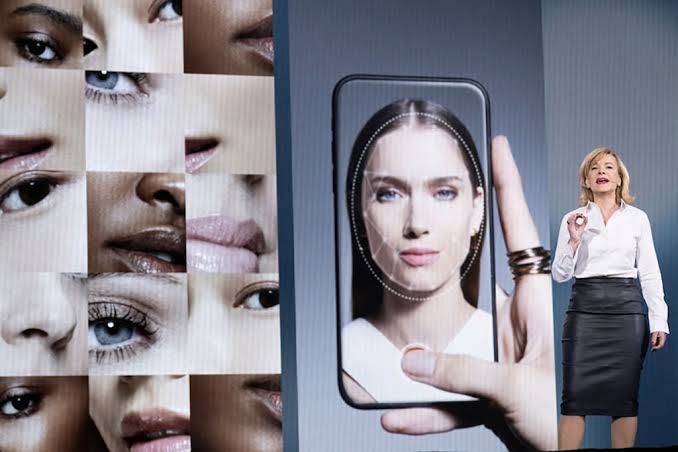
L'Oréal Indonesia spotlighted this shift during its media gathering in Jakarta titled "Beauty That Moves: The Science of Longevity," reported on November 25, 2026. Rather than framing aging as a flaw to conceal, the company introduced its framework for beauty longevity, combining more than a decade of cellular biology research with artificial intelligence diagnostic platforms across flagship brands Lancôme and Kérastase.
Backed by over EUR 1.3 billion in annual Research and Innovation spending and a network of 4,000 global scientists, L'Oréal is positioning beauty longevity as the next structural engine of the cosmetics industry. The numbers behind global demographics, cellular science, and Indonesia's multi-billion-dollar beauty economy explain why this pivot is arriving now.
Why Demographic Shifts Are Driving the Rise of Beauty Longevity
The push toward beauty longevity is not a fleeting marketing rebrand. It mirrors an irreversible global demographic transition. One in five people worldwide will be over the age of 60 by 2040, forcing healthcare systems and consumer brands alike to rethink what aging looks like.
Figures from the World Health Organization underscore the scale of that curve. By 2030, one in six people globally will be 60 or older, lifting that demographic from 1 billion in 2020 to 1.4 billion. By 2050, the global population aged 60 and above is projected to double to 2.1 billion, accounting for 22 percent of humanity compared with 12 percent in 2015. Crucially, two-thirds of older adults by 2050 will live in low- and middle-income countries rather than Western Europe or Japan.
Indonesia is already feeling this shift in its consumer base. According to an October 2026 report by IDN Research Institute citing Statistics Indonesia (BPS) projections, roughly 109.7 million Indonesians are aged 40 and above in 2026, representing more than one-third of the national population. Consumer attitudes inside that cohort are changing just as quickly: 38 percent of surveyed 40-plus Indonesians said they want to age gracefully while maintaining a healthy appearance, rather than chasing artificial youth.
This behavioral change reflects a broader move from lifespan (simply living longer) to healthspan (staying healthy, active, and comfortable throughout those added years). At the Jakarta event, Melanie Masriel, Chief Corporate Affairs and Engagement Officer at L'Oréal Indonesia, linked this philosophy directly to the group's core mission, "Create the Beauty That Moves the World." She noted that beauty is about helping people feel healthy, comfortable, and confident at every stage of life, adding that beauty longevity reframes aging as a natural process that can be understood and cared for through scientific research, product innovation, and Beauty Tech.
Clinical voices echo that distinction. Holistic health practitioner dr. Grace Hananta, C.Ht., emphasized the gap between chronological age and biological age. While chronological age simply counts the years a person has lived, biological age reflects the true physiological state of cells and tissues. Two individuals born in the same year can exhibit vastly different biological trajectories depending on declining cellular energy, cellular senescence, and chronic low-grade microinflammation.
Because cellular aging unfolds beneath the surface long before deep wrinkles form, dr. Grace noted that topical creams alone cannot carry the full workload. Maintaining long-term skin and scalp vitality requires pairing science-based daily routines with foundational habits such as balanced nutrition and restorative sleep.
Inside the Science Behind Longevity Integrative Science and AI Diagnostics
Turning cellular biology into reliable consumer products requires massive research infrastructure. L'Oréal Groupe draws on 117 years of research and innovation heritage, supported by 21 research centers across seven geographic regions and a workforce of roughly 4,000 scientists alongside more than 8,000 digital, technology, and data specialists.
According to the L'Oréal 2025 Annual Report, the group generated EUR 44.05 billion in sales in 2025, achieving 4.0 percent like-for-like growth and outpacing the broader global beauty market's 3.5 percent expansion. To sustain that lead, the company invested over EUR 1.3 billion in Research and Innovation in 2025 alone, filing 725 patents and recording more than 120 million consumer interactions with its Beauty Tech services across 66 countries and 31 brands.
Within its dedicated longevity track, L'Oréal has spent more than 15 years investigating biological aging mechanisms, producing over 40 peer-reviewed scientific publications. That body of work culminated in Longevity Integrative Science™, a systems-biology framework that maps 267 skin biomarkers and categorizes 10 primary hallmarks of skin aging.
Through its proprietary "Wheel of Longevity for Beauty," researchers examine how molecular, cellular, and tissue pathways interact across three core functional zones of the skin: structural integrity, metabolic performance, and cellular signaling. To decode how those 267 biomarkers respond to active compounds, L'Oréal developed the Longevity AI Cloud™. Rather than relying solely on slow trial-and-error lab screening, this AI engine models biological pathways to predict the most potent ingredient synergies before physical formulation even begins.
Zoe Lee, Research and Innovation Director at L'Oréal Indonesia, explained that cellular aging never stems from a single isolated cause. Instead, it emerges from tightly interwoven biological interactions. By mapping those relationships through Longevity Integrative Science™, L'Oréal can target the root cellular mechanisms governing skin, scalp, and hair vitality rather than simply masking surface symptoms.

How Lancôme Combines Biotech Actives and AI Skin Analysis
To bring beauty longevity from research labs to consumer vanities, L'Oréal is pairing open biotech partnerships with precision hardware. In skincare, its luxury flagship Lancôme unveiled the Absolue Longevity MD line, developed through a strategic collaboration with Swiss longevity biotechnology firm Timeline.
L'Oréal's corporate venture fund, BOLD, first acquired a minority stake in Timeline in 2024, giving the beauty giant access to Mitopure®, a proprietary, ultra-pure form of Urolithin A. Backed by 15 years of research and more than USD 50 million in R&D, Mitopure® is a postbiotic compound clinically studied for its ability to trigger mitophagy, the cellular renewal process that clears out worn-out mitochondria and restores cellular energy production.
Lancôme combines Mitopure® with its own patent-pending active ingredient, Absolue PDRN™, to fortify cellular metabolism, strengthen resilience against oxidative stress, and accelerate skin renewal. Recognizing that biological needs shift across decades, the Absolue Longevity MD portfolio segments care into three targeted stages:
- Anticipate Cream (Under 35 Years Old): Formulated to protect baseline cellular energy and defend skin against early environmental stressors before visible aging accelerates.
- Intercept Serum (35 to 55 Years Old): Engineered to intervene when early signs of collagen decline, uneven tone, and fatigue begin emerging on the skin surface.
- Reset Serum (55 Years Old and Above): Designed to support intensive cellular recovery and structural vitality when biological aging markers become pronounced.
Hardware plays an equally central role in this rollout. Lancôme deploys Skin Screen, an AI-powered facial diagnostic instrument capable of evaluating 13 distinct skin condition parameters during a consultation. By benchmarking a customer's visible surface age against their estimated biological skin age, the system moves recommendations away from guesswork toward individualized regimens. Globally, Lancôme has also extended its diagnostic roadmap through Cell BioPrint™, a lab-on-a-chip device co-developed with Korean biotech startup NanoEnTek that analyzes skin surface protein biomarkers in under five minutes.
Extending Cellular Longevity to Scalp and Hair Care With Kérastase
While skincare dominated early conversations around beauty longevity, hair and scalp biology has emerged as one of the fastest-growing frontiers in personal care. Hair follicles are among the most metabolically active mini-organs in the human body, meaning scalp aging directly dictates fiber thickness, elasticity, and luster.
L'Oréal brings its cellular longevity principles to hair care through Kérastase Chronologiste. Treating the scalp as the biological foundation for healthy hair growth, the range blends Pro-Xylane™ with deep-sea Ochrophyta Algae extract to nourish scalp cellular vitality. The formulations specifically target five primary markers of hair aging: dryness, dullness, frizz, loss of volume, and progressive thinning.
The updated Chronologiste routine splits care into two complementary steps:
- Longevity Potion Scalp Serum: Targets the scalp microenvironment directly to strengthen barrier function and support healthy follicular activity at the root.
- Overnight Youth Hair Serum: Works along the hair shaft during sleep to smooth cuticles, restore moisture balance, and improve surface reflection from mid-lengths to ends.
Just as Lancôme anchors consultations with Skin Screen, Kérastase pairs its formulations with K-Scan, an AI-driven scalp and hair diagnostic scanner fitted with a 4K smart camera. Using high-resolution optical imaging and machine learning models, K-Scan inspects follicle density, scalp hydration, sebum balance, and fiber diameter, generating a clear aging index for both scalp and hair. For salon stylists and consumers alike, visualizing microscopic scalp changes makes preventative care far easier to understand and commit to over time.
What AI Diagnostics and Clinical Proof Mean for Indonesia's Beauty Market
L'Oréal's investment in beauty longevity arrives as consumer expectations around clinical proof reach an all-time high. According to McKinsey's Future of Wellness 2027 report published in November 2026, the global wellness economy has grown into a USD 2.7 trillion marketplace, with 33 percent of new US consumer packaged goods launches in 2026 carrying wellness claims compared with 24 percent in 2021. Equally telling, consumer survey data in the same study revealed that product effectiveness (44 percent) now ties with price (44 percent) as the single most decisive factor behind wellness purchases.
Technology is rapidly becoming the primary mechanism brands use to prove that effectiveness. Market estimates from InsightAce Analytic value the global artificial intelligence in beauty and cosmetics market at USD 4.9 billion in 2025, forecasting expansion at a 22.3 percent compound annual growth rate to reach USD 33.75 billion by 2035. Statista similarly projects global users of beauty tech platforms to climb to 515.8 million by 2029, while McKinsey estimates generative AI alone could contribute USD 9 billion to USD 10 billion to the global economy through personalized consultations, formulation support, and product discovery across the beauty sector.
Nowhere in Southeast Asia is this intersection of scale, digital adoption, and scientific appetite more visible than in Indonesia. According to Ken Research market data, Indonesia's beauty and personal care market reached USD 9.74 billion in 2025, making it the largest in Southeast Asia ahead of Thailand at USD 8.50 billion and the Philippines at USD 5.90 billion. The Indonesian market is estimated to hit USD 10.16 billion in 2026 and expand to USD 13.12 billion by 2032 at a 4.35 percent compound annual growth rate.
At the same time, competition inside Indonesia has grown extraordinarily fierce. More than 343,000 cosmetic products were registered in the country as of 2025, backed by over 1,500 domestic manufacturers, while e-commerce accounts for nearly 20 percent of all beauty retail transactions in 2026. In a marketplace flooded with trend-driven serums and unverified social media claims, shoppers are growing fatigued by generic promises.
That crowded backdrop highlights the commercial logic behind L'Oréal's beauty longevity strategy. By anchoring formulations in measurable cellular mechanisms like mitochondrial renewal, backing them with 267 mapped biomarkers, and putting AI diagnostic scanners like Skin Screen and K-Scan directly into retail counters and salons, the company raises the scientific bar for the entire category. For Indonesian consumers navigating an aging demographic and an overwhelming shelf of skincare options, beauty longevity offers a more transparent standard: measurable biological care built to sustain healthy skin and hair across every decade of life.
Read More