


 Friday, 27-11-26


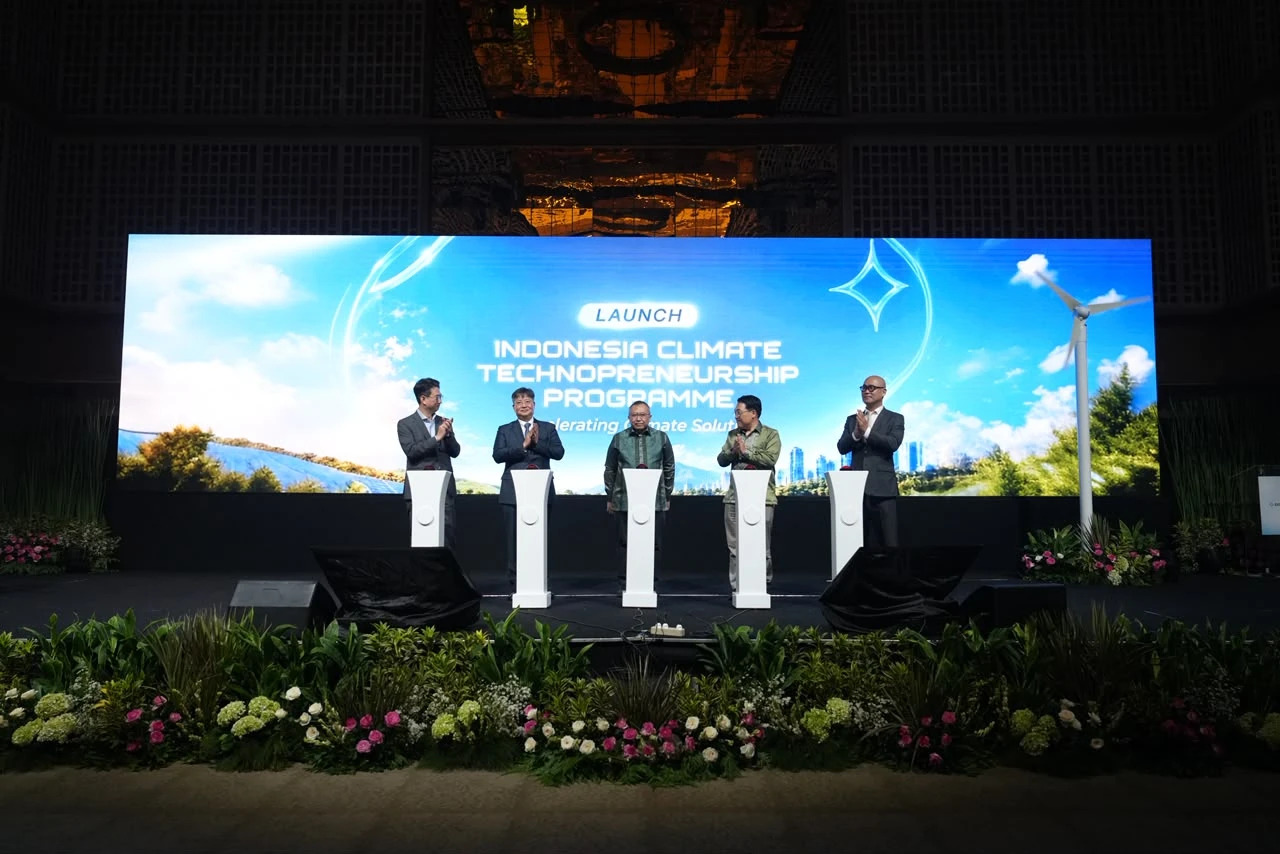
Indonesia took a concrete step toward bridging the gap between early-stage green innovation and institutional capital on November 24, 2026. In Jakarta, the Ministry of Creative Economy and Creative Economy Agency (Ekraf), partnering with the Global Green Growth Institute (GGGI) Indonesia, officially introduced the Indonesia Climate Technopreneurship Programme.
The launch arrives at a critical moment for local climate founders. Across the archipelago, young engineers and entrepreneurs are building practical tools for clean energy, waste recovery, and low-carbon agriculture. Yet promising prototypes routinely stall before reaching commercial scale because early-stage climate ventures struggle to secure patient capital, technical validation, and international commercial partners.
By combining structured business acceleration with access to a targeted USD 200 million regional investment vehicle, the Climate Technopreneurship Programme aims to turn promising domestic prototypes into investable companies capable of competing across regional and global markets.
Why Indonesia Needs Dedicated Capital for Climate Technology Startups
Indonesia's startup landscape has matured rapidly over the past decade, yet private venture capital remains heavily skewed toward conventional digital sectors. According to the DailySocial.id Indonesia Startup Funding Tracker covering January through November 2026, Indonesian startups raised USD 399.2 million in disclosed funding across 32 deals, consisting of 30 equity rounds totaling USD 387.2 million and two convertible notes worth USD 12 million. Financial technology absorbed USD 280 million of that total, representing roughly 70 percent of all disclosed venture capital deployed during the period.
Climate technology ventures operate on a very different timeline than consumer apps or lending platforms. Hardware integration, pilot testing, regulatory approvals, and environmental compliance require longer runways and specialized investors who understand physical infrastructure and industrial supply chains. Traditional venture funds often hesitate to absorb that early technical risk alone.
Meanwhile, the macroeconomic stakes for Indonesia are enormous. Under its Enhanced Nationally Determined Contribution (Enhanced NDC), Indonesia committed to reducing greenhouse gas emissions by 31.89 percent unconditionally and by up to 43.20 percent with international support by 2030, on a longer trajectory toward Net Zero Emissions by 2060 or sooner. Data compiled from Indonesia's NDC mitigation roadmap and cited in Bank Indonesia's Q4 2025 Green Policy presentation places cumulative climate mitigation costs through 2030 between USD 263.5 billion and USD 281 billion, or nearly USD 23.96 billion annually.
Public budgets cannot carry that weight alone. Findings from the Indonesian Ministry of Finance's 2018 to 2023 Climate Budget Tagging report show that state spending covers only 16.4 percent of the financing required to meet national climate targets. That leaves an 83.6 percent funding gap that must come from private markets, multilateral institutions, and cross-border blended finance.
Muhammad Neil El Himam, Deputy for Digital Creativity and Technology at the Ministry of Creative Economy, framed the launch directly around this economic reality. Speaking at the event in Jakarta, he explained that the ministry views startups as a vital engine of economic transformation and wants creative and technology founders to grow, collaborate, and tackle global development challenges. Through the Indonesia Climate Technopreneurship Programme, the government aims to construct a reliable bridge linking creativity, technological innovation, business readiness, and investment access.
Inside the USD 221 Million Regional Blueprint Behind the Programme
Rather than operating as an isolated domestic pilot, Indonesia's rollout forms part of a larger cross-border initiative known as the Collaborative Research, Development and Business (R&DB) Programme for Promoting the Innovation of Climate Technopreneurship, formally cataloged as Green Climate Fund project FP240.
Approved by the Green Climate Fund Board in July 2024 and entering formal implementation after its Funded Activity Agreement took effect in November 2025, the regional programme spans five Southeast Asian nations: Indonesia, Cambodia, Laos, the Philippines, and Vietnam. Its active rollout runs from 2026 to 2030, backed by a long-term institutional lifecycle extending to November 2036.
The architecture brings together public climate finance and Korean institutional investment expertise. Korea Development Bank (KDB) serves as the GCF Accredited Entity, working alongside co-implementation partners GGGI, NongHyup Investment & Securities (NH IS), and NongHyup Absolute Return Partners (NH ARP).

What makes this structure especially practical for founders is its blended finance design. The grant component finances ecosystem building, technical assistance, and startup acceleration, while the equity pool anchors the USD 200 million Climate Technopreneurship Fund. Because institutional concessional capital absorbs early structuring friction, the fund can crowd in co-investment from commercial venture capital firms, private equity funds, development finance institutions, multilateral banks, and impact investors.
Indonesian startups that satisfy climate impact thresholds and pass investment due diligence will be eligible for direct funding from this regional pool, opening doors to institutional check sizes that rarely reach early-stage green ventures in Southeast Asia.
How the National Climate Entrepreneur Accelerator Programme Prepares Founders
Capital alone rarely fixes an underprepared startup pipeline. Investors across Asia frequently point out that deal flow in climate tech suffers less from a shortage of ideas and more from gaps in commercial readiness, financial governance, and verifiable impact metrics.
To solve that bottleneck, the Climate Technopreneurship Programme uses the National Climate Entrepreneur Accelerator Programme (N-CEAP) as its primary entry mechanism. Led by GGGI in collaboration with the Ministry of Creative Economy, N-CEAP identifies high-potential early-stage and growth-stage local ventures and guides them through intensive commercial preparation.
Selected founders receive hands-on mentorship focused on four core areas:
- Business Model Maturation and Market Validation: Helping engineering-led teams refine pricing structures, customer acquisition strategies, and unit economics so their climate solutions stand on commercial merit rather than relying indefinitely on subsidies.
- Investment Readiness and Corporate Governance: Preparing startups for institutional due diligence through cleaner financial reporting, transparent governance practices, and bankable expansion roadmaps.
- ESG and Environmental Compliance: Equipping companies to measure and verify carbon reductions alongside environmental and social safeguards required by global funds.
- Cross-Border R&DB Partnerships: Connecting local startups with international technology providers, research labs, and corporate partners to accelerate product adaptation and regional market entry.
At the national ecosystem level, the Climate Technopreneurship Programme pulls government ministries, universities, research institutions, private corporations, and local accelerators into a shared network. Training domestic accelerators ensures that institutional mentoring capacity stays inside Indonesia long after individual cohorts graduate.
Hakseok Ryu, ASEAN Regional Engagement Lead at GGGI, highlighted why Indonesia occupies a central position in this regional push. He noted that Indonesia possesses deep potential in green technology and climate innovation driven by young talent, entrepreneurial energy, and a steadily expanding innovation ecosystem. With coordinated access to technology, capital, and policy alignment, he expressed confidence that Indonesia can establish itself as one of Southeast Asia's premier green innovation hubs.
Seven Priority Climate Sectors Targeted Across Indonesia
Implementation in Indonesia under the Ministry of Creative Economy focuses on seven priority climate technology sectors, alongside adjacent green solutions that deliver measurable emissions reductions or climate resilience:
- Renewable Energy: Distributed solar systems, micro-hydro solutions, bioenergy, and clean power generation suited to Indonesia's archipelagic geography.
- Energy Storage and Distribution: Battery storage innovations, smart microgrids, and grid-balancing software that stabilize intermittent clean power.
- Low-Emission Transportation: Electric two-wheelers, commercial fleet electrification, battery-swapping networks, and cleaner urban logistics.
- Energy Efficiency: Industrial energy management tools, smart cooling systems, and low-carbon building technologies for commercial and manufacturing hubs.
- Climate-Smart Agriculture: Precision farming sensors, drought-resilient agritech, low-emission supply chains, and sustainable bioeconomy solutions.
- Water Management: Clean water treatment systems, leak-detection technologies, and climate-resilient watershed monitoring.
- Waste Management: Circular recycling platforms, organic waste-to-energy systems, and methane reduction technologies for municipalities and industrial estates.
These seven verticals mirror the sharpest commercial demand across Southeast Asia. According to the Southeast Asia's Green Economy Report 2026 published by Bain & Company and Standard Chartered in May 2026, roughly 80 percent of the USD 40 billion in annual green capital expenditure deployed regionally between 2021 and 2025 flowed into power and grid infrastructure (around USD 20 billion) and the electric vehicle value chain (around USD 11 billion). Electric vehicle adoption across Southeast Asia has already outpaced earlier projections by 1.5 to 2 times, creating immediate commercial pull for local mobility, storage, and charging startups.
Closing the Funding Gap for Women Founders and Inclusive Ventures
One standout element of the Climate Technopreneurship Programme is its explicit commitment to gender inclusivity and equitable entrepreneurship. Both Ekraf and GGGI have prioritized outreach to women-led startups and ventures building inclusive green growth, integrating gender mainstreaming directly into N-CEAP selection and mentoring standards.
Hard numbers show why this priority is economically overdue. Micro, small, and medium enterprises represent roughly 99 percent of all businesses in Indonesia and generate about 60 percent of national GDP, with women managing 64.5 percent of those enterprises, according to data compiled by KUMPUL and Indosat Ooredoo Hutchison in the SheHacks Impact Report. Yet capital distribution remains starkly lopsided. An International Finance Corporation study cited in the same report found that 70 percent of women entrepreneurs in Indonesia experience greater barriers to formal financial institutions than men, forcing many to rely on personal savings or informal credit.
The disparity widens even further inside high-growth technology sectors. Research highlighted by the Asian Development Bank notes that women-led startups globally received just 2.3 percent of all venture capital funding. Within Indonesia's own women-in-tech ecosystem, founders surveyed by SheHacks rated their access to investment support at a low 2.88 out of 5 and deep-tech readiness at just 2.63 out of 5, even though 63 percent reported revenue growth and 78.5 percent created new jobs after receiving structured incubation.
By embedding gender action targets into the Climate Technopreneurship Programme and pairing technical coaching with investor introductions, Indonesia can unlock an undercapitalized segment of founders already solving frontline challenges in waste management, sustainable agriculture, and community energy access.
Turning Ambition Into Real Deployment Across Southeast Asia
Southeast Asia's broader green transition has reached an inflection point where execution matters far more than pledges. The 2026 Bain & Company and Standard Chartered report estimates that Southeast Asia's green economy has reached USD 290 billion and is projected to climb to USD 430 billion by 2030, expanding at 8 to 9 percent per year.
Yet the same study exposes a glaring conversion problem. Out of approximately USD 540 billion in green capital expenditure announced across Southeast Asia's power and EV value chains through 2030, only around USD 315 billion sits on a credible path to actual deployment, leaving a realization gap exceeding 35 percent. Between 2021 and 2025, between 50 percent and 60 percent of renewable energy projects across Indonesia, Vietnam, and Thailand were canceled due to grid bottlenecks, permitting hurdles, and unclear power purchase rules.
That realization gap explains why initiatives like the Climate Technopreneurship Programme matter beyond startup headlines. Large utility projects often stall when local technical supply chains, permitting frameworks, and decentralized distribution networks lag behind policy targets. Nimble local startups developing distributed storage, smart grid software, waste conversion systems, and efficient mobility tools can fill those operational gaps far faster when backed by coordinated policy dialogue and blended institutional funding.
With implementation running from 2026 through 2030, the real test for the Climate Technopreneurship Programme will be conversion: how many Indonesian N-CEAP graduates clear institutional due diligence, secure co-investment from the USD 200 million fund, and scale measurable carbon reductions across the country. If the Ministry of Creative Economy, GGGI, KDB, and private co-investors execute smoothly, Indonesia will gain more than a stronger startup cohort. It will build a repeatable commercial engine for its creative and green economy over the next decade.
Read More