


 Tuesday, 03-11-26


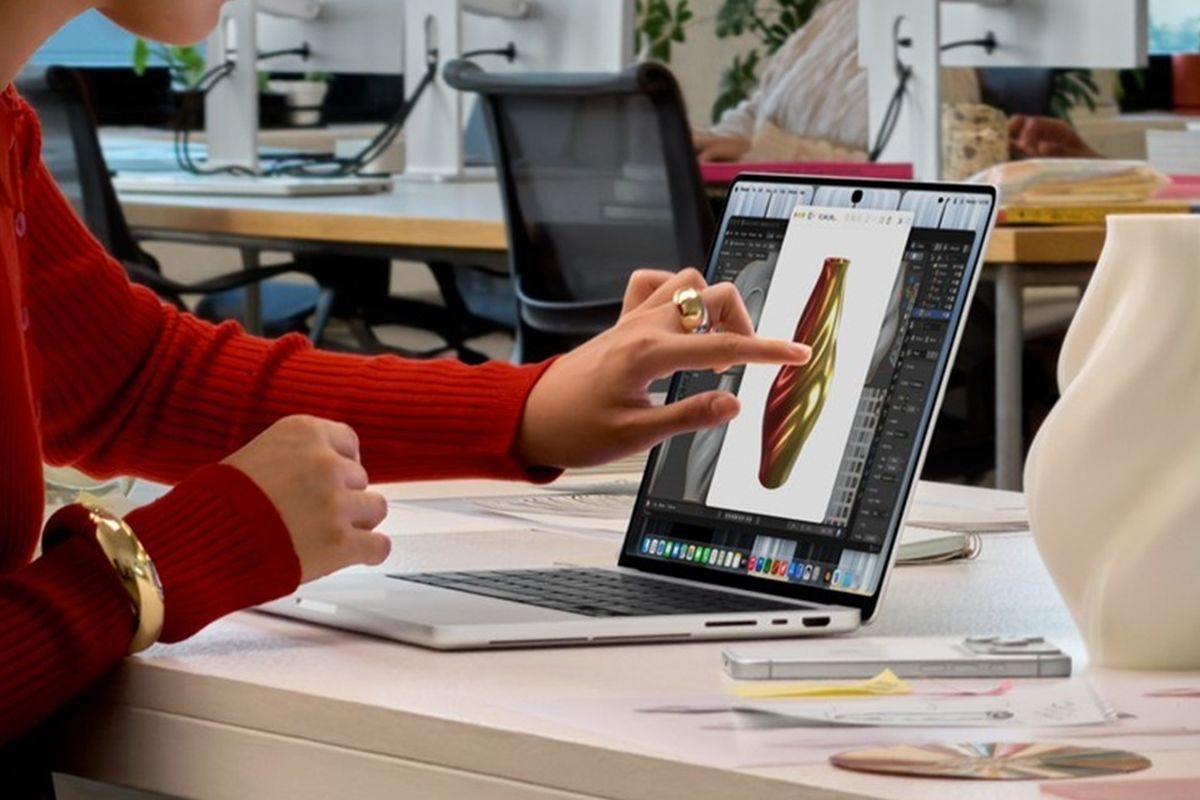
The personal computing industry has reached a pivotal structural milestone with the official announcement of Apple's flagship portable hardware refresh. For over a decade, creative professionals and software engineers have debated whether touch interaction belongs on pro-grade laptop displays. With the public unveiling of the touchscreen MacBook Pro PROLED XDR, Apple has delivered a definitive answer by integrating direct Multi-Touch gestures into macOS alongside self-emissive display engineering. Featuring cutting-edge M5 Pro and M5 Max processors, this device combines raw computational throughput with an unprecedented optical panel, establishing a new benchmark for mobile digital workstations.
By transitioning from traditional mini-LED backlighting to custom tandem OLED technology, Apple solves long-standing trade-offs between peak luminance, energy efficiency, and color accuracy. Combined with extended battery performance lasting up to 24 hours, the new architecture targets demanding workloads across 3D rendering, color grading, software development, and high-resolution video production. Exploring the detailed technical specifications and market positioning reveals how this release alters the landscape for premium computing hardware.
Next-Generation Tandem OLED Display Engineering
At the center of the hardware update lies the PROLED XDR panel, available in 14.2-inch and 16.3-inch diagonal screen sizes. Unlike standard single-layer OLED screens found in commercial consumer electronics, tandem OLED technology stacks two self-illuminating organic light-emitting layers in series. This dual-layer architecture multiplies light output while distributing electrical strain across both layers, significantly enhancing display longevity and thermal stability.
The optical metrics of the touchscreen MacBook Pro PROLED XDR display set a high benchmark for portable displays. The panel sustains 1,000 nits of full-screen brightness for both Standard Dynamic Range (SDR) and High Dynamic Range (HDR) content, with peak HDR highlights reaching up to 2,000 nits. Furthermore, in intense ambient light conditions such as direct outdoor sunlight, the display engine dynamically boosts full-screen SDR brightness up to 2,000 nits. Coupled with an astronomical 10,000,000:1 contrast ratio, every pixel generates its own illumination, completely eliminating the backlight halo effects and blooming artifacts inherent to traditional local-dimming LED arrays.
Color management capabilities have also expanded to support complex multi-medium workflows. For the first time in a Mac notebook, the display natively covers both the P3 wide color gamut and the Adobe RGB color space within a single unified preset. Photographers preparing physical print layouts and colorists mastering 4K video can switch between gamuts without external calibration tools. The display natively supports ProMotion adaptive refresh rates from 10Hz up to 120Hz, while filmmaker presets offer discrete fixed refresh rates of 47.95Hz, 48Hz, 50Hz, and 59.94Hz to ensure perfect frame synchronization during video editing.
Direct Touch Integration and Modern Interface Dynamics
Integrating direct touch input into a desktop-class operating system requires precise balance between traditional precision pointing and intuitive touch gestures. Rather than overlaying an external digitizer glass that increases weight and introduces screen reflections, the touchscreen MacBook Pro PROLED XDR embeds capacitive touch sensors directly into the tandem OLED panel structure. This zero-gap integration minimizes parallax errors and ensures sub-millisecond response latency during multi-finger operations.
Within macOS, touch interaction complements rather than replaces the Force Touch trackpad and physical keyboard. Professionals can pinch to zoom across dense timeline tracks in digital audio workstations, rotate three-dimensional CAD models directly on screen, or paint vector masks with direct finger placement. The operating system intelligently scales touch target zones when fingers approach the display, preserving pixel-level cursor accuracy when using a mouse or trackpad.
Another structural addition is the arrival of the Dynamic Island on the Mac display housing. Positioned at the top border, the Dynamic Island encapsulates the 12MP Center Stage camera and sensor array while presenting active background processes, system notifications, rendering progress bars, and live audio meters. This interactive status bar keeps critical utility metrics visible without taking up workspace on the primary display canvas.
Silicon Architecture and Extreme Performance Benchmarks
Underneath the chassis, the system is powered by the M5 Pro and M5 Max system-on-chip architectures. Built on an advanced sub-three-nanometer process node, these chips incorporate upgraded CPU cores, a high-throughput GPU architecture with hardware-accelerated ray tracing, and a next-generation Neural Engine designed for complex artificial intelligence models.
Memory configurations scale up to 128GB of unified memory with high memory bandwidth, allowing 3D animators and machine learning researchers to load massive data sets directly into local video RAM without disk caching delays. Internal solid-state storage options extend up to 16TB with read speeds exceeding 7.5 gigabytes per second, ensuring immediate asset streaming for uncompressed 8K video timelines.
The thermal envelope has been completely redesigned to maintain sustained performance under maximum load. Dual high-efficiency fans work in tandem with an enlarged vapor chamber system to dissipate heat silently. Even during extended CPU and GPU stress tests, the internal thermal management maintains maximum clock speeds without thermal throttling. This thermal efficiency enables the 14-inch model to weigh just 3.0 pounds and the 16-inch model to weigh 4.0 pounds, while delivering up to 24 hours of video playback on a single charge.
Comprehensive Connectivity and Audio Visual Systems
Professional workflows require expansive peripheral support without mandatory dongles or adapters. The touchscreen MacBook Pro PROLED XDR comes equipped with three high-bandwidth Thunderbolt 5 ports capable of bi-directional data transfers up to 120 Gigabits per second. These ports support multiple high-resolution 8K external monitors, high-speed RAID storage arrays, and external expansion chassis simultaneously.
Physical port selection includes a dedicated HDMI output supporting up to 8K resolution at 60Hz, a high-speed SDXC card slot for instant camera media ingestion, a MagSafe 3 charging port, and a high-impedance 3.5mm headphone jack. Wireless connectivity gets an upgrade with Wi-Fi 7 integration and Bluetooth 6 support, providing lower latency and faster throughput over congested wireless networks.
The audio subsystem features a redesigned six-speaker array equipped with force-cancelling woofers that produce 50 percent deeper bass response compared to prior generations. Studio-quality three-microphone arrays utilize spatial beamforming to cancel background ambient noise during remote collaboration. Meanwhile, the 12MP Center Stage camera utilizes Desk View software algorithms to show both the user face and an overhead view of their physical desk simultaneously, ideal for interactive design reviews.
Economic Positioning and Market Value Analysis
With pre-orders opening immediately following the announcement and official retail availability set for November 6, Apple has positioned this lineup firmly within the premium enterprise market. Pricing for the 14.2-inch model begins at 2,899 dollars for the M5 Pro configuration, while the 16.3-inch model starts at 3,399 dollars. Upgrading to the flagship M5 Max silicon pushes base tier pricing to 4,499 dollars for the 14-inch model and 4,799 dollars for the 16-inch version.
While these price points represent a notable capital investment, enterprise buyers and creative studios evaluate purchase decisions through the lens of workflow efficiency and hardware longevity. The inclusion of dual P3 and Adobe RGB color profiles eliminates the need for expensive secondary reference monitors, which often cost several thousand dollars on their own. Furthermore, the efficiency gains provided by hardware-accelerated touch input and M5 class processing directly compress project delivery timelines.
As commercial software developers roll out updates optimized for touch-enabled macOS environments, the value proposition of the touchscreen MacBook Pro PROLED XDR will continue to expand. By combining touchscreen functionality, tandem OLED visual quality, and industry-leading performance efficiency in a portable form factor, Apple has delivered a mobile workstation that sets a clear direction for the future of personal computing.
Read More