


 Tuesday, 03-11-26


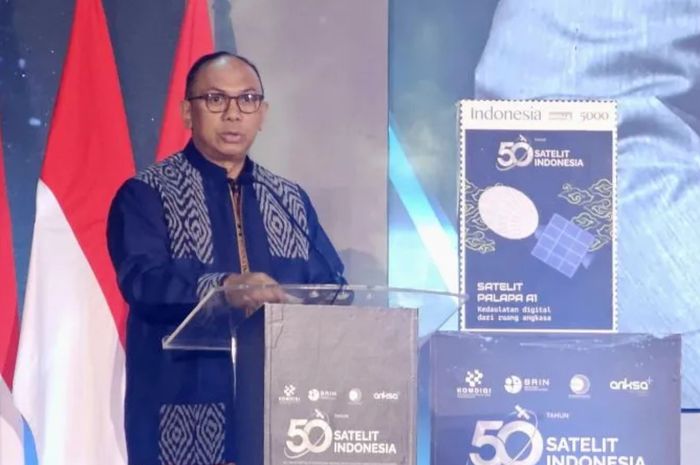
The Ministry of Communication and Digital has officially enacted a high-level executive change at the Telecommunication and Information Accessibility Agency, commonly known as BAKTI. By appointing Wayan Toni Supriyanto as the Acting President Director to succeed Fadhilah Mathar, the government aims to reinforce administrative oversight, accelerate project execution, and ensure continuity across major public sector connectivity programs. This leadership decision comes at a critical juncture when national telecommunications policy focuses on closing persistent connectivity gaps between urban economic hubs and isolated rural communities. The ongoing Indonesia digital infrastructure leadership transition reflects a strategic pivot toward enhanced operational efficiency, rigorous procurement governance, and accelerated deployment of digital networks across the archipelago.
BAKTI serves as the primary operational vehicle for the ministry in delivering universal telecommunications access. Established to manage Universal Service Obligation funds contributed by licensed telecommunications operators, the agency is tasked with building essential connectivity assets in areas deemed commercially unviable by private service providers. These regions, categorized as frontier, outermost, and underdeveloped districts, rely heavily on state-backed interventions to gain access to basic cellular coverage and broadband internet. Consequently, leadership stability and strategic clarity within BAKTI directly influence how fast rural populations can participate in the modern digital economy.
Under the newly appointed direction, the agency is expected to maintain momentum across several complex infrastructure initiatives while sharpening internal risk management frameworks. The transition highlights the government's commitment to maintaining seamless continuity in public service delivery, ensuring that ongoing contract management, operational maintenance, and network expansion projects proceed without administrative bottlenecks or budgetary delays.
Strategic Mandate of BAKTI in National Telecommunication Policy
Understanding the significance of the Indonesia digital infrastructure leadership transition requires examining the extensive operational scope managed by BAKTI. As an official agency under the Ministry of Communication and Digital, BAKTI manages multi-trillion rupiah annual budgets dedicated exclusively to telecommunication accessibility. Its portfolio encompasses land-based fiber optic backbones, high-capacity communications satellites, and thousands of cellular towers constructed in challenging geographical terrains.
One of the agency's flagship assets is the Palapa Ring project, a nationwide fiber optic network spanning thousands of kilometers across land and undersea corridors. This national digital backbone connects major island clusters, providing the high-capacity bandwidth necessary to deliver fast internet to regional government offices, public health centers, and educational institutions. Maintaining and expanding this backbone requires constant technical upgrades, vendor management, and strategic coordination with regional governments to ensure high network availability.
In addition to terrestrial fiber networks, BAKTI oversees the deployment and operation of the SATRIA-1 telecommunications satellite. Launched to deliver direct-to-building satellite broadband coverage, SATRIA-1 targets public service locations in remote regions where laying fiber optic cables or erecting traditional towers remains logistically unfeasible. Managing the ground segment infrastructure, including earth stations and terminal equipment distribution, forms a vital component of the agency's daily operational responsibilities.
The agency also plays a central role in managing the Universal Service Obligation framework. By collecting a statutory percentage of gross revenues from private telecommunications operators, BAKTI redistributes these funds into targeted public infrastructure investments. This mechanism ensures that commercial growth in dense metropolitan markets directly subsidizes the expansion of digital networks into remote border regions, creating a balanced national connectivity footprint.
Key Priorities for the New Executive Direction
The immediate focus for the incoming leadership revolves around completing and optimizing the expansive 4G Base Transceiver Station deployment across remote provinces. Constructing cellular towers in isolated regions, particularly within the mountainous terrains of Papua and remote island chains in Maluku and East Nusa Tenggara, presents severe logistical, security, and environmental hurdles. The Indonesia digital infrastructure leadership transition serves as a catalyst to streamline field operations, resolve supply chain delays, and establish robust security coordination with local authorities.
Ensuring total operational readiness for existing BTS towers is equally vital. Beyond physical construction, cellular sites require continuous electrical power supply, reliable backhaul connectivity, and routine preventative maintenance. Implementing hybrid power solutions, such as solar photovoltaic panels paired with industrial battery storage, has become essential for off-grid locations. The new management team must ensure that service-level agreements with operational partners are strictly enforced so that remote communities experience reliable, uninterrupted cellular signals.
Another central priority involves strengthening governance, financial auditing, and procurement transparency. In recent years, public digital infrastructure projects have faced intense regulatory scrutiny. Restoring complete public confidence and institutional integrity requires implementing stringent compliance protocols, transparent bidding processes, and real-time monitoring of project disbursements. By prioritizing structural accountability, the new executive leadership aims to safeguard public resources while delivering high-quality infrastructure assets on schedule.
Furthermore, fostering deeper technical integration between satellite systems and ground networks remains a top objective. Maximizing the operational bandwidth of SATRIA-1 requires expanding ground station capacities and deploying user terminals across thousands of remote public schools, community health clinics, and village administrative offices. Coordinated execution between satellite operations and ground deployment teams will maximize the return on public investment and deliver immediate social benefits to underserved citizens.
Economic and Social Impacts of Rural Connectivity
Expanding digital infrastructure into remote regions generates profound economic and social transformations. When isolated villages receive high-speed internet access, local entrepreneurs gain the ability to connect with broader regional and national markets through e-commerce platforms. Farmers and fishermen can access real-time commodity prices, weather forecasts, and agricultural best practices, significantly improving their productivity and income stability. The Indonesia digital infrastructure leadership transition directly underpins these socio-economic advancements by ensuring that network deployment plans remain aligned with community development goals.
In the realm of public education, reliable internet connectivity bridges long-standing educational divides. Students in remote border areas can access digital learning materials, participate in online educational programs, and utilize interactive resources previously available only to urban schools. Similarly, public health facilities benefit immensely from digital integration. Community health centers can utilize electronic medical records, conduct remote consultations through telemedicine platforms, and coordinate emergency medical evacuations more effectively.
Financial inclusion represents another major benefit of widespread telecommunication access. Expanded mobile coverage enables digital banking services, mobile wallet adoption, and micro-finance access for populations that lack physical bank branches in their vicinity. By integrating rural residents into the formal financial ecosystem, digital infrastructure acts as a powerful catalyst for poverty reduction and inclusive economic growth across outer island regions.
Public safety and administrative efficiency also improve significantly with enhanced digital access. Local government agencies can digitize public records, streamline administrative services, and communicate instantaneously with central ministries during natural disasters or public emergencies. Reliable connectivity ensures that emergency alerts, disaster response coordination, and relief distribution efforts can be managed swiftly and accurately.
Fostering Public-Private Partnerships and Ecosystem Growth
Achieving universal digital connectivity across a vast archipelago cannot be accomplished by government action alone. It requires active, sustained collaboration between public agencies and private sector telecommunication providers. The newly appointed leadership at BAKTI is expected to deepen strategic partnerships with major mobile network operators, technology vendors, and tower infrastructure companies to create a cohesive digital ecosystem.
Private telecommunications operators bring deep technical expertise, advanced network management capabilities, and established commercial scale. By co-investing in shared infrastructure models, government agencies and private firms can eliminate duplicate network builds, reduce overall capital expenditures, and accelerate the rollout of high-speed services. Open-access infrastructure frameworks allow multiple service providers to utilize state-funded towers and fiber networks, fostering healthy commercial competition and lowering subscription costs for end users.
Additionally, collaborating with international technology partners and domestic technology startups encourages local innovation. Developing localized digital applications tailored to the specific needs of rural communities, such as agricultural management tools, local language educational content, and simplified digital banking interfaces, ensures that newly connected populations can derive maximum value from internet access.
Training local communities in digital literacy represents another vital component of ecosystem development. Infrastructure alone is insufficient if citizens lack the skills to navigate online environments safely and productively. Through joint initiatives with educational institutions, non-profit organizations, and local community leaders, the government can roll out comprehensive digital literacy programs that teach cybersecurity awareness, digital entrepreneurship, and responsible internet usage.
Future Trajectory of National Digital Accessibility
Looking toward the future, national digital policy aims to build an inclusive, secure, and resilient digital foundation that supports long-term economic expansion. The strategic vision outlined in the national digital roadmap targets widespread high-speed broadband adoption, robust cloud computing infrastructure, and comprehensive digital public services. Navigating the Indonesia digital infrastructure leadership transition successfully ensures that the institutional framework responsible for rural connectivity remains agile, resilient, and aligned with these long-term strategic ambitions.
As global technological standards evolve toward fifth-generation cellular networks and advanced low-Earth orbit satellite constellations, national telecommunications infrastructure must continuously adapt. Future network planning must incorporate scalable architectures capable of supporting higher data traffic volumes, lower latency applications, and expanded internet-of-things devices across agricultural and industrial sectors.
By reinforcing governance structures, accelerating project timelines, and fostering strong multi-stakeholder collaboration, the leadership team at BAKTI is well-positioned to drive the next phase of national digital transformation. Ensuring that every citizen, regardless of geographic location, enjoys equal access to digital opportunities will remain the ultimate measure of success for public sector connectivity initiatives.
The ongoing Indonesia digital infrastructure leadership transition stands as a testament to the nation's unwavering determination to eliminate the digital divide. Through sustained public investment, prudent administrative management, and strategic industry collaboration, Indonesia continues to build a connected, prosperous, and digitally empowered future for all its people.
Read More