





 Wednesday, 14-10-26








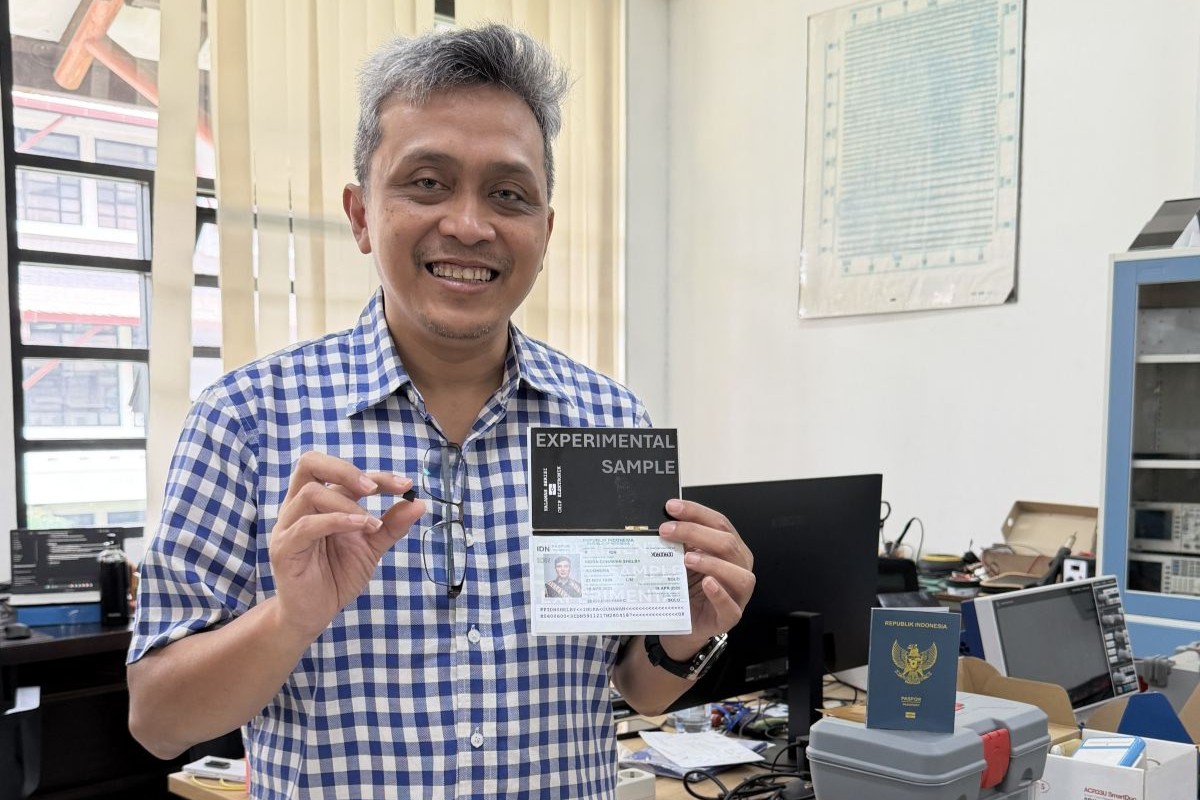
Institut Teknologi Bandung (ITB), through PT LAPI ITB, has partnered with the state-owned Perusahaan Umum Percetakan Uang Republik Indonesia (PERURI) to develop Indonesia’s first domestically designed electronic passport chip prototype (13/10).
The project aims to strengthen identity document security, reduce dependence on imported technology, and support the development of Indonesia’s semiconductor industry.
The chip was developed over one year, from 2025 to 2026. The prototype completed its development, testing, and demonstration stages in September 2026, according to ITB.
Indonesia Develops First Electronic Passport Chip Prototype
The project was initiated to strengthen Indonesia’s ability to design chips used in electronic passports, also known as e-passports. According to Prof. Ir. Arif Sasongko, S.T., M.T., Ph.D., Indonesia still relies on imported chips and does not have full control over their design processes and underlying technologies.
The research has three main objectives: improving expertise in security technology, increasing domestic economic value, and creating opportunities to use the technology for other purposes.
The research team includes Prof. Arif Sasongko, Muhammad Iqbal Arsyad, Nana Sutisna, Mervin Tangguar Hutabarat, Waskita Adijarto, Yusuf Kurniawan, and Prof. Sarwono Sutikno of the Institut Teknologi Sumatera (ITERA).
Electronic Passport Chip Aims to Strengthen Security and Reduce Imports
Developing the chip domestically allows researchers to understand and control its architecture and technological components. This capability is important for electronic devices that store personal identity information.
Domestic development is also expected to increase local content and reduce dependence on chip technologies designed or manufactured abroad. Carrying out more design and development activities within Indonesia could allow local expertise to contribute more directly to the technology’s economic value.
“If PERURI and ITB’s chip can be manufactured, the added value will be very high. The chip can also be used for various other purposes besides electronic passports,” Prof. Arif said at ITB’s Ganesha Campus on Monday (12/10/2026).
He explained that the technology could also be used in electronic identity devices, electronic money (e-money), and other applications requiring chip-based security systems.
Prof. Arif highlighted the domestic design capability as a key achievement of the research.
“This is the first one designed in Indonesia. Previously, the chips were designed overseas and manufactured overseas,” he said.
Prototype Requires Further Development Before Mass Production
The electronic passport chip remains at the prototype stage and is not yet ready for mass production. Further development is needed to enable large-scale manufacturing at more efficient costs.
The research also contributes to Indonesia’s efforts to develop expertise in integrated circuit (IC) design. This field is relevant to the development of chips used in electronic identity systems, electronic transactions, and other technologies that require information security.
Domestic Chip Design Supports Semiconductor Industry Development
The research forms part of efforts to strengthen Indonesia’s capabilities in semiconductor technology, particularly chip design. Chips are key components in modern electronic devices, including identity systems, electronic transactions, and technologies that require information protection.
Prof. Arif said the project supports the development of Indonesia’s semiconductor industry, particularly in chip design.
“This develops Indonesia’s semiconductor industry, particularly chip design,” he said.
Through this research, ITB is contributing to the development of technology that could be adapted for various industrial needs in the future.
PHOTO: ITB
This article was created with AI assistance.
We make every effort to ensure the accuracy of our content, some information may be incorrect or outdated. Please let us know of any corrections at [email protected].
Read More