





 Monday, 19-10-26








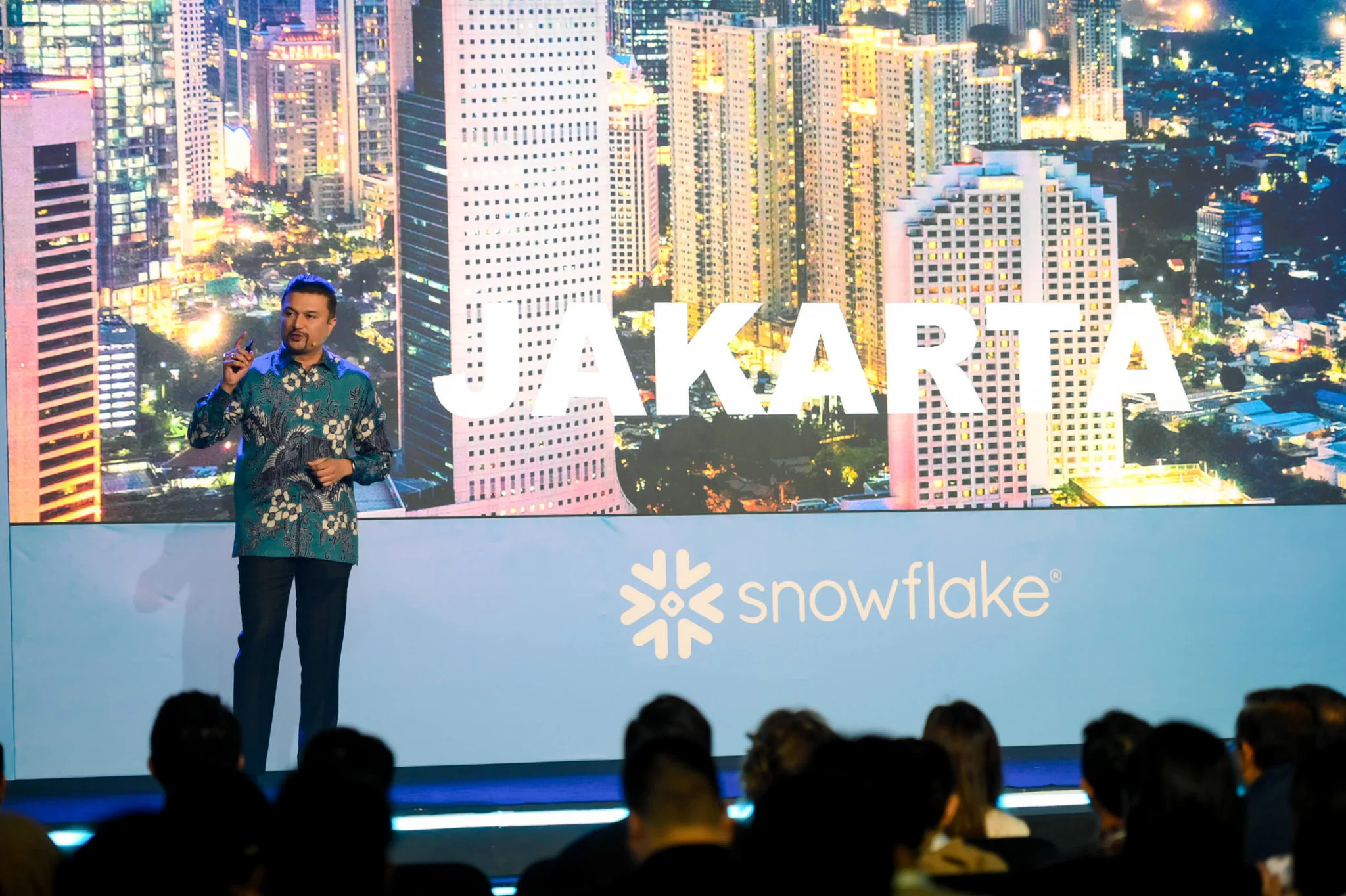
The global enterprise software landscape is undergoing a massive transformation powered by rapid developments in cloud architecture and artificial intelligence. Cloud data platform giant Snowflake recently announced impressive financial results for the second quarter of fiscal 2026, recording total revenue reaching Rp27.5 trillion. This substantial financial performance underscores the rising global demand for unified data platforms that can process, manage, and analyze massive volumes of information. As corporate data strategy rapidly shifts toward machine learning and predictive modeling, the Snowflake AI Expansion in Indonesia represents a pivotal initiative designed to capture high-growth market opportunities across Southeast Asia.
Indonesia represents one of the most dynamic digital economies in the region, driven by widespread smartphone adoption, booming e-commerce, digital banking, and rapid public sector modernization. However, organizations in the country face distinct operational hurdles when attempting to extract actionable intelligence from fragmented data repositories. Snowflake's expanded strategic focus aims to help local enterprises resolve these complexities while capitalizing on the generative artificial intelligence boom. By uniting disparate data streams into a single, scalable cloud ecosystem, Snowflake is positioning itself as a core enabler of enterprise digital maturity across the Indonesian market.
Strong Financial Performance and Revenue Acceleration
Snowflake's second-quarter fiscal 2026 revenue of Rp27.5 trillion reflects robust year-over-year momentum across product revenue and overall platform consumption. The company's unique consumption-based pricing model aligns customer costs directly with platform usage, creating a business framework that scales naturally alongside customer workload growth. During the quarter, product revenue surged significantly, driven by enterprise migration from legacy on-premises databases to cloud native environments.
Key performance indicators highlight sustained confidence from large enterprise customers. The organization recorded solid net revenue retention rates, indicating that existing clients continue to expand their workloads on the platform over time. Furthermore, Snowflake experienced substantial growth in the number of high-value clients, specifically those contributing significantly to annual product revenue. Financial analysts point out that this top-line expansion demonstrates customer trust in Snowflake's core architecture, particularly as enterprises upgrade their infrastructure to prepare for advanced artificial intelligence workloads.
Capital expenditure and research funding have increasingly focused on integrating machine learning tools into the underlying platform. Rather than treating artificial intelligence as an isolated feature, Snowflake has embedded model training, inference, and data governance directly into its core infrastructure. This strategic choice provides customers with an immediate path to deploy intelligent applications without having to move sensitive corporate data across multiple external environments.
Enterprise AI Adoption Across the Indonesian Digital Economy
Southeast Asia's largest economy is undergoing a massive shift as enterprises transition from basic digitization to advanced intelligence. Financial institutions, telecommunications operators, logistics providers, and retail platforms across Indonesia generate petabytes of operational data daily. Managing this data influx requires flexible, secure, and highly scalable cloud platforms. The strategic rollout of the Snowflake AI Expansion in Indonesia addresses this exact challenge by offering scalable infrastructure tailored for heavy workload processing.
Many traditional Indonesian businesses rely on legacy data architectures that isolate operational metrics within siloes. This fragmentation limits the speed at which business leaders can execute real-time analytics or train machine learning algorithms. Cloud native data platforms remove these barriers by consolidating data into unified repositories. As a result, organizations can run complex SQL queries, build predictive models, and generate real-time analytics without incurring high maintenance overhead.
Furthermore, executive decision-makers in Indonesia are placing artificial intelligence at the top of their strategic agendas. Companies are actively searching for tools that improve operational efficiency, automate customer support, detect fraud, and deliver personalized commercial recommendations. By delivering enterprise grade data management, Snowflake allows organizations in Indonesia to transition smoothly from basic reporting to sophisticated predictive analytics.
Core Technology Infrastructure and Data Cloud Innovations
At the technical core of Snowflake's market differentiation is its multi-cluster shared data architecture. This framework completely separates compute power from storage, allowing organizations to scale processing resources independently based on real-time operational demands. This separation ensures that compute intensive artificial intelligence tasks do not interfere with standard business reporting or daily operational workloads.
Recent product developments have focused on expanding the Snowflake Data Cloud capability stack through built-in artificial intelligence tools. Products such as Snowpark allow developers to write code in familiar programming languages, including Python, Java, and Scala, directly within the secure boundary of the data platform. Additionally, integrated generative tools, such as Snowflake Cortex AI, grant organizations immediate access to large language models and industry standard machine learning frameworks without requiring complex third-party system integrations. Through these features, the Snowflake AI Expansion in Indonesia provides enterprises with the necessary architecture to construct, deploy, and scale proprietary models securely.
Support for open table formats like Apache Iceberg further strengthens Snowflake's competitive position. By allowing customers to access data stored in open formats without sacrificing platform performance or security, Snowflake provides enterprise leaders with maximum flexibility over their technological ecosystem. This openness prevents vendor lock-in and encourages broader enterprise adoption across highly regulated industries.
Ecosystem Partnerships and Regional Execution Strategies
Expanding market footprint across Southeast Asia requires more than just providing cutting-edge cloud software. An essential catalyst behind the Snowflake AI Expansion in Indonesia is the company's commitment to building strong localized partnerships with system integrators, global consulting firms, and technology distributors. These local ecosystem partners provide deep context regarding regional market dynamics, industry standards, and specific operational challenges faced by domestic companies.
System integrators play a key role in assisting Indonesian enterprises with data migration projects. Transitioning legacy databases to a modern cloud environment requires careful planning, data pipeline restructuring, and staff retraining. By partnering with experienced local technology consultants, Snowflake accelerates project implementation times while minimizing operational risks for end customers.
In addition to corporate partnerships, investment in technical talent development remains a top strategic priority. Snowflake offers extensive training, certification programs, and community building initiatives across the Asia-Pacific region. By empowering local software engineers, data architects, and system administrators with specialized cloud skills, the company helps create a sustainable ecosystem capable of supporting long-term digital growth in Indonesia.
Navigating Regulatory Compliance and Governance Challenges
Operating cloud data platforms in Indonesia requires strict adherence to local regulatory frameworks, including personal data protection laws and financial sector compliance mandates. Organizations handling sensitive consumer data must ensure robust encryption, fine-grained access controls, and transparent audit capabilities. To maintain positive momentum, the Snowflake AI Expansion in Indonesia must continuously align with localized data residency and sovereignty requirements.
Snowflake addresses governance concerns by offering multi-layered security controls natively within its platform. End-to-end data encryption, dynamic data masking, and role-based access control ensure that sensitive information remains protected across all processing stages. Furthermore, centralized policy enforcement allows compliance teams to audit data access patterns, track data lineage, and verify regulatory compliance from a single administrative console.
Multi-cloud deployment options also help enterprises navigate sovereign cloud requirements. By running on top of major public cloud providers operating local cloud regions in Indonesia, Snowflake allows enterprises to store and process data within national borders. This geographic flexibility ensures full compliance with local regulatory bodies while maintaining access to global cloud infrastructure capabilities.
Long Term Outlook for Enterprise Data Platforms
The modern software landscape is defined by continuous innovation, where data platforms must continually evolve to meet shifting enterprise requirements. Looking ahead, the long term trajectory of the Snowflake AI Expansion in Indonesia reflects broader trends across Southeast Asia, where cloud migration and data monetization are becoming primary drivers of economic competitive advantage.
As competitive pressures intensify, the market distinction between traditional data warehouses, data lakes, and machine learning platforms will continue to disappear. Enterprise buyers increasingly demand unified data environments that handle structured, semi-structured, and unstructured data seamlessly. Snowflake's unified platform position places it in a strong position to capture future software spend as organizations scale their digital initiatives.
Moreover, the long term success of enterprise artificial intelligence depends on data quality, accessibility, and governance. Organizations that fail to build robust data foundations will struggle to achieve meaningful business returns from their artificial intelligence investments. By focusing on data clean rooms, cross-cloud collaboration, and managed artificial intelligence services, Snowflake provides a clear foundation for future tech transformations.
Snowflake's Q2 fiscal 2026 revenue achievement of Rp27.5 trillion demonstrates the strong global demand for enterprise data solutions. As businesses move from experimentation to full execution in machine learning and generative tools, having a secure, scalable, and multi-cloud data infrastructure becomes essential. Ultimately, the Snowflake AI Expansion in Indonesia illustrates how global data infrastructure providers can bridge global technology capabilities with distinct regional needs, empowering local enterprises to unlock the full potential of their digital assets in an increasingly AI-driven world.
Read More