





 Saturday, 17-10-26








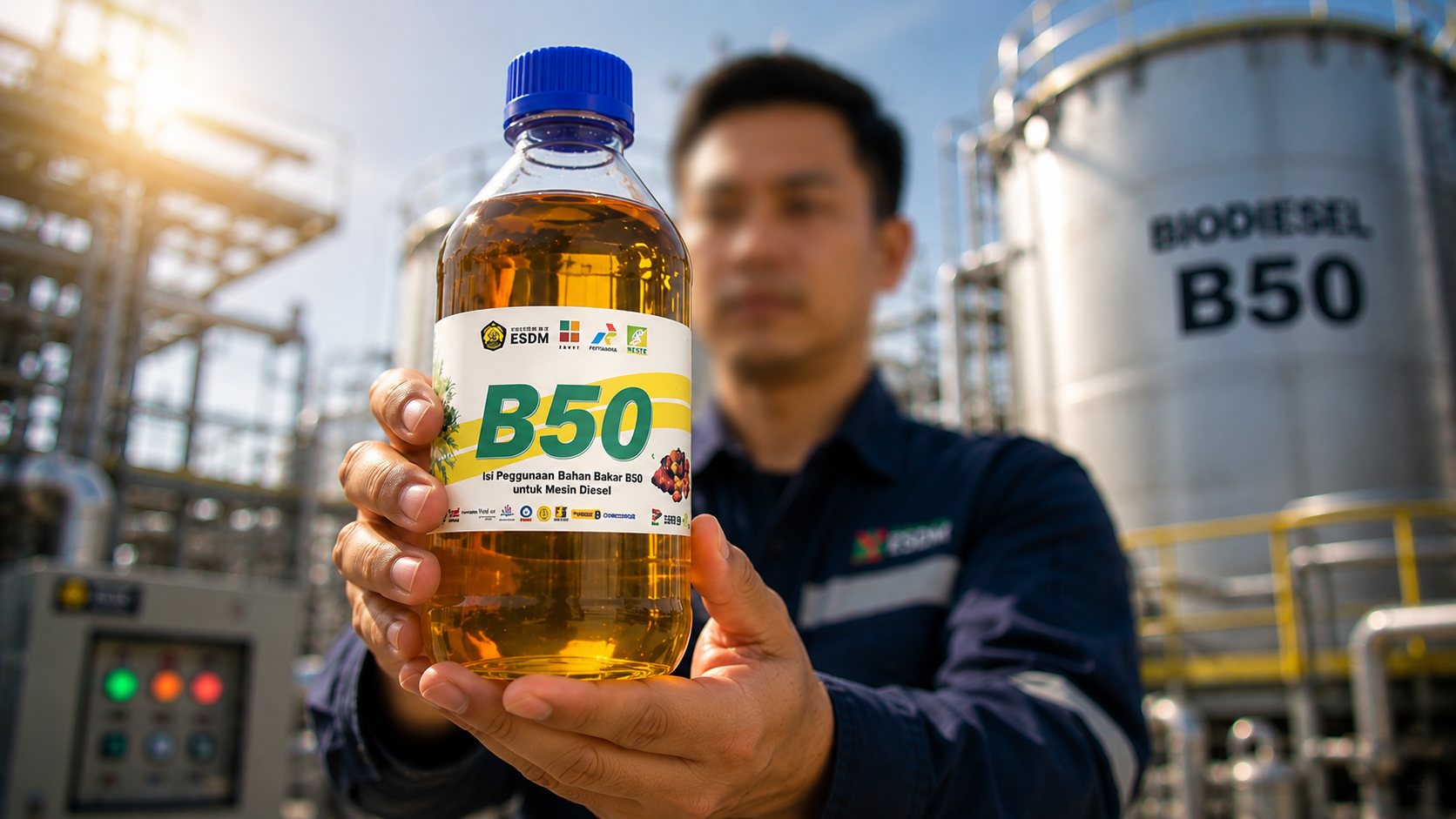
Indonesia has reached a critical landmark in its ambitious energy transition blueprint as national adoption of fifty percent palm oil-based biodiesel accelerates across the archipelago. The Ministry of Energy and Mineral Resources reported that Indonesia B50 biodiesel distribution has officially achieved a nationwide completion rate of seventy-five to eighty percent as of late August 2026. State energy enterprise Pertamina has spearheaded this deployment, pushing retail availability at filling stations to nearly ninety percent. This structural shift highlights the country's intent to reduce reliance on imported fossil fuels while expanding domestic agricultural value chains. As the designated transition window closes at the end of September, regulatory authorities are reinforcing operational monitoring and evaluation protocols to ensure full market compliance by October 1, 2026.
This bold mandate builds directly on over a decade of progressive biofuel policy evolution, advancing from earlier B20, B30, and B40 blends to establish Indonesia as the global pioneer in high-blend renewable fuel integration. Blending fifty percent Fatty Acid Methyl Ester derived from refined palm oil with conventional diesel fuel presents complex technical, logistics, and market coordination challenges. However, the government's systematic implementation schedule demonstrates that large-scale agricultural energy integration can achieve substantial operational momentum when supported by targeted policy frameworks, public-private supply chain coordination, and rigorous technical oversight.
Tracking Progress Across National Supply Channels
The execution of Indonesia B50 biodiesel distribution relies on an intricate nationwide network of fuel terminals, blending facilities, and downstream retail outlets. Coordinating the continuous movement of bulk Fatty Acid Methyl Ester from major palm oil refining hubs to regional blending facilities requires precise supply timing and real-time inventory management. Despite geographically complex maritime distribution routes across the archipelago, downstream distribution channels have demonstrated remarkable operational resilience during the multi-month ramp-up period.
State-owned energy corporation Pertamina has served as the anchor distributor for this national initiative, achieving an impressive ninety percent implementation rate across its extensive service station network. Private fuel distributors and industrial suppliers are steadily aligning their distribution logistics with the mandatory national targets. By maintaining active oversight across all regional supply hubs, energy regulators can rapidly identify localized bottlenecking, address storage tank calibration requirements, and verify fuel blending accuracy before commercial dispatch.
Strengthening Monitoring and Evaluation Frameworks
To maintain supply stability and protect engine integrity across industrial and transportation sectors, the Ministry of Energy and Mineral Resources is intensifying its monitoring and evaluation activities. Regulatory field teams are actively auditing blending ratios, storage facility conditions, and fuel specification compliance across primary distribution points. These physical inspections ensure that all commercial fuel batches strictly conform to national quality standards for flash point, viscosity, water content, and cold flow characteristics.
The active monitoring strategy extends beyond technical fuel quality audits to encompass strict regulatory enforcement timelines. The official transition phase for the mandate spans from July 1 through September 30, 2026. Beginning October 1, 2026, all fuel blending enterprises and retail outlets will be legally obligated to supply B50 fuel exclusively. Companies failing to meet mandatory blending targets or operational standards will receive formal administrative warnings, followed by structured economic and administrative sanctions taking full effect on January 1, 2027. This phased enforcement approach gives commercial operators adequate time to fine-tune blending infrastructure while establishing firm legal accountability for long-term compliance.
Economic Value Creation and Foreign Exchange Savings
Beyond its primary role in national energy strategy, the acceleration of Indonesia B50 biodiesel distribution generates immense macroeconomic benefits across the domestic economy. By substituting imported petroleum diesel with domestically produced palm oil derivatives, the nation is substantially reducing its current account deficit and strengthening overall currency stability. Official government projections indicate that full B50 implementation will deliver annual foreign exchange savings reaching approximately 170 trillion Rupiah in 2026, up significantly from the savings recorded under the previous B40 program.
Furthermore, expanding the domestic biofuel mandate creates strong upstream multiplier effects within Indonesia's agricultural sector. By diverting a larger share of raw Crude Palm Oil toward domestic energy production, the program insulates local farmers from global commodity price volatility while enhancing local processing yields. Economic assessments estimate that the value added within the palm oil industrial sector will expand from 20.92 trillion Rupiah to 23.49 trillion Rupiah under the fifty percent blend requirement. Simultaneously, the broader supply chain supports approximately 2.1 million direct and indirect jobs spanning plantation management, refining, transport logistics, and technical maintenance.
Environmental Impact and Decarbonization Targets
From an environmental standpoint, expanding Indonesia B50 biodiesel distribution serves as a cornerstone of the nation's broader strategy to achieve net-zero carbon emissions. Diesel consumption across heavy transportation, mining operations, agricultural machinery, and industrial power generation historically represents a major source of greenhouse gas emissions. Replacing half of traditional petroleum diesel volume with renewable bio-based inputs produces an immediate, measurable reduction in net carbon output.
Environmental modeling conducted by government energy analysts indicates that mandatory B50 implementation will cut national greenhouse gas emissions by approximately 44.46 million tons of carbon dioxide equivalent in 2026. This represents a major leap forward in meeting national climate commitments under international agreements. Furthermore, cleaner fuel combustion reduces localized particulate matter, sulfur oxides, and unburned hydrocarbons near major industrial centers and transport corridors, delivering tangible public health benefits alongside global climate gains.
Strategic Outlook and Future Bioenergy Innovations
As the mandatory target date of October 1, 2026 approaches, focus is shifting toward long-term operational sustainability and technical refinement. Industry stakeholders, automotive manufacturers, and energy researchers are closely observing engine wear metrics, fuel filter performance, and long-term storage stability under real-world commercial conditions. Positive initial testing across heavy mining equipment and commercial vehicle fleets has bolstered confidence, paving the way for broader industrial application without requiring expensive engine modifications.
Looking ahead, the success of the fifty percent blending program solidifies Indonesia's standing as an international leader in bioenergy innovation. The continuous enhancement of Indonesia B50 biodiesel distribution demonstrates that developing economies can successfully balance energy security, agricultural industrialization, and environmental stewardship. By establishing robust monitoring mechanisms, enforcing clear regulatory timelines, and supporting domestic value addition, the government has created a repeatable template for large-scale renewable fuel adoption that will shape national energy policy for decades to come.
Read More