





 Saturday, 17-10-26








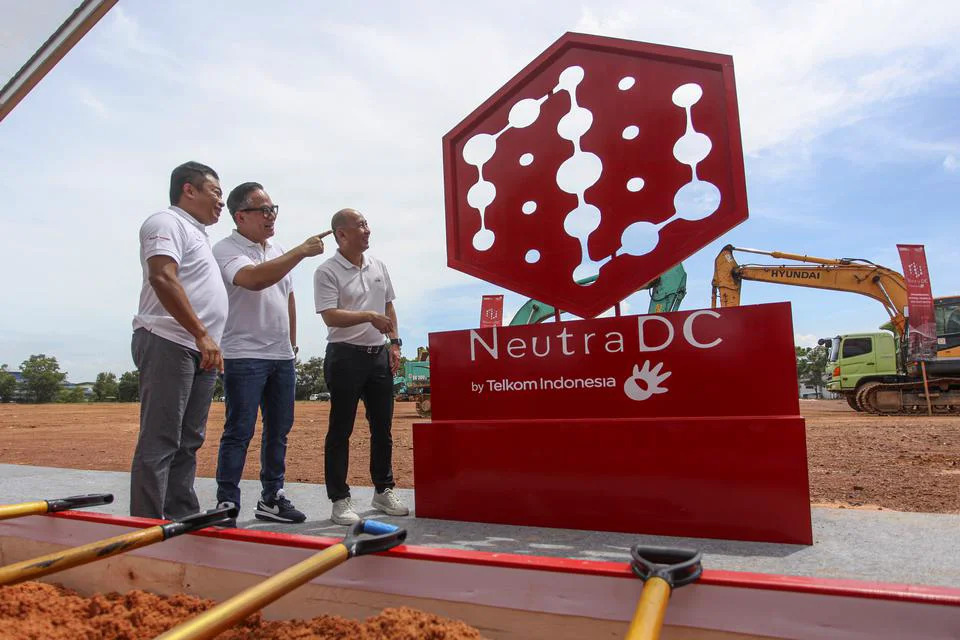
Indonesia is witnessing a surge in digital transformation, driven by rapid cloud adoption, expanding internet access, and explosive growth in digital services. As the cornerstone of the country's telecommunications infrastructure, PT Telkom Indonesia (Persero) Tbk has been actively broadening its ecosystem to meet the escalating demands of data storage and processing. Through its dedicated data center arm, PT Telkom Data Ekosistem (NeutraDC), the enterprise continues to scale its regional presence. A major milestone in this strategic initiative is the establishment of a NeutraDC data center in Manado, designed to strengthen digital infrastructure outside the primary economic corridors of Java.
Historically, data center development in Indonesia has remained heavily concentrated around the Greater Jakarta region. While this concentration served initial enterprise requirements, the shift toward real-time applications, edge computing, and localized content delivery requires a more distributed model. By placing strategic infrastructure in North Sulawesi, Telkom aims to bridge the digital divide between western and eastern Indonesia. The launch of the NeutraDC data center in Manado marks a pivotal turn toward creating a resilient, high-speed, and low-latency digital network capable of serving both national and international needs.
Strategic Importance of Manado as Eastern Indonesia's Tech Gateway
Manado, the capital of North Sulawesi, possesses a unique geographical and geopolitical advantage. Positioned at the northern tip of Sulawesi island, the city acts as a natural bridge connecting Indonesia directly to the Pacific Rim, East Asia, and North America. In recent years, global telecommunication consortiums have recognized this strategic location, selecting Manado as a key landing point for major international submarine cable systems such as the Indonesia Global Gateway and incoming trans-Pacific subsea routes.
Integrating localized data facilities with subsea landings significantly enhances network resilience. When digital traffic must travel thousands of kilometers to central facilities in Jakarta or Singapore, latency naturally increases, and network vulnerabilities multiply. Constructing a NeutraDC data center in Manado allows data to be cached, processed, and routed locally. This proximity dramatically cuts packet delay for users in North Sulawesi, Maluku, Papua, and neighboring territories. Furthermore, it creates a direct conduit for international data traffic entering Indonesia through the Pacific route, eliminating the extra hops traditionally required across Java-centric network topologies.
From a macroeconomic perspective, establishing high-performance IT infrastructure in Manado aligns with broader government directives to decentralize economic activity. As regional cities become tech hubs in their own right, local businesses no longer need to rely exclusively on capital-heavy IT setups hosted in distant metropolitan centers. Localized hosting fosters regional technology ecosystems, enabling software developers, financial institutions, and educational entities to build high-availability applications close to their user base.
Driving Regional Digital Transformation and Edge Computing
The transition toward edge computing is reshaping how enterprises manage their computational workloads. Unlike traditional cloud architectures that centralize processing in massive regional data campuses, edge computing pushes critical workloads closer to the point of data creation. This shift is critical for applications demanding microsecond-level latency, such as autonomous systems, industrial Internet of Things, telehealth applications, and high-frequency financial transactions.
In Eastern Indonesia, industries ranging from maritime logistics and mining to agriculture and local banking stand to gain immensely from localized computational resources. The deployment of the NeutraDC data center in Manado provides local enterprises with carrier-neutral facilities, offering secure colocation, managed cloud platforms, and direct interconnectivity to multiple network operators. Local governance and smart city programs also benefit directly. Municipal agencies can host public service platforms, traffic management systems, and citizen portals locally, ensuring high uptime and fast access speeds even during periods of heavy network traffic.
Moreover, regional media streaming, gaming platforms, and e-commerce platforms require edge nodes to deliver rich media content without buffering. By storing frequently accessed content at the edge, service providers save substantial backhaul bandwidth costs while improving overall user satisfaction. The Manado facility acts as an essential edge gateway, ensuring that consumers across eastern provinces experience identical performance standards to users in major metropolitan hubs.
Supporting National Sovereignty and Digital Inclusion
Data sovereignty and security have emerged as national priorities for governments globally. Regulations in Indonesia increasingly emphasize local data residency, requiring critical infrastructure providers, public agencies, and financial services to maintain operational data within national borders. Expanding data center infrastructure into regional territories reinforces national sovereignty by ensuring that critical datasets remain protected under local regulatory frameworks while maintaining geographical redundancy.
Geographical redundancy is particularly vital for disaster recovery planning. Indonesia lies along the Pacific Ring of Fire, making physical infrastructure vulnerable to natural disasters such as earthquakes and volcanic events. Relying on a single geographical cluster for data storage creates systemic risks for enterprises and government agencies. By expanding data infrastructure across a distributed geographical grid, including the NeutraDC data center in Manado, Telkom provides robust backup options. Enterprises can establish active-active or active-passive disaster recovery sites separated by hundreds of miles, securing continuity for mission-critical services.
Beyond security and compliance, digital inclusion remains a fundamental driver of Indonesia's national strategy. Empowering regional communities requires equal access to digital tools, educational resources, and economic platforms. High-speed connectivity alone is insufficient if the underlying processing infrastructure remains distant. By lowering latency and increasing bandwidth capacity in Eastern Indonesia, this new facility helps level the playing field for local entrepreneurs, small and medium enterprises, and educational institutions across the region.
Technical Specifications and Eco-Friendly Infrastructure Standards
Modern data centers are far more than concrete structures housing server racks; they are highly specialized engineering installations designed for maximum efficiency, uptime, and energy management. NeutraDC has consistently adhered to international standards across its portfolio, including Tier III and Tier IV design specifications that guarantee high levels of operational availability and fault tolerance.
The project in Manado is designed to meet strict security and efficiency benchmarks. Key technological features of the facility include:
- Redundant Power Architecture: Utilizing dual power feeds backed by uninterruptible power supply systems and modular diesel generators to maintain continuous operation during power grid fluctuations.
- Advanced Cooling Technologies: Implementing precision cooling systems, hot and cold aisle containment, and high-efficiency chillers designed to optimize Power Usage Effectiveness metrics in tropical climates.
- Carrier Neutral Connectivity: Offering an open interconnect platform where multiple telecommunication carriers, internet service providers, and cloud providers can peer directly, fostering a competitive digital marketplace.
- Physical and Cyber Security: Equipping the facility with multi-tiered physical access controls, biometric security, 24/7 CCTV surveillance, and dedicated security operation centers.
Environmental sustainability is another critical pillar in NeutraDC's expansion strategy. As data centers consume significant energy, adopting green building practices is essential for long-term viability. The Manado facility incorporates energy-efficient lighting, eco-friendly refrigerants, and smart energy monitoring tools. Additionally, Telkom is exploring partnerships with local renewable energy providers to integrate solar and hydroelectric power into the site's energy mix, reducing the facility's overall carbon footprint.
Strengthening Indonesia's Position in the Global Digital Ecosystem
NeutraDC's strategy reaches beyond domestic boundaries. By creating an interconnected mesh of hyper-scale and edge data centers across Indonesia, Singapore, and broader Southeast Asia, the organization is building a regional digital ecosystem. The Manado facility complements major hyperscale hubs in Cikarang and Batam, completing a seamless network topology that spans from Western to Eastern Indonesia.
As global tech giants, hyperscalers, and content delivery networks seek deeper integration into Southeast Asian markets, Indonesia represents one of the most dynamic growth opportunities. The strategic addition of regional hubs makes the nation far more attractive for international tech investment. Instead of viewing Indonesia as a single market centered around Jakarta, global firms can now leverage a distributed network topology that provides reliable access to over 270 million inhabitants spread across thousands of islands.
The expansion into Manado demonstrates a forward-looking approach to digital infrastructure development. By anticipating the growth of edge computing, global subsea connectivity, and regional enterprise needs, Telkom Group reinforces its position as the premier digital telecommunications operator in the region. As the project reaches full operational capacity, it will serve as a foundational pillar for Eastern Indonesia's digital evolution, propelling local businesses, empowering communities, and strengthening national connectivity for years to come.
Read More