





 Wednesday, 01-07-26








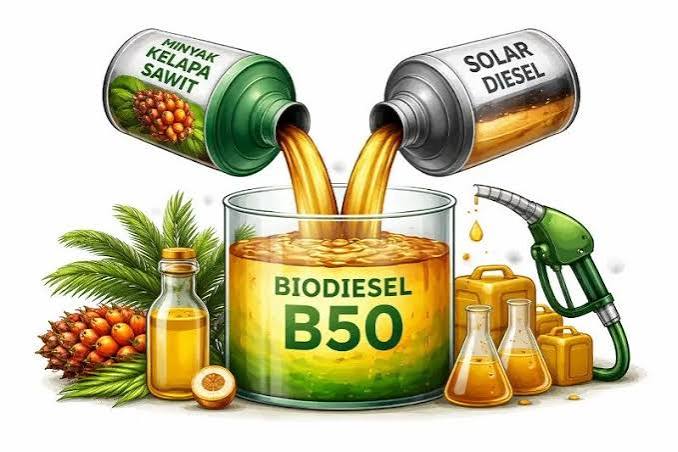
Indonesia has taken a bold step toward achieving greater energy independence through the implementation of its B50 biodiesel mandate. Beginning on July 1, 2026, the country officially requires diesel fuel to contain a blend of 50 percent palm oil based biodiesel and 50 percent conventional fossil diesel. As the world's largest producer of crude palm oil, Indonesia views this policy as much more than an energy initiative. It represents a comprehensive economic strategy designed to strengthen national resilience, reduce dependence on imported fossil fuels, create employment opportunities, and enhance Indonesia's geopolitical position.
The introduction of Indonesia B50 Biodiesel comes during a period of heightened global uncertainty. Rising geopolitical tensions, volatile oil prices, and increasing concerns over energy security have encouraged many nations to seek greater control over domestic energy resources. Indonesia's abundant palm oil production provides a unique opportunity to transform agricultural resources into strategic energy assets while supporting long term economic development.
Although the policy offers numerous advantages, it also raises important questions regarding sustainability, food security, international trade, and technical readiness across multiple industries. Understanding both the opportunities and the challenges is essential for policymakers, investors, businesses, and consumers alike. According to the executive summary, the B50 policy represents a strategic shift in Indonesia's use of domestic demand as a national economic instrument while significantly reducing dependence on imported diesel fuel.
Understanding Indonesia B50 Biodiesel
Indonesia's biodiesel journey has evolved steadily over the past decade. The country first introduced B20 before gradually advancing to B30 and B40. The latest transition to B50 marks the most ambitious biodiesel blending policy implemented anywhere in the world using palm oil as its primary feedstock.
Under the B50 mandate, every liter of diesel fuel distributed domestically consists of an equal blend of fossil diesel and Fatty Acid Methyl Ester derived from crude palm oil. Extensive road testing across transportation, mining, agriculture, maritime operations, railway systems, and electricity generation demonstrated encouraging technical performance before nationwide implementation. These successful trials provided confidence that industries could begin adapting to the higher biodiesel blend with manageable operational adjustments.
The government's decision was accelerated by changing geopolitical conditions. Global instability, particularly disruptions affecting energy markets, highlighted Indonesia's vulnerability to imported petroleum products. By expanding domestic biodiesel production, Indonesia seeks to reduce exposure to international oil price fluctuations while strengthening national energy resilience.
Why Energy Sovereignty Matters
Energy has become one of the most strategic resources in today's global economy. Nations that depend heavily on imported fuels often face increased vulnerability whenever geopolitical conflicts, supply chain disruptions, or market speculation drive prices higher.
Indonesia imports substantial quantities of diesel each year despite possessing abundant natural resources. Through Indonesia B50 Biodiesel, policymakers aim to dramatically reduce diesel imports while increasing domestic energy production.
The executive summary estimates that Indonesia could eliminate approximately five million tons of diesel imports annually. Such reductions would significantly improve national energy security while lowering exposure to unpredictable global fuel markets. This strategy also contributes to greater macroeconomic stability because lower import dependence reduces pressure on foreign exchange reserves and strengthens the national currency.
Unlike short term energy interventions, the B50 mandate represents a structural transformation. It encourages greater utilization of domestic agricultural resources while creating stronger linkages between Indonesia's farming communities, processing industries, transportation sector, and national energy infrastructure.
Economic Benefits for Indonesia
One of the strongest arguments supporting Indonesia B50 Biodiesel lies in its expected economic impact.
Foreign exchange savings are projected to reach between USD 9.18 billion and USD 10.84 billion during 2026 alone. These savings result primarily from reduced diesel imports, allowing Indonesia to preserve valuable foreign currency while improving its balance of payments.
The policy also creates a stable domestic market for crude palm oil. Farmers benefit from stronger and more predictable demand, reducing exposure to fluctuations in international commodity markets. Greater certainty encourages investment throughout the palm oil supply chain while supporting rural incomes and regional economic development.
Employment generation represents another significant advantage. The biodiesel expansion is expected to create approximately 2.5 million jobs across plantation activities together with thousands of additional positions in biodiesel processing facilities. These employment opportunities contribute directly to poverty reduction and broader economic inclusion, particularly in rural regions where palm oil cultivation remains an important source of household income.
Government finances may also improve despite continued biodiesel subsidies. Rising crude oil prices have narrowed the cost difference between biodiesel and conventional diesel, reducing subsidy requirements while maintaining policy effectiveness.
Impact on Global Palm Oil Markets
Because Indonesia accounts for a substantial share of global palm oil production, domestic policy changes inevitably influence international commodity markets.
The implementation of Indonesia B50 Biodiesel is expected to increase domestic crude palm oil consumption by an additional 3.5 to 4 million metric tons annually. Instead of exporting this volume, Indonesia will redirect more palm oil toward domestic fuel production.
As export availability declines, global supply may tighten considerably. Commodity analysts expect crude palm oil prices to remain elevated as importing countries compete for reduced export volumes. Nations heavily dependent on imported palm oil could experience higher procurement costs while food manufacturers may also face increased production expenses.
Higher palm oil prices could create new opportunities for producers in other exporting countries. At the same time, importing nations may accelerate research into alternative vegetable oils and biofuel feedstocks to reduce long term dependence on palm oil imports.
The international market implications demonstrate how a domestic energy policy can influence global commodity trade, investment decisions, and food manufacturing costs well beyond Indonesia's borders.
Corporate and Investor Perspectives
The implementation of Indonesia B50 Biodiesel extends beyond government policy and has significant implications for businesses and investors. Companies operating in the palm oil, renewable energy, logistics, automotive, and heavy equipment sectors are expected to experience both opportunities and operational challenges.
Palm oil producers are among the biggest beneficiaries. A guaranteed domestic market reduces dependence on export demand and provides greater pricing stability. This stronger market outlook encourages companies to expand production capacity, improve efficiency, and invest in more sustainable plantation practices.
Meanwhile, biodiesel manufacturers are likely to benefit from increasing production requirements. To meet the higher blending mandate, Indonesia plans to significantly expand Fatty Acid Methyl Ester production, creating new opportunities throughout the biofuel value chain.
Investors generally view the B50 policy as a positive signal because it demonstrates the government's long term commitment to renewable energy development. However, investors also remain cautious regarding potential risks associated with feedstock availability, sustainability standards, and future regulatory adjustments. According to the executive summary, while government commitment enhances market confidence, concerns remain regarding palm oil supply, food versus fuel dynamics, and technical readiness.
Geopolitical Implications
Energy has become increasingly connected with international politics. Countries that can secure reliable domestic energy supplies often enjoy greater strategic independence during periods of global instability.
The implementation of Indonesia B50 Biodiesel strengthens Indonesia's negotiating position in international trade discussions. By increasing domestic palm oil consumption, Indonesia becomes less vulnerable to trade restrictions affecting its agricultural exports.
This strategy is particularly relevant in relation to European regulations concerning deforestation and sustainable agricultural products. As domestic demand increases, Indonesia gains greater flexibility in determining how much palm oil enters international markets.
Furthermore, reducing diesel imports decreases Indonesia's exposure to supply disruptions resulting from geopolitical conflicts and volatile oil markets. Rather than relying primarily on imported fossil fuels, the country increasingly utilizes its own renewable resources to satisfy domestic energy demand.
This approach reflects a broader international trend in which governments seek greater energy independence through locally available renewable resources while improving national resilience against external economic shocks.
Sustainability and Food Security Concerns
Despite its economic advantages, Indonesia B50 Biodiodiesel also generates important environmental and social debates.
One of the primary concerns involves competition between food production and fuel production. As larger volumes of crude palm oil are directed toward biodiesel manufacturing, less palm oil becomes available for food industries. This shift may contribute to higher cooking oil prices and increased production costs for food manufacturers.
Environmental organizations also continue to express concerns regarding deforestation and land conversion associated with palm oil expansion. Without strong sustainability standards, increasing biodiesel demand could encourage further clearing of forests and peatlands, threatening biodiversity and contributing to greenhouse gas emissions.
Recognizing these concerns, policymakers have emphasized stronger implementation of sustainable palm oil certification, improved land management practices, and stricter environmental oversight. Encouraging responsible plantation management will be essential to ensuring that renewable energy development does not undermine environmental conservation.
Balancing economic growth with environmental responsibility remains one of the most important long term challenges associated with Indonesia's biodiesel expansion.
Technical and Implementation Challenges
Successfully implementing Indonesia B50 Biodiesel requires more than policy announcements. Industries throughout Indonesia must adapt their equipment, maintenance procedures, and fuel management systems.
Higher biodiesel blends can behave differently from conventional diesel. Some engines may experience increased filter clogging, greater water absorption, or compatibility issues depending on their design and operating conditions. Older vehicles and industrial machinery may require additional maintenance or component upgrades to maintain optimal performance.
Fuel quality also becomes increasingly important as biodiesel content rises. Consistent production standards, proper storage conditions, and effective distribution systems help ensure reliable engine performance across transportation, agriculture, mining, and power generation sectors.
The executive summary recommends strengthening fuel quality standards, investing in research and development, encouraging technological innovation, and supporting industries as they transition toward greater biodiesel utilization. These measures will help minimize operational risks while maintaining confidence in the nationwide B50 program.
Future Outlook
Looking ahead, Indonesia B50 Biodiesel represents an important milestone rather than the final destination of Indonesia's renewable energy transition.
As technology advances, Indonesia may continue expanding biofuel innovation by exploring alternative feedstocks alongside palm oil. Research involving waste cooking oil, algae, agricultural residues, and second generation biofuels could diversify renewable fuel production while reducing pressure on palm oil resources.
The success of B50 may also encourage greater investment in renewable energy infrastructure, sustainable agriculture, and green industrial development. International investors increasingly recognize that energy security, environmental sustainability, and economic resilience are becoming closely interconnected.
For Indonesia, maintaining this momentum will require continuous policy evaluation, technological innovation, environmental protection, and effective collaboration between government agencies, private companies, research institutions, and local communities.
If implemented responsibly, the B50 mandate has the potential to strengthen Indonesia's position as a global leader in renewable energy while supporting long term economic development.
Conclusion
The launch of Indonesia B50 Biodiesel marks one of the most ambitious renewable energy initiatives undertaken by any palm oil producing nation. By combining domestic agricultural resources with national energy policy, Indonesia seeks to reduce fossil fuel imports, improve energy security, strengthen rural economies, and enhance resilience against global market volatility.
The policy offers substantial economic benefits through foreign exchange savings, employment creation, increased domestic demand for palm oil, and stronger investor confidence. At the same time, it presents significant challenges related to sustainability, food security, technical adaptation, and international trade.
Ultimately, the long term success of Indonesia B50 Biodiesel will depend on balancing economic growth with environmental responsibility. Strong governance, continuous innovation, rigorous sustainability standards, and close cooperation between public and private sectors will be essential for ensuring that the program delivers lasting national benefits while contributing to the global transition toward cleaner and more secure energy systems.
Read More