





 Wednesday, 01-07-26








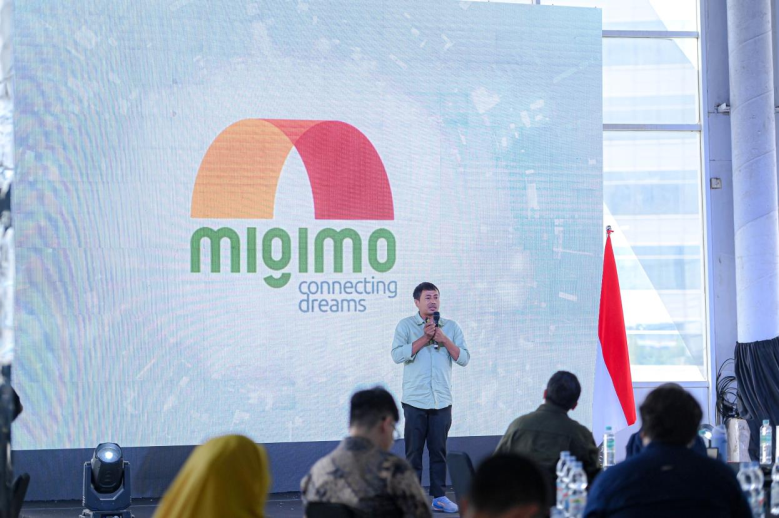
Migimo is becoming a noteworthy example of how a digital cooperative startup can grow from a social mission into a nationally competitive business model. The West Java based startup recently advanced to the Practitioner Training stage of PIDI DIGDAYA x Hackathon 2026 after placing among the top 480 teams out of roughly 800 applicants from across Indonesia. The provincial government described Migimo as a cooperative platform serving Indonesian Migrant Workers in 86 countries through two main services, Economic Sharing Remittance and Remote Business Ownership.
The story is important because Migimo is not simply another app with a nice pitch. It represents a digital cooperative startup that tries to solve a real economic problem for migrant workers, namely how to turn cross border labor into long term ownership and value creation. In a market where many startups chase convenience, Migimo is pursuing structural change. That makes it a useful case study for anyone watching Indonesia’s cooperative innovation, digital finance, and social entrepreneurship space.
Why Migimo Matters In Indonesia's Innovation Scene
Migimo stands out because it combines three ideas that are rarely connected in a single business: cooperative ownership, migrant worker empowerment, and digital cross border services. According to the West Java government, the startup was founded by Tata Sugiarta, a former Indonesian Migrant Worker who worked in Japan from 2014 to 2017. He now leads Migimo alongside Dadan Syarifudin and Teguh Ari Prianto, and the company’s stated focus is digitalizing export services with an emphasis on cross border transactions.
That background matters. A founder who has personally experienced migrant worker life is more likely to understand the practical problems users face, from remittance leakage to the lack of accessible business ownership after returning home. Migimo’s cooperative structure is designed to address that gap by making members part of the economic value chain instead of leaving all transaction benefits in the hands of outside operators. For a digital cooperative startup, that is not just a social message. It is the business model itself.
The company’s West Java origin is also relevant. The provincial article frames Migimo as part of a broader ecosystem of innovation and socially useful startups emerging from the region. West Java has been trying to build a reputation as a hub for practical digital solutions, and Migimo fits that narrative because it connects local entrepreneurship with a national labor issue and a global cross border payments opportunity.
How The Digital Cooperative Startup Migimo Works
Migimo’s model is built around two services. The first is Economic Sharing Remittance, or ESR. The West Java government explains that through ESR, part of the profit generated from cross border remittance activity is redirected back to cooperative members rather than being captured only by foreign remittance operators. The second is Remote Business Ownership, or RBO, which allows Indonesian Migrant Workers to own productive business interests in Indonesia without returning home.
This is where the digital cooperative startup idea becomes compelling. A standard remittance platform helps users send money. Migimo tries to do more by linking the remittance flow to ownership and economic participation. That is a much deeper proposition because it turns a financial transaction into a pathway toward asset building. For migrant workers, especially those who spend years abroad, that shift could be more meaningful than a lower transfer fee alone.
The platform’s legal and operational progress also supports its credibility. The provincial article says Migimo has already received a registered trademark and copyright protection from Indonesia’s intellectual property office. The English article adds that as of May 2026 the platform had recorded a gross transaction value of IDR 136 million, more than 100 members, and 86 prospective members awaiting verification. It also said Migimo’s network reached 27 districts and cities in West Java and even extended to Pennsylvania in the United States.
Those numbers may still be early stage in startup terms, but they matter because they show evidence of actual use rather than a purely conceptual pitch deck. A digital cooperative startup usually needs both trust and transaction volume before it can prove that the cooperative model works in a tech driven environment. Migimo appears to be moving in that direction.
Why PIDI DIGDAYA x Hackathon 2026 Is A Big Deal
Migimo’s qualification for PIDI DIGDAYA x Hackathon 2026 gives the company more than visibility. It places the startup inside a national innovation program backed by Bank Indonesia, the Financial Services Authority, the Indonesian Payment Systems Association, APUVINDO, and the Indonesian Banking Development Institute. The official PIDI site describes the hackathon as a structured national program that combines training and competition to produce digital talent and implementable solutions with real economic impact.
The challenge structure matters because it is not just a pitch contest. PIDI DIGDAYA x Hackathon 2026 includes training, submissions, semifinals, practitioner training, capstone work, and mentoring. In other words, teams are expected to refine their solutions over time and demonstrate readiness for implementation. That kind of environment is well suited to a digital cooperative startup like Migimo, which needs not only good branding but also sound operational discipline and product maturity.
Migimo’s advancement to the top 480 from more than 800 participants suggests that its idea resonated with the selection process. The West Java article says the team must now complete confirmation and re registration before entering intensive training. That is a meaningful milestone because it shows Migimo is moving from concept validation toward deeper scrutiny by judges, mentors, and industry partners.
Migimo Has Already Built A Track Record
One reason Migimo has attracted attention is that this is not its first appearance on a national stage. The provincial reporting says the startup previously entered the Top 7 Startup Lab Jakarta in the Lunch & Launch 2025 Garuda Spark Komdigi program, won Best Impact & Sustainability at Venture Connect 2025 Block71, and made the Top 38 Startups Eligible for Funding in ICEFF 2025 under the Ministry of Creative Economy.
That track record helps explain why Migimo is being watched closely. A startup that consistently appears in impact oriented programs signals that its proposition is not only commercially relevant but also socially legible. In practical terms, that can make it easier to attract partners, mentors, and institutional supporters, especially when the business model touches on remittance, migrant worker welfare, and cross border transactions.
Migimo also seems to understand that trust is central to its growth. The company has pursued intellectual property protection and has built relationships with public and private institutions, including an audience with the Ministry of Migrant Worker Protection and a non disclosure agreement with Bank Mandiri for QRIS Cross Border API integration, according to the English provincial article. For a digital cooperative startup, those kinds of formal relationships can be a major signal of seriousness.
What Migimo Says About The Future Of Cooperative Innovation
Migimo is a useful reminder that cooperatives are not limited to traditional, offline business structures. The provincial article explicitly notes that as a legal cooperative under Indonesia’s cooperative framework, Migimo shows that the cooperative model can adapt and compete in the national digital innovation ecosystem. That point is easy to miss, but it may be the most important part of the story.
The digital cooperative startup approach is significant because it blends collective ownership with modern product design. Instead of asking whether cooperatives can survive in a digital economy, Migimo asks a more ambitious question: can cooperatives become a vehicle for digital inclusion, financial participation, and long term wealth creation for workers who are usually treated as temporary contributors to the economy? The answer is still unfolding, but Migimo is clearly trying to prove that the model can scale.
There is also a broader policy implication. If startups like Migimo continue to gain traction, regional governments may begin treating cooperative technology as a serious part of their innovation strategy, not just a social welfare initiative. That could open the door to more support for platforms that connect labor, finance, and entrepreneurship in one system. For West Java, Migimo strengthens the province’s position as a place where innovation can have both commercial and social impact.
The Road Ahead For Migimo
The next stage for Migimo will likely be about execution, not just recognition. Practitioner Training will test whether the digital cooperative startup can sharpen its product, prove its business logic, and convince partners that its model is scalable. If it performs well, the company could become a reference point for cooperative innovation in Indonesia. If it stalls, it will still have contributed an important idea to the national startup conversation.
What makes Migimo worth watching is not only that it is moving forward in a national hackathon. It is that the startup is trying to redesign the relationship between migrant workers, remittances, and ownership. That is a much bigger ambition than app development. It is an attempt to reshape how economic value returns to the people who create it. For a digital cooperative startup from West Java, that is an unusually strong and timely proposition.
Read More