





 Wednesday, 01-07-26








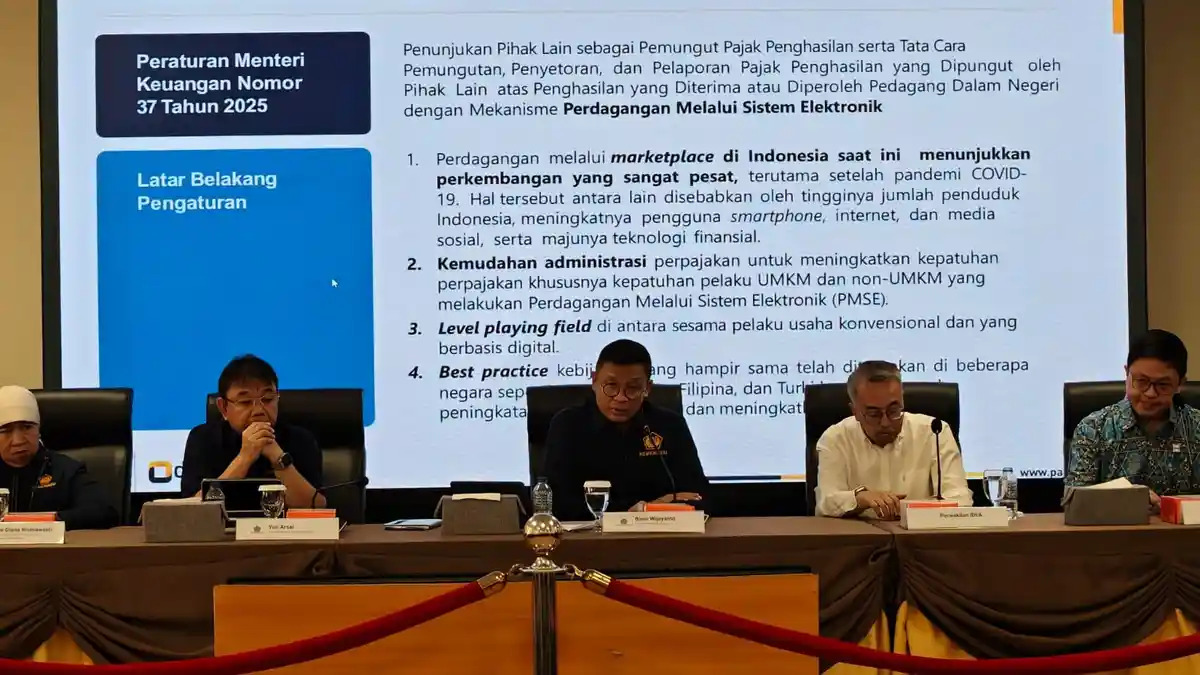
Indonesia is entering a new phase in digital taxation, and the country’s biggest online selling platforms are now at the center of the story. On 1 July 2026, the Directorate General of Taxes officially appointed four major marketplace operators, Tokopedia, Shopee, Lazada, and Blibli, to act as collectors of income tax under PPh Pasal 22. The marketplace tax collection rule will take effect on 1 August 2026, according to DDTC’s report on the announcement. The policy is not described by the tax authority as a new tax, but as a new collection mechanism for sellers using digital platforms.
The move matters because it changes who handles compliance. Instead of relying mainly on sellers to calculate and pay taxes independently, the government is asking marketplaces to collect, remit, and report the tax at the source. That approach has been under discussion for months and was already being framed by the tax office as a simplification measure for digital commerce. In practice, the marketplace tax collection policy will shape how online sellers, platform operators, and tax officials interact every day.
How The Marketplace Tax Collection Rule Works
The core of the policy is straightforward. Under PMK 37/2025, the tax collected through marketplaces is PPh Pasal 22 at a rate of 0.5 percent from gross turnover, excluding VAT. The Directorate General of Taxes has explained that marketplaces are appointed as the collection point for income earned by domestic merchants through electronic commerce. The tax office has also said the mechanism uses a collect at the source model, which is meant to improve efficiency, transparency, and accountability.
This is why the marketplace tax collection policy is being presented as an administrative reform rather than a brand new levy. For taxpayers using the standard UMKM final tax scheme, the 0.5 percent collection can function as settlement of their final tax obligation. For taxpayers whose income is not subject to final tax, the collection can be used as a tax credit in the annual return. The government’s argument is that the tax is already embedded in the existing system, only the collection channel is changing.
DJP has also clarified that not every seller will be captured in the same way. Individual merchants with annual turnover below Rp500 million remain outside this scheme. For merchants who fall under the relevant tax rules, the marketplace tax collection mechanism is designed to reduce manual filing friction and create a cleaner audit trail. That is one reason the government has repeatedly said the policy is aimed at simplification, not punishment.
Why The Government Says This Is Not A New Tax
One of the biggest public concerns has been whether marketplace tax collection means online sellers are being hit with a new burden. The tax authority says no. DJP has repeatedly explained that the policy does not create a new tax object. Instead, it changes the method of collection for an existing income tax obligation. In its own materials, DJP says the 0.5 percent rate is not a new tax and is aligned with the existing final tax framework for qualifying small businesses.
That distinction is important because Indonesia has already seen confusion around marketplace taxation before. The phrase marketplace tax collection can sound like a fresh levy to sellers who are already managing thin margins, volatile traffic, and platform fees. By calling it a collection reform, the government is trying to reassure merchants that the fiscal burden is not being doubled. In official guidance, DJP also explains that where the seller is subject to non final tax treatment, the amount withheld can be credited later in the annual tax return.
The policy also reflects a broader shift in tax administration. Indonesia has been trying to bring more digital activity into the formal tax net without making compliance overly complex. Reuters reported earlier in the policy process that the rule was aimed at improving supervision of the shadow economy and bringing online vendors who avoid filing into a clearer compliance system. In that context, marketplace tax collection is as much about visibility as it is about revenue.
Which Platforms And Sellers Will Be Affected First
The first platforms named in the public announcement are Tokopedia, Shopee, Lazada, and Blibli. DDTC reported that the tax office selected these large operators because of their scale, transaction volume, administrative readiness, and technical capacity. DJP chief Bimo Wijayanto said the appointment also considered whether each platform already had a strong escrow account structure and the ability to handle electronic collection and reporting. That means the policy is being rolled out first where the system is most mature.
Reuters had earlier reported that the broader proposal would affect the country’s main e-commerce operators, including TikTok Shop, Tokopedia, Shopee, Lazada, Blibli, and Bukalapak. Reuters also reported that the policy could apply to sellers with annual turnover between Rp500 million and Rp4.8 billion, while those below the lower threshold remain exempt. The official rule in Indonesia’s tax guidance is therefore not a blanket tax on all sellers, but a targeted marketplace tax collection framework aimed at merchants already inside the relevant tax bracket.
This distinction is crucial for understanding the real impact. The typical fear is that every online seller will suddenly lose 0.5 percent of revenue. In reality, the policy is more nuanced. The smallest individual merchants are protected by the turnover threshold, while larger or already taxable merchants are expected to comply through the marketplace system. The result is a more segmented compliance structure, which is exactly how marketplace tax collection is intended to function.
There is also a data dimension that should not be overlooked. Reuters reported that Tokopedia alone had around 12 million sellers and handled transactions worth Rp249 trillion in 2023. When a platform that large becomes part of the tax collection chain, the reporting infrastructure becomes just as important as the tax rate itself. For the tax authority, that data can improve oversight. For sellers, it can also mean less ambiguity about whether obligations have been met.
What Marketplace Tax Collection Means For Online Sellers
For sellers, the immediate effect is administrative rather than philosophical. Many merchants will simply see the tax deducted at the platform level instead of paying it separately later. That may feel unfamiliar, but it also reduces the risk of missed reporting and last minute compliance problems. DJP has argued that this is one of the main benefits of marketplace tax collection, especially for small and medium enterprises that do not have a dedicated accounting team.
Still, online sellers will need to pay attention to documentation. DJP says merchants must provide key information such as NPWP or NIK and correspondence address, and those with turnover up to Rp500 million must submit a statement confirming their annual turnover status. That means compliance will not disappear. It will simply move earlier in the transaction chain, closer to the platform and farther from the end of the year tax return scramble.
For larger sellers, marketplace tax collection may also change financial planning. A small percentage withheld on each sale sounds modest, but it affects cash flow timing. Sellers who already operate near the threshold between final tax and normal tax treatment will need clearer internal records so they can match withheld amounts with their annual tax obligations. That is especially relevant for merchants who rely on frequent working capital turnover.
There is a competitive angle too. The government says the reform is partly about fairness between online and offline businesses. Traditional retailers often point out that digital sellers can operate with lower overhead and fewer fixed costs, even when their sales volumes are substantial. By standardizing collection through marketplaces, the government is trying to reduce that perceived imbalance. Whether the public accepts that logic may depend on how smoothly the rollout happens after 1 August 2026.
Why The Policy Matters For Indonesia's Digital Economy
The larger story is not just about a tax deduction. It is about how Indonesia wants to manage its expanding digital economy. Marketplaces have become essential infrastructure for trade, especially for small sellers that may never open a physical store. Once those platforms also become part of the tax collection system, the boundary between commerce and compliance becomes much thinner. That is why marketplace tax collection is likely to remain a major policy keyword throughout 2026.
The government’s message is that digital trade should not sit outside formal fiscal systems. At the same time, it wants to avoid creating friction that could discourage entrepreneurship. That balance is difficult. Too much bureaucracy would hurt small businesses. Too little oversight would leave revenue and fairness concerns unresolved. The 0.5 percent model, with its exemptions and platform based collection, is the government’s attempt to thread that needle.
If the implementation is smooth, marketplace tax collection could become a template for other forms of digital compliance in Indonesia. If it is confusing, the policy could generate the same resistance that earlier e-commerce tax ideas faced years ago. For now, the official direction is clear. The tax office wants major marketplaces to help gather tax at the source, starting 1 August 2026, and it is preparing the administrative machinery to do it.
In practical terms, sellers should treat this as an operational change, not a rumor. Marketplaces should treat it as a systems upgrade, not a side project. And policymakers should treat the rollout as a test of whether Indonesia can modernize tax collection without slowing down digital commerce. That is the real meaning behind marketplace tax collection, and it is why the policy deserves close attention well beyond the first day it takes effect.
Read More