





 Wednesday, 01-07-26








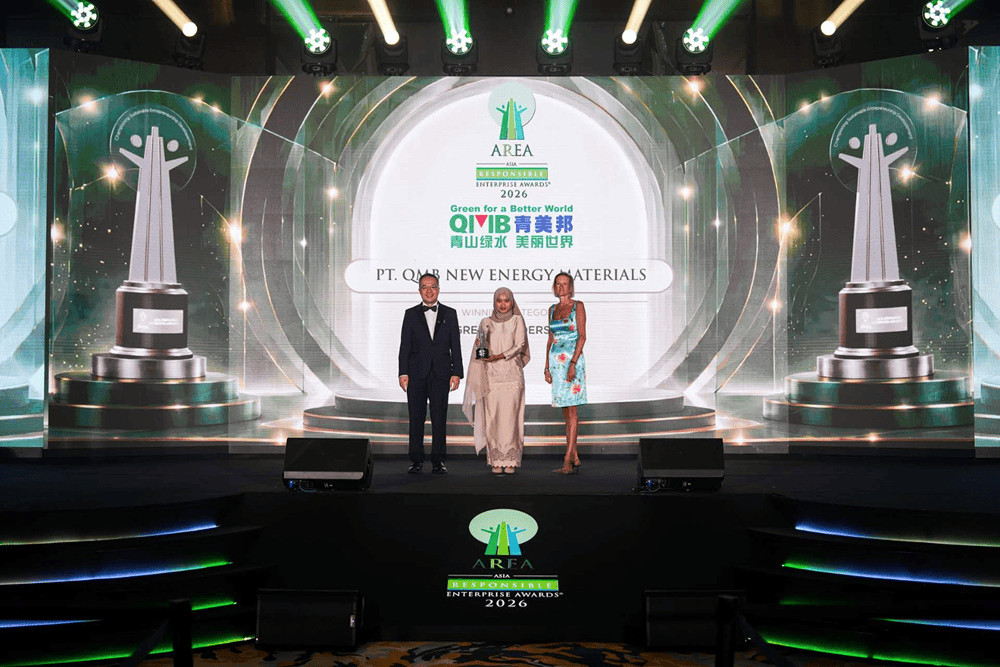
PT QMB New Energy Materials has emerged as a notable example of how industrial growth and social responsibility can move in the same direction. In accessible reporting on the story, the company received TOP CSR Awards 2026 Corporate Level STAR 4 for its education focused CSR initiative, Desa Percontohan Bahodopi: Akselerasi Kualitas dan Akses Pendidikan Berkelanjutan. Its President Director, Peng Yaguang, also received the TOP Leader on CSR Commitment 2026 recognition. The award matters because TOP CSR Awards 2026 is positioned as one of Indonesia’s most prominent CSR assessment platforms, with judging that emphasizes ISO 26000, ESG, and the alignment of CSR with business strategy.
Why QMB New Energy Materials Stood Out At TOP CSR Awards 2026
The strongest signal behind this recognition is not simply that QMB won an award. It is the type of program that won. The company was recognized for a Bahodopi education initiative that focuses on improving access and quality, not for a one off charitable donation. In the reported remarks from the company, the program was framed as a long term effort to invest in people, especially in the industrial ring around Morowali, Sulawesi Tengah. That positioning fits the direction of TOP CSR Awards 2026, which evaluates whether CSR programs are integrated into a company’s wider strategy and whether they create long term value instead of short term publicity.
TOP CSR Awards 2026 itself is structured to reward more than basic compliance. The event uses a Star 1 to Star 5 system, with Star 5 as the highest rating, and it also includes a special category for Top Leader on CSR Commitment. The judging framework, according to TopBusiness, looks at ISO 26000 social responsibility principles, ESG considerations, and the link between CSR and competitiveness. In other words, the award is designed to identify companies that treat sustainability as a management issue, not a decorative campaign. That context makes QMB’s STAR 4 result meaningful, because it suggests the company’s CSR system is considered strong, organized, and relevant to stakeholder needs.
For QMB, the Bahodopi education program appears to have worked because it addressed a local reality that industrial companies often overlook. When a large operation grows near a community, public expectations change quickly. Residents want jobs, but they also want schools, skills, and a pathway for the next generation. QMB’s award narrative shows that the company has tried to place education at the center of that relationship. By doing so, it moved CSR away from a transactional model and toward a shared value model, which is exactly the kind of shift many CSR judges now want to see. That is one reason the phrase TOP CSR Awards 2026 has become closely associated with sustainable business discussions this year.
What The Bahodopi Education Program Reveals About Local ESG Strategy
To understand why this recognition matters, it helps to understand what QMB is and where it operates. Official company materials describe PT QMB New Energy Materials as a joint venture involving GEM, Qingshan, Brunp Recycling, ECOPRO, Hanwa, and Yibin Libao, with operations based in the IMIP industrial area in Bahodopi, Morowali, Central Sulawesi. The company is focused on producing new energy nickel cobalt manganese raw materials from laterite nickel ore, and it positions itself around green, low carbon, and sustainable development. That local and industrial footprint explains why education oriented CSR can carry strategic weight there.
The company’s broader industrial profile also shows why sustainability language matters in this case. In its official profile document, QMB says the project was designed with a “technology, intelligence, and green” concept, uses advanced third generation HPAL technology, and aims to produce low carbon raw materials for the global new energy battery industry. The document also states that the project covers about 1,070 hectares, carries total investment of nearly US$1.6 billion, and targets annual output of 96,000 tons of nickel metal after full completion. These details matter because a company with that scale of operations has a much higher responsibility to prove that its growth benefits surrounding communities, not just shareholders.
That is where the Bahodopi education program becomes more than a corporate gesture. In industrial regions, school access, learning quality, and youth readiness are often the first pressure points when communities start to feel the impact of expansion. A company that responds with a structured education initiative is doing more than meeting a checklist. It is building the social infrastructure that makes long term industrial presence more acceptable. QMB’s award story suggests that the company understands this reality and has tried to respond with a program that is tied to place, not just to branding. That is one of the clearest reasons TOP CSR Awards 2026 is an important keyword for this story.
The company’s own ESG language reinforces that interpretation. In official materials, QMB emphasizes a commitment to clean production, recycling, energy saving, emissions reduction, and a green and intelligent manufacturing approach. It also says the company is working within a human centered philosophy that connects industry, technology, and culture with green development. When that kind of business philosophy is matched with an education focused CSR program, the result is a more coherent ESG story. The award is therefore not just about one winning project. It is about whether the company can show consistency between its industrial model and its social commitments.
Why The Win Matters For Indonesia's Industrial Growth Narrative
The QMB case arrives at a moment when Indonesian CSR is being judged more strictly. TopBusiness describes TOP CSR Awards 2026 as a learning platform as well as a recognition platform, and it notes that the event draws participants from many sectors, including private companies, state owned enterprises, and regional enterprises. That breadth matters because it shows the market is treating CSR and ESG as mainstream business disciplines rather than niche reputational tools. For companies operating in heavy industry, this raises the bar. They are expected to demonstrate measurable social impact, credible governance, and a visible connection between business performance and community outcomes.
QMB’s recognition fits that trend neatly. The company was not only acknowledged for the CSR program itself, but also for leadership commitment through Peng Yaguang’s award. That dual recognition matters because strong CSR systems usually need both operational discipline and executive sponsorship. In the reporting on the award, QMB’s ESG supervisor La Ode Muhamad Syawaluddin said the program reflects a collective effort to align business growth with social value, and he emphasized the belief that investing in human quality is the best investment for the future of the region. That message is important because it frames education not as an expense, but as a development multiplier.
There is also a broader narrative here about how nickel and battery related industries are expected to behave in Indonesia. Large industrial projects bring jobs and infrastructure, but they also draw scrutiny over environmental and social impacts. In that environment, CSR cannot remain a side activity. It has to be part of the business case for operating. QMB’s TOP CSR Awards 2026 result sends a signal that the company is trying to meet that expectation through a structured local program in Bahodopi, while also keeping its low carbon industrial story intact. For investors, policymakers, and local stakeholders, that combination is more persuasive than a standalone CSR campaign.
The practical lesson from this story is simple. If an industrial company wants durable legitimacy, it has to prove that its presence improves life in the surrounding area. QMB’s education initiative in Bahodopi, together with its STAR 4 result in TOP CSR Awards 2026, suggests that the company is trying to do exactly that. It is not a complete answer to every challenge around industrial development, but it is a meaningful example of how social investment can be tied to business strategy. That is why the story resonates beyond a single trophy. It reflects the direction Indonesian business is moving toward, where sustainability, community development, and competitiveness are increasingly judged together.
Read More