





 Thursday, 18-06-26








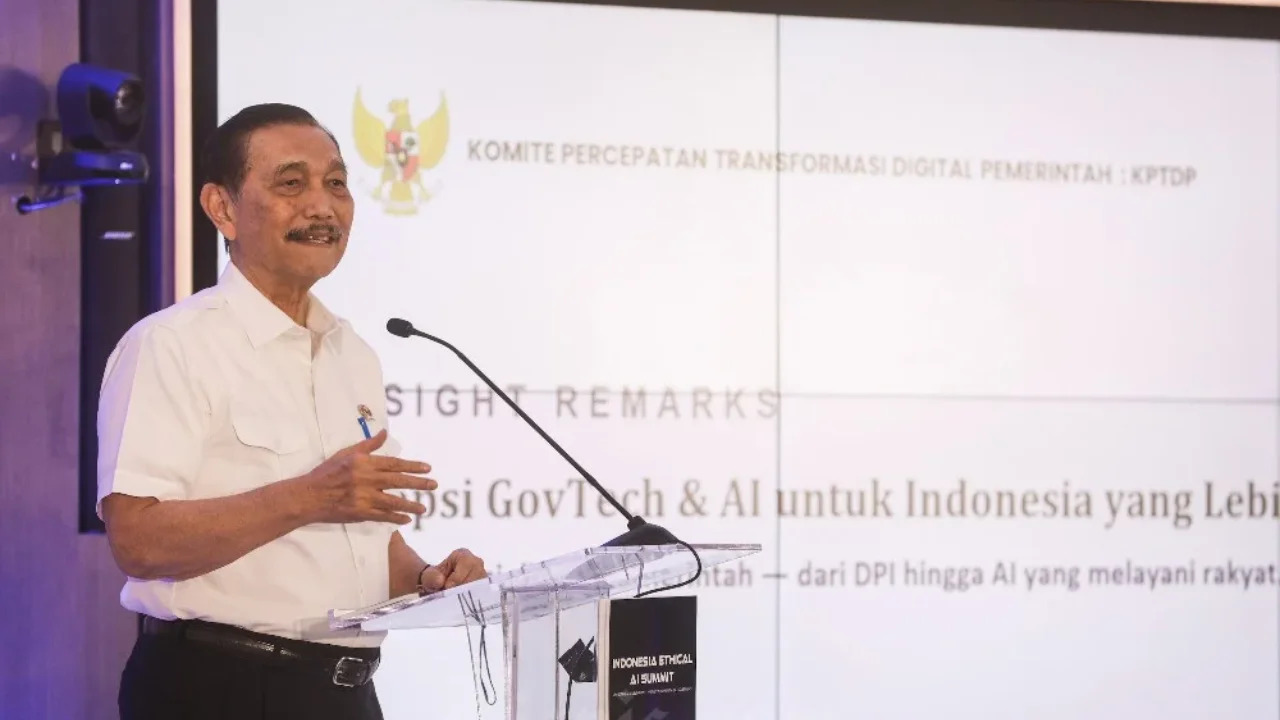
Indonesia is moving from AI enthusiasm to AI capacity building, and the latest signal comes from Luhut Binsar Pandjaitan’s plan to gather young talent into what is being described as a brain factory. The idea is simple but ambitious: create a structured pipeline that can identify, train, and deploy young Indonesians so they can help accelerate national AI development. This fits a broader national pattern. Komdigi has already launched the AI Talent Factory, a government backed program designed to build AI talent through collaboration between government, academia, and industry. Luhut’s framing adds a more strategic, production oriented layer to that effort.
The policy timing matters. Indonesia is simultaneously expanding its AI governance framework, strengthening digital government systems, and pushing for greater efficiency across the public sector. Luhut has recently said digitalization and AI based government systems could reduce leakage and improve efficiency at large scale, while Komdigi has been promoting formal AI talent development and national AI regulation. Put differently, the AI Talent Factory concept is not appearing in isolation. It sits inside a much wider push to make AI a usable national capability rather than a vague future promise.
Why The AI Talent Factory Matters Now
The biggest reason the AI Talent Factory story matters is that Indonesia’s digital economy is no longer short on ambition. What it still lacks is enough specialized talent to turn that ambition into systems, products, and public value. In late 2025, Komdigi officially launched the AI Talent Factory as a national program focused on practical, real world use cases and collaboration among government, universities, and industry. The stated aim was to produce AI talent that can do more than consume technology. It wants people who can build, implement, and create AI solutions relevant to national needs.
Luhut’s newer framing adds urgency to that agenda. ANTARA reported earlier that he had already recruited young Indonesians to create domestically developed AI, and that those recruits were preparing to present their work to President Prabowo. That earlier statement makes the current brain factory idea look less like a slogan and more like the next stage of a continuing talent strategy. The point is not merely to teach AI literacy. It is to produce a working cohort of builders who can support Indonesia’s digital sovereignty.
This matters because AI ecosystems do not scale on policy language alone. They scale when there is enough human capital to train models, manage data, design applications, evaluate risks, and integrate tools into existing institutions. Komdigi’s own AI Talent Factory materials say the program is meant to strengthen AI sovereignty and innovation through a sustained talent pipeline. That aligns closely with Luhut’s concept of a brain factory, which suggests a more industrial view of talent development. In that view, talent is not a side project. It is the raw material.
How The Brain Factory Fits Indonesia's Digital Strategy
The AI Talent Factory concept fits neatly into Indonesia’s broader digital state agenda. Luhut has repeatedly pushed the government toward AI supported digitalization in social protection, commodity governance, and public administration. In June 2026, he said integrated digital systems could save the state trillions of rupiah by reducing leakage and making corruption harder. Reuters and local reports also showed the government is using AI and integrated data systems across ministries and agencies, which means the need for AI capable personnel is immediate, not abstract.
That creates an important policy link. If government wants to deploy AI across bansos, government technology, critical minerals, and other public systems, it needs people who understand the technical and operational details. A brain factory can serve that need by becoming the pipeline between classroom learning and state capability. The talent has to know more than coding. It also has to understand data quality, public policy, security, ethics, and the realities of large scale system deployment.
The timing is also reinforced by Komdigi’s recent international collaboration. In April 2026, the ministry and JICA formalized cooperation on the Next Gen AI Talent Factory, which is meant to strengthen the program in a more structured and sustainable way. That shows Indonesia is not trying to build AI capability in a closed loop. It is trying to learn, adapt, and scale through partnerships. Luhut’s brain factory idea can be read as the political and strategic umbrella above those institutional efforts.
There is also a practical economic angle. Indonesia’s digital economy is projected to keep expanding, and government statements have repeatedly tied AI development to productivity gains and competitiveness. A country that wants to host more data centers, more cloud services, and more AI supported public systems needs domestic specialists who can operate across the stack. The AI Talent Factory is therefore relevant not just to the tech sector, but to labor markets, education reform, and industrial upgrading.
What Young Talent Stands To Gain
For young Indonesians, the AI Talent Factory model offers something more useful than generic training. It offers proximity to real problems. Komdigi’s program is built around industrial and public sector use cases, which means participants are expected to solve tangible challenges rather than work on theory alone. That is important because many AI training programs fail when they stop at certificates and never connect learners to deployment environments. Indonesia appears to be trying to avoid that trap.
A well designed brain factory can also create credibility in the labor market. If a young developer, analyst, or engineer has worked on a nationally recognized AI program, that experience is more valuable than a generic course badge. It signals that the person has been exposed to real governance constraints, practical use cases, and team based problem solving. For employers, that is exactly the kind of experience that reduces hiring risk. For the state, it builds a deeper bench of people who can move into government, startups, or established companies.
There is a second benefit as well: retention. One of the biggest problems in many emerging markets is not a lack of talent, but the migration of talent into overseas markets or into roles unrelated to national priorities. A visible and well funded AI Talent Factory can help keep promising people engaged at home by giving them a clear path to meaningful work. Luhut’s framing of a brain factory suggests exactly that kind of retention strategy, where young people are not only trained, but also connected to national missions.
The Real Test Is Execution, Not Headlines
The strongest challenge for the AI Talent Factory will be execution. Indonesia already has the rhetoric, the institutional interest, and the political attention. What it still needs is a durable mechanism that can consistently identify talent, teach relevant skills, match graduates with real projects, and keep the program updated as AI technology evolves. Komdigi’s program description shows the right design principles are in place. The harder question is whether those principles can survive scale.
That challenge is not unique to Indonesia. Around the world, governments often announce talent initiatives that look impressive at launch but lose momentum because they are not tied to industry demand or public sector adoption. What makes Indonesia’s case more interesting is that the demand side seems stronger than usual. The government is already integrating AI into digital governance and public administration. If the supply side can keep pace, the country has a realistic chance of converting training into national capability.
The biggest strategic opportunity is that the AI Talent Factory can become a bridge between policy and implementation. Luhut’s brain factory idea points to a future where talent development is treated like infrastructure. That is the right instinct. AI is not only about models, chips, and data centers. It is also about people who can make those systems useful in the real world. Indonesia seems to understand that now more clearly than ever.
If the program is implemented well, the payoff could be significant. Indonesia would not just have more AI users. It would have more AI builders, public sector reformers, product designers, and system integrators. That is the real meaning of a brain factory. It is not a slogan about intelligence. It is a production line for national capability.
Read More