





 Monday, 21-09-26








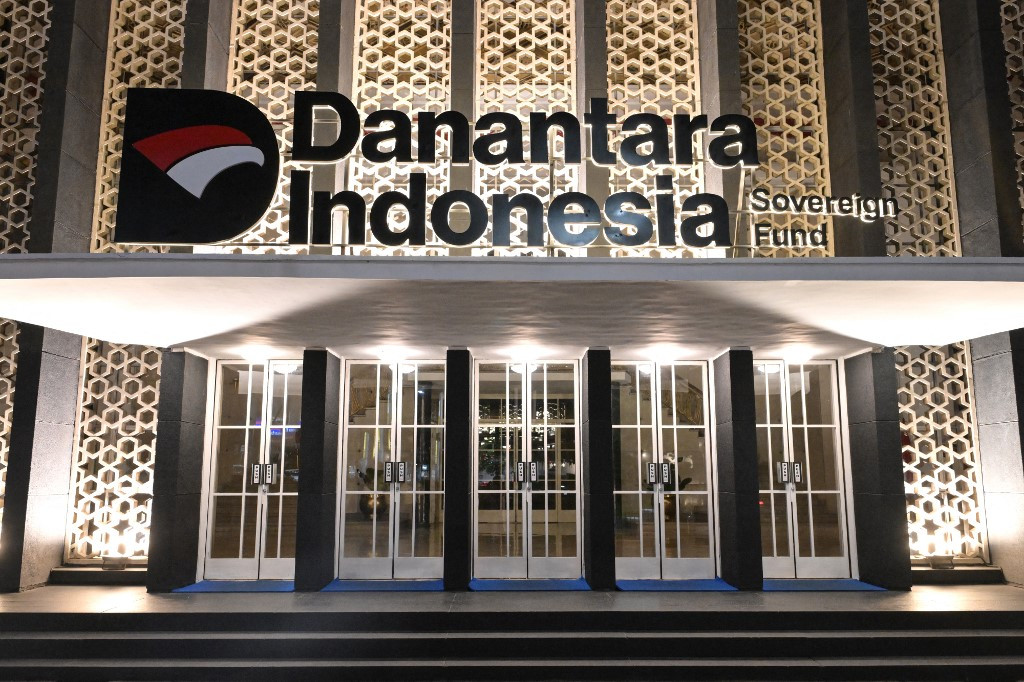
Indonesia is moving closer to a new funding model for artificial intelligence infrastructure, and the phrase sovereign AI fund is quickly becoming more than a policy buzzword. Recent reporting shows that authorities have proposed a dedicated fund to support the country’s AI ambitions, with Danantara positioned as a likely financing engine. At the same time, Komdigi has been pushing a broader data center expansion strategy, arguing that data centers are now a backbone of the digital economy and a foundational layer for AI. Danantara’s own 2026 investment agenda already includes data centers among its priority projects, which suggests the direction is not speculative anymore.
Why A Sovereign AI Fund Matters Now
The logic behind a sovereign AI fund is straightforward. AI workloads are capital intensive, and the infrastructure needed to support them is even more demanding. Companies and governments need large scale compute, reliable storage, low latency connectivity, and energy systems that can handle heavy loads without breaking down. Indonesia has already signaled that it wants to reduce the concentration of data centers in western Indonesia and expand capacity more evenly across the archipelago. ANTARA reported that the government is preparing a master plan to distribute data centers beyond the western region, while Komdigi says the goal is to make Indonesia a regional hub rather than just a consumer market for digital services.
That matters because the market is still growing. ANTARA reported that Indonesia’s data center industry is projected to reach US$1.83 billion by 2026 and as much as US$3.48 billion by 2031, while most current operations remain concentrated in Jakarta and Batam. In practical terms, that concentration means the next wave of investment will need to solve geographic imbalance, energy access, and infrastructure readiness at the same time. A sovereign AI fund is appealing precisely because it can be designed to do more than chase returns. It can anchor strategic projects that private capital may hesitate to back alone.
Danantara’s Role Could Go Beyond Passive Capital
Danantara already sits at the center of this conversation. Reuters reported that the fund was launched in February 2025 and reports directly to the president, while ANTARA reported that Danantara plans to invest Rp202.4 trillion, or US$13.1 billion, in 2026 across four priority projects that include data centers. That is important because it shows Danantara is not just a policy concept. It is an active capital allocator with a strategic mandate. In August 2025, Reuters also reported that AI authorities had proposed a sovereign AI fund and said the government document envisioned Danantara as the main manager of that vehicle.
Danantara’s fundraising ability is also beginning to look meaningful. Reuters reported that Danantara Investment Management raised US$1.5 billion in its debut dollar bond sale on June 12, 2026, with orders peaking at around US$4.6 billion. That kind of demand matters because it shows international investors are willing to back Danantara’s institutional framework, even in a volatile market environment. An inference from those facts is that a well structured sovereign AI fund could become an anchor vehicle for co investment, blending state backing, market debt, and private sector participation into one financing stack.
The Real Bottlenecks Are Not Just Money
Funding alone will not solve Indonesia’s AI infrastructure gap. Komdigi has repeatedly emphasized that data centers must be distributed more evenly and built with strong supporting infrastructure, including fiber optic networks, submarine cable links, electricity, and water supply. Liputan6’s summary of Komdigi’s remarks also noted that the ministry is promoting the idea of green data centers and is pushing for better digital talent development, because physical infrastructure without skilled people will not produce competitive AI capability.
This is where the policy logic becomes more complicated. A sovereign AI fund cannot simply write checks for concrete and cooling systems. It would need to choose projects that can actually be delivered, in locations that can support them, with governance that reassures both domestic stakeholders and foreign partners. That means the fund would likely need to prioritize sites with access to reliable power, strong interconnectivity, and clear permitting pathways. It would also need to avoid repeating the familiar pattern of overconcentration in Jakarta by backing more distributed infrastructure, especially if the government wants eastern Indonesia to become part of the next growth wave.
What Investors Will Watch Next
The next question is whether Indonesia can turn the sovereign AI fund concept into a credible investment framework rather than a headline. Investors will look for three things: governance, project selection, and execution discipline. Reuters noted that Danantara’s recent bond sale benefited from confidence in its institutional setup, which suggests that transparency and perceived state support matter as much as balance sheet size. ANTARA’s reporting also shows that Danantara already has a broad 2026 investment mandate, including data centers, but the market will want to see how those projects are selected and sequenced.
There is also a strategic branding issue. If the sovereign AI fund is framed too narrowly as a financing tool, it may miss the larger opportunity. If it is framed as part of a national industrial policy, it could help align AI infrastructure, digital talent, data governance, and regional development under one investment umbrella. That would fit the broader direction already visible in Komdigi’s policy messaging, which treats data centers as the backbone of the digital economy and a platform for AI competitiveness. The challenge is to move from ambition to bankable projects without losing speed.
For Indonesia, that is the real test. A sovereign AI fund would not just be a new label for public investment. It would be a signal that the country wants to build the physical and financial rails for AI at scale. If Danantara can combine long term capital, investor trust, and infrastructure discipline, Indonesia could position itself not only as a consumer of AI services but also as a regional host for the data and compute layers that make those services possible.
Read More