





 Monday, 14-09-26








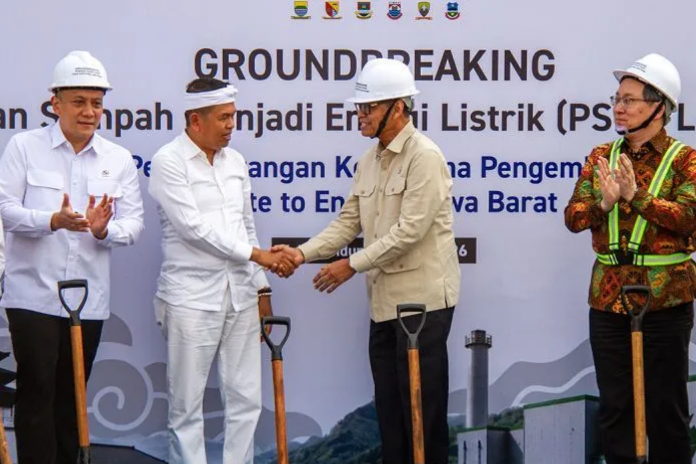
Indonesia has broken ground on the Legok Nangka waste-to-energy power plant in Bandung District, West Java, which is expected to generate 40 megawatts (MW) of electricity when completed (29/07).
Deputy Minister of Energy and Mineral Resources Yuliot Tanjung said the project will strengthen West Java's energy supply while providing a long-term solution to the province's growing waste management challenges.
Project Expected to Create 1,500 Construction Jobs
The Legok Nangka project is expected to employ around 1,500 workers during its construction phase while producing about 40 MW of electricity after completion.
"The project will employ around 1,500 workers and generate about 40 megawatts of electricity. This will strengthen energy availability in West Java Province while creating significant employment opportunities during the construction phase," Yuliot said.
The facility is being developed through a joint venture between an Indonesian private company and a Japanese partner, combining waste treatment with renewable energy generation.
Facility to Support Waste Management and Renewable Energy
Yuliot said the groundbreaking marks an important step in addressing waste accumulation in West Java through waste processing that also produces renewable energy.
"The groundbreaking of the Legok Nangka waste-to-energy plant will mark an important step toward addressing West Java's waste accumulation. The waste will be processed to improve environmental quality and public health while producing sustainable, clean renewable energy," he said.
The facility is scheduled to begin commercial operations in 2029 as part of President Prabowo Subianto's directive to accelerate the development of waste-to-energy facilities across Indonesia.
The government is also preparing similar facilities in Greater Bogor, Depok, and Greater Bekasi to expand waste processing capacity.
Plant to Produce Electricity and Alternative Energy
Yuliot said the projects are expected to improve waste management across West Java while increasing electricity generation from municipal solid waste.
He added that the Legok Nangka plant will also support the circular economy by converting recyclable materials into different forms of energy.
Plastic waste, for example, can be processed into alternative fuels through integrated technologies capable of producing electricity, transportation fuels, and other forms of bioenergy.
Environmental Measures and Grid Connection
Yuliot said the plant's incinerator technology will operate at temperatures exceeding 800 degrees Celsius to enable more complete combustion while minimizing the formation of harmful dioxins.
He added that transmission lines connecting the facility to the nearest power substation will be developed in parallel with state-owned electricity company PT PLN (Persero), allowing electricity generated by the plant to be fed directly into the power grid once commercial operations begin.
PHOTO: ANTARA/NOVRIAN ARBI
This article was created with AI assistance.
We make every effort to ensure the accuracy of our content, some information may be incorrect or outdated. Please let us know of any corrections at [email protected].
Read More