





 Tuesday, 22-09-26








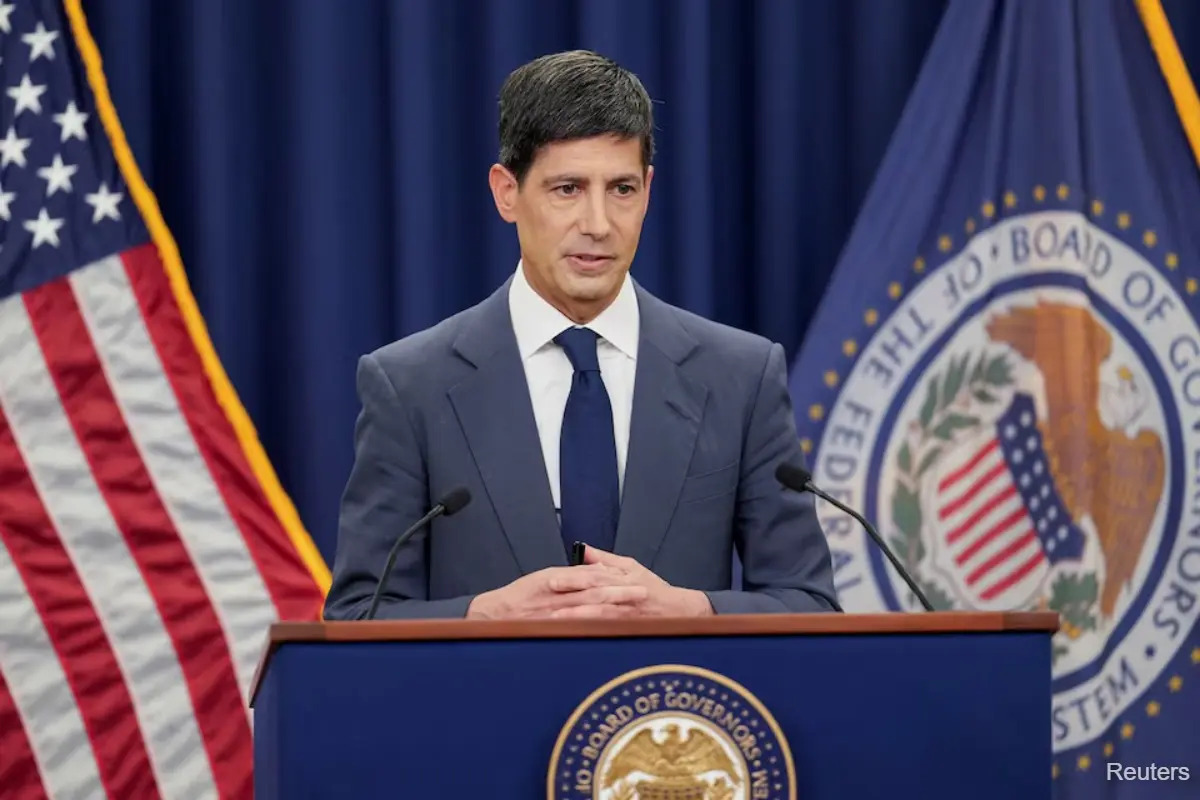
The first Kevin Warsh speech as Federal Reserve chair was never going to be routine, and it was not. In his debut press conference after the central bank held interest rates steady, Warsh signaled a new operating style for the Fed, one that is leaner, less verbose, and more willing to let markets do some of the interpreting themselves. Reuters described the moment as the opening of a new era, with the Fed keeping its policy rate in the 3.50 percent to 3.75 percent range while launching a wide-ranging review of how it communicates and conducts policy. The official Fed statement also said inflation remained somewhat elevated and that policymakers would continue to assess incoming data, the outlook, and risks before making any further move.
For markets, the message was not subtle. The Kevin Warsh speech came with a more hawkish tone than many traders had expected, and the result was immediate volatility in equities and short-term bonds. Reuters reported that stock markets sold off and short-term yields jumped after the announcement, while investors began pricing in a higher chance of a future rate hike. In a period when many market participants had hoped for a quicker path to easier policy, Warsh instead emphasized restraint, uncertainty, and a willingness to rethink how the Fed tells its story.
A Rate Hold That Set The Tone
The Fed’s decision to keep rates unchanged was important not because it was surprising, but because of the context around it. The central bank maintained the target range at 3.50 percent to 3.75 percent, said inflation was still somewhat elevated, and reiterated that it is committed to returning inflation to its 2 percent objective. That combination matters because it shows the Fed still sees the inflation fight as unfinished, even as growth remains solid and unemployment has not moved much in recent months.
The official statement also noted elevated uncertainty about the outlook and pointed to developments in the Middle East as one factor that could affect the U.S. economy. That detail is not decorative. Energy shocks can flow quickly into inflation expectations, transportation costs, and consumer sentiment. Warsh’s Kevin Warsh speech therefore landed in a setting where the Fed was already signaling caution, and where geopolitical risk was still a live input into monetary policy.
What made this meeting particularly important is that it was Warsh’s first as chair. Reuters reported that he used the occasion to strip forward guidance out of the statement, favoring a shorter and more restrained policy document. That is a notable shift in central banking style. In recent years, the Fed has relied heavily on communication to shape expectations. Warsh appears more skeptical of that approach. In practical terms, the Kevin Warsh speech suggests a Fed that may tell markets less and force them to react more to data itself.
The Five Task Forces Reveal A Broader Agenda
One of the most revealing parts of the Kevin Warsh speech was not about the rate decision itself. It was his announcement of five independent task forces to review core parts of the Fed’s work. Reuters reported that these groups will examine inflation, communications, data use, productivity, and employment. That is a broad agenda, and it suggests Warsh wants to look not only at what the Fed decides, but also at how it forms those decisions.
This matters because central banks usually change gradually. They adjust rates, update forecasts, and refine statements. Warsh is doing something more structural. He is asking whether the Fed’s internal machinery is still suited to the current environment. According to Reuters, he has long criticized the size of the Fed’s balance sheet and believes its large bond holdings distort markets and pull the institution into decisions better left to elected officials. Even so, the latest statement also reaffirmed the Fed’s policy of maintaining ample reserves, which suggests that any large balance sheet changes are still some distance away.
That tension is important for understanding the Kevin Warsh speech. On one hand, it is a strong signal that the Fed wants to re-examine itself. On the other hand, the institution is not abandoning its current operating framework overnight. Reuters noted that future changes to the balance sheet are likely to take time because the system is complex and tightly linked to money market functioning. So while the speech sounded transformational, the mechanics of Fed policy still place a ceiling on how fast Warsh can move.
There is also a deeper policy reading. Warsh’s focus on productivity and data quality suggests he sees inflation management as partly a supply-side question, not only a demand-side question. Reuters reported that the statement highlighted strong productivity growth and capital investment, while also attributing high prices in part to supply shocks, including energy. That framing is important because it moves the conversation beyond the usual rate-cut versus rate-hike debate. The Kevin Warsh speech was not just about holding policy steady. It was about redefining the macro problem the Fed thinks it is solving.
Why Markets Reacted So Sharply
Financial markets dislike uncertainty, and the Kevin Warsh speech produced a fresh wave of it. According to Reuters, the statement’s shorter format and the absence of forward guidance immediately changed how investors read the Fed’s next move. Some market participants concluded that the path toward rate cuts had become less likely, while others began to price in a possible rate hike as soon as September. Whether that projection proves right is less important than the fact that the market suddenly had to recalibrate around a less predictable central bank.
The market reaction also reflected a broader truth about central banking in 2026. Investors had grown accustomed to the idea that the Fed might gradually shift toward easier policy. Warsh complicated that assumption. Reuters reported that the new projections showed nine of 19 policymakers now expected at least one rate hike by the end of 2026. That is not a unanimous hawkish pivot, but it is enough to warn markets that the Fed sees more inflation pressure than many traders wanted to believe.
The inflation outlook adds to that caution. Reuters reported that officials marked up inflation for the end of 2026 to 3.6 percent from 2.7 percent, while unemployment was expected to end the year at 4.3 percent. That combination is awkward for policymakers because it points to persistent inflation at the same time as only modest labor market cooling. In that environment, the Kevin Warsh speech reads as an effort to preserve optionality, not promise relief too early.
What Comes Next For The Fed
The key question is whether the Kevin Warsh speech marks a temporary reset or the beginning of a much larger institutional shift. The answer, based on the early evidence, is probably both. Warsh clearly wants to change the Fed’s tone, reduce its reliance on forward guidance, and reopen some of the central bank’s most basic assumptions about balance sheets, communication, and policy design. Reuters described the approach as a return to a more Greenspan-era style, with less wordiness and less signaling. That is a meaningful philosophical shift even if the rate path itself changes slowly.
At the same time, the Fed is still constrained by the data. Inflation remains above target, the labor market is not breaking, and uncertainty around external shocks remains elevated. That means any fast pivot toward cuts would need much stronger evidence than the current backdrop provides. The official statement and Reuters coverage both point to a central bank that is still focused on price stability first, even as it debates how much communication is useful in achieving that goal.
For policymakers, the Kevin Warsh speech is a reminder that leadership changes can alter the culture of an institution even before they alter the policy rate. For investors, it is a warning that the Fed may become harder to read, not easier. And for the public, it is a sign that the central bank is entering a more self-critical phase, one that may eventually reshape how monetary policy is explained, debated, and delivered. That alone makes this debut speech more consequential than a standard post-meeting appearance.
Read More