





 Sunday, 20-09-26








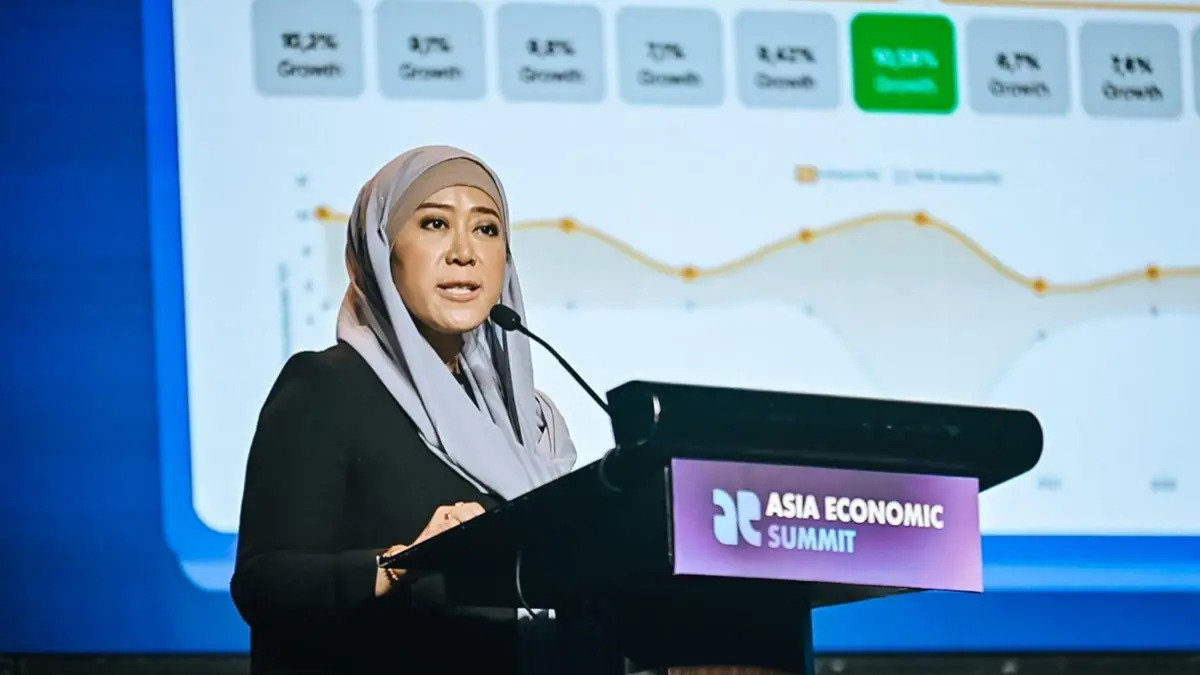
Indonesia is entering a decisive phase in its digital transformation. The latest message from Meutya Hafid points to a future in which the country’s digital economy Indonesia narrative is no longer about potential alone, but about scale, governance, and execution. Komdigi has said Indonesia’s digital economy could surpass US$100 billion in 2026 and reach between US$220 billion and US$360 billion by 2030, a range that would place the country at the top of Asia’s digital economy rankings. In earlier ministry statements, Meutya also said Indonesia’s digital economy reached about US$90 billion in 2024, the largest in Southeast Asia.
Why The 2030 Projection Matters
The headline number is important because it changes how policymakers and businesses should think about the next five years. A digital economy Indonesia projected to reach US$360 billion is not just a market forecast. It is a signal that payments, commerce, cloud services, logistics, media, fintech, and AI-enabled services will keep becoming more central to national growth. Komdigi has framed this trajectory as part of a broader push to make Indonesia the largest digital economy in Asia, not merely one of the fastest growing. That is a meaningful shift in ambition, and it explains why the ministry keeps tying digital policy to infrastructure, talent, and regulation.
There is also a practical reason the number matters. Komdigi has said the country’s 2024 digital economy value was about US$90 billion, with e-commerce contributing about US$65 billion and growing around 11 percent. That means the base is already large, and the next wave of expansion will depend on whether Indonesia can deepen adoption rather than simply broaden access. For the digital economy Indonesia story, the next leap will come from making digital tools more productive, more trusted, and more useful for businesses of every size.
What Is Driving Digital Growth In Indonesia
The strongest growth engine remains the consumer internet economy, especially e-commerce, digital financial services, and app-based transport. Meutya said in February 2026 that the wider digital economy is being propelled by e-commerce, digital finance, app-based transportation, and the growing adoption of digital tools by MSMEs, which make up around 60 percent of Indonesia’s GDP contribution. She also noted that digital design and content skills are no longer optional for smaller businesses that want to market and sell effectively in the online economy. In other words, the digital economy Indonesia wants to build is increasingly an MSME-driven economy, not just a platform economy.
The second growth engine is AI. Komdigi has linked AI to future digital economic leadership, saying Indonesia is preparing to become a stronger AI market through digital investment, data center expansion, and national AI regulation. In May 2026, Nezar Patria said the country already had 185 data centers with 274 MW of total capacity and aims to exceed 2,000 MW by 2029. He also pointed to Microsoft’s US$1.7 billion commitment and noted that Nvidia and Amazon have also reaffirmed investments in Indonesia. That matters because the digital economy Indonesia expects at scale will need far more computing power, storage, and cloud infrastructure than it uses today.
The broader message is that digital growth is becoming more infrastructure heavy. As AI use grows, so do demands for reliable power, secure storage, stronger connectivity, and more capable data handling. That means Indonesia’s digital economy will not rise simply because more people shop online. It will rise because the country can support a deeper layer of services that are more automated, more data intensive, and more dependent on physical infrastructure than the older digital economy model.
Talent And Governance Will Decide The Outcome
The biggest constraint is talent. Komdigi has said Indonesia needs 12 million digital talents by 2030 and still faces a shortfall of about 3 million. The ministry has also stressed that a strong digital economy requires more than access to tools. It needs skilled people who can build, manage, secure, and improve those tools over time. Meutya has repeatedly pushed this point in different settings, including efforts to widen participation among women and girls in technology. For the digital economy Indonesia wants to scale, talent is not a support function. It is the operating system.
Governance is the second constraint, and it may be even more important in the long run. Komdigi said in June 2026 that the government is preparing two presidential regulations on AI, one on the AI roadmap and one on AI ethics. The ministry has been clear that innovation must be balanced with transparency, accountability, security, and public protection. It has also said AI adoption should be guided by a framework that protects users from risks such as misuse of personal data and harmful digital content. That approach is essential if the digital economy Indonesia aims to build is going to be trusted by consumers, investors, and international partners.
This is where the policy story becomes more mature. Early digital growth often rewards speed above structure. But a larger market cannot be run on speed alone. It needs rules that make platforms predictable, data handling safer, and AI deployment more responsible. Indonesia is already signaling that it understands this tradeoff. The country’s digital economy may be expanding quickly, but Komdigi is clearly trying to ensure that expansion does not come at the cost of trust.
What Businesses Should Read From The Signal
For businesses, the message is straightforward. The next phase of the digital economy Indonesia story will reward firms that can combine scale with credibility. That means investing in data governance, responsible AI use, security by design, and digital skills inside the organization. It also means localizing products for Indonesian users rather than assuming global templates will work unchanged. Companies that can help MSMEs, public institutions, and consumers use digital services more efficiently are likely to benefit the most from the growth path Komdigi is describing.
For investors, the opportunity is tied to infrastructure and enablement. The 2030 projection suggests room for more cloud, payment rails, logistics tech, digital media, AI tools, and workforce training. The government’s emphasis on data centers, AI rules, and digital talent shows that Indonesia is not only chasing consumption growth. It is trying to create the conditions for a more durable digital stack. That is usually the difference between a short-lived boom and a real economic shift.
For universities, startups, and industry players, the window is equally clear. Komdigi has consistently pushed collaboration with academia and the private sector, while also supporting practical digital capacity building for creators and MSMEs. That suggests the next decade of the digital economy Indonesia will not be built by government alone. It will depend on whether training, research, investment, and product development move in the same direction. If they do, the US$360 billion figure will look less like an aspirational headline and more like a reachable target.
Indonesia has already proven that digital demand is strong. The harder task now is turning that demand into a more productive, more inclusive, and more globally competitive economy. The numbers are encouraging, but the real test lies in execution. If the country can close the talent gap, expand infrastructure, and keep AI governance credible, the digital economy Indonesia story could become one of the defining growth narratives of the decade.
Read More