





 Wednesday, 03-06-26








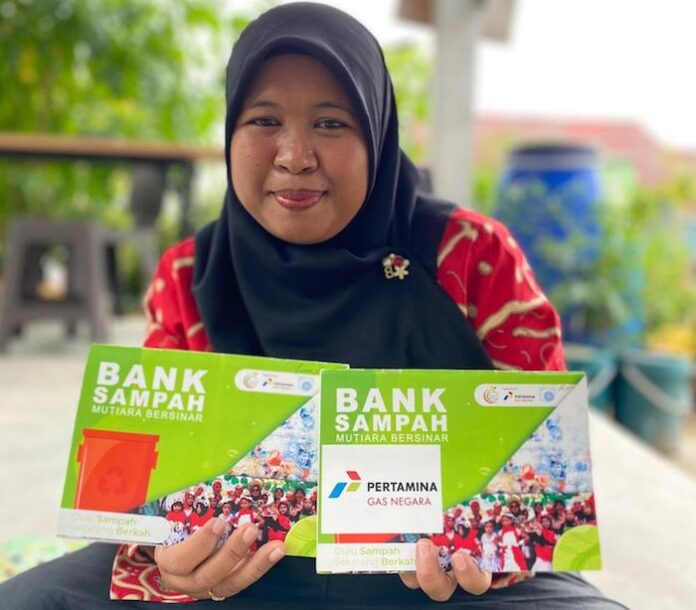
Batam is facing a waste challenge that is hard to ignore. The city’s waste generation reached around 1,300 tons per day in 2025, according to Batam city government data, which makes community-based solutions more than a feel-good initiative. They are now part of a practical response to a mounting urban problem. Against that backdrop, Pertamina Patra Niaga’s waste bank program in Batam offers a useful example of how circular waste management can reduce landfill pressure while also creating income for residents.
The program, known as KIMARA or Kampung Inovasi Sampah Permata Bandara, is run by Pertamina Patra Niaga Regional Sumbagut through Aviation Fuel Terminal Hang Nadim together with UBS RT One Berseri in Batam, Riau Islands. The initiative has been running for four years and is built around an economy circular approach and zero waste principles. What makes it notable is that the program does not treat waste as a cleanup issue alone. It treats waste as an asset that can be processed, sold, and turned into useful products.
The report shows that this approach is already producing measurable results. Each month, the group processes around 41 kilograms of fruit waste into eco enzyme, 231 kilograms of household organic waste into maggot feed, and 39 kilograms into compost. It also harvests about 20 kilograms of hydroponic vegetables per month for local sale. On the inorganic side, the group collects and sorts up to three tons of waste each month and sells it to recycling companies. That is a strong operational signal that circular waste management can work at a community scale, not just in theory.
A Community Program Built Around Circular Value
KIMARA stands out because it is not designed as a charity project. It is a structured community enterprise. Pertamina’s local communication and CSR leadership says the program aims to create a sustainable waste management system while opening business opportunities for the community, especially housewives. That emphasis matters because waste programs often fail when they only focus on collection and not on livelihood incentives. Here, the economics are part of the design from the beginning.
That design is important in a city like Batam, where the waste problem is both a public service issue and a development issue. Batam’s government has said the city’s waste load reached about 1,300 tons per day, and officials have warned that waste management needs stronger regulation, broader public participation, and more support from technology and investment. In that context, circular waste management is attractive because it reduces dependence on final disposal sites and creates a more distributed system of responsibility.
The human side of the story is just as important as the environmental side. One member of UBS RT One Berseri said the Pertamina mentoring has helped the group become more independent, while also raising household income. She also noted that limited land is not a barrier to productive growing, because simple home-based hydroponic systems can still generate vegetables for sale. That is the kind of local behavior change that turns a waste program into a broader community economy.
For business readers, this is where the real lesson sits. Community waste initiatives do not need to remain small or symbolic. With the right training, product channels, and recurring mentoring, they can evolve into micro-enterprises that sell compost, maggot feed, eco enzyme, and recycled materials. KIMARA shows that circular waste management can create several revenue lines from what used to be a single cost center.
How KIMARA Converts Organic And Inorganic Waste
The operational model behind KIMARA is worth unpacking because it is where the program becomes scalable. Organic waste is separated and directed into different treatment paths depending on its composition. Fruit waste from juice and fruit businesses is processed into eco enzyme. Household organic waste is partly diverted into maggot cultivation, which can then support feed production. Another portion is converted into compost, which can return to gardening or local agriculture. This layered approach is a textbook example of circular waste management in practice because it extracts value at multiple stages instead of sending everything to the same disposal stream.
On the inorganic side, the group’s ability to collect and sort up to three tons per month gives the program a commercial backbone. Those materials are sold to recycling companies, creating a cash flow that helps sustain the operation. This matters because many local waste efforts are effective in collection but weak in monetization. If a waste bank cannot reliably generate value from the sorted material, volunteer energy tends to fade. KIMARA appears to avoid that trap by connecting community sorting with a downstream buyer.
The hydroponic component also deserves attention. Producing about 20 kilograms of vegetables per month may seem modest in isolation, but in community terms it is significant because it links waste processing with food production. That linkage is exactly what makes circular systems resilient. The waste is not just removed. It is transformed into input for another useful activity, which is then sold or consumed locally. This is the broader logic behind circular waste management and why the model is gaining credibility in urban sustainability discussions.
Pertamina’s framing of the program also connects it to the United Nations Sustainable Development Goals, especially SDG 12 on responsible consumption and production. That is not just corporate language. It gives the program a wider policy relevance because Batam’s waste problem is part of a larger question about how cities handle material flows, household behavior, and local economic inclusion. The more the system can keep materials in use, the less pressure it puts on landfills and public budgets.
Why Batam's Waste Challenge Makes The Model Relevant
Batam is a useful case study because its waste volume is high enough to demand structural solutions, yet local communities are still close enough to the problem to participate in the response. The city government has described waste as a fundamental challenge that must be handled seriously, comprehensively, and in step with regulatory reform. Officials have also said that waste should be seen not only as a burden, but as a resource with economic value if managed productively. That is almost the same philosophical foundation that supports circular waste management in the KIMARA model.
This alignment between public policy and community practice matters. When a city recognizes that waste reduction, recycling, and re-use need both regulation and grassroots participation, community programs gain more room to scale. KIMARA may be small compared with Batam’s overall waste volume, but it demonstrates a working template: train residents, separate waste, create saleable outputs, and connect the system to buyers. That template can be replicated in other neighborhoods, especially if local institutions provide consistent support.
There is also an economic development angle. Waste programs often get framed as environmental interventions, but in Batam the employment and income effect is part of the story. Pertamina says the initiative has opened opportunities for community enterprise and improved household earnings, particularly for women in the group. That means the program is not only reducing waste going to landfill. It is also improving resilience in households that can use the new income stream for daily needs or small reinvestments.
For companies, local governments, and development institutions, this is the real takeaway. Circular waste management works best when it is treated as infrastructure for community livelihoods, not just as an environmental campaign. If the model in Batam keeps expanding, it could offer a repeatable approach for other Indonesian cities that are struggling with rising waste volumes and limited disposal capacity. The key is continuity, mentoring, and a market for the recovered materials. Without those elements, even a good pilot can stall.
What This Means For Indonesia's Waste Economy
Indonesia’s urban waste challenge is not going away soon. That is exactly why programs like KIMARA matter. They show that local solutions can create environmental benefits while also generating microeconomic value. The figures in Batam are not giant in industrial terms, but they are meaningful at the community level because they prove that sorted organic and inorganic waste can produce usable outputs every month. That is how circular waste management becomes a system, not just a slogan.
The bigger opportunity lies in scale and replication. If more neighborhoods can replicate Batam’s model with the right support, then cities can reduce landfill pressure, improve recycling rates, and create more local income from materials that were previously thrown away. Pertamina’s Batam program suggests that the future of urban waste management may depend as much on social organization as on trucks, bins, and disposal sites. That is a valuable lesson for policymakers and corporate sustainability teams alike.
In the end, the most important part of the story is simple. A community group in Batam is turning fruit scraps, household waste, and recyclables into practical value. That is what good circular waste management looks like on the ground. It is local, measurable, and human. And in a city coping with 1,300 tons of waste every day, that kind of model is worth paying attention to.
Read More