





 Tuesday, 02-06-26








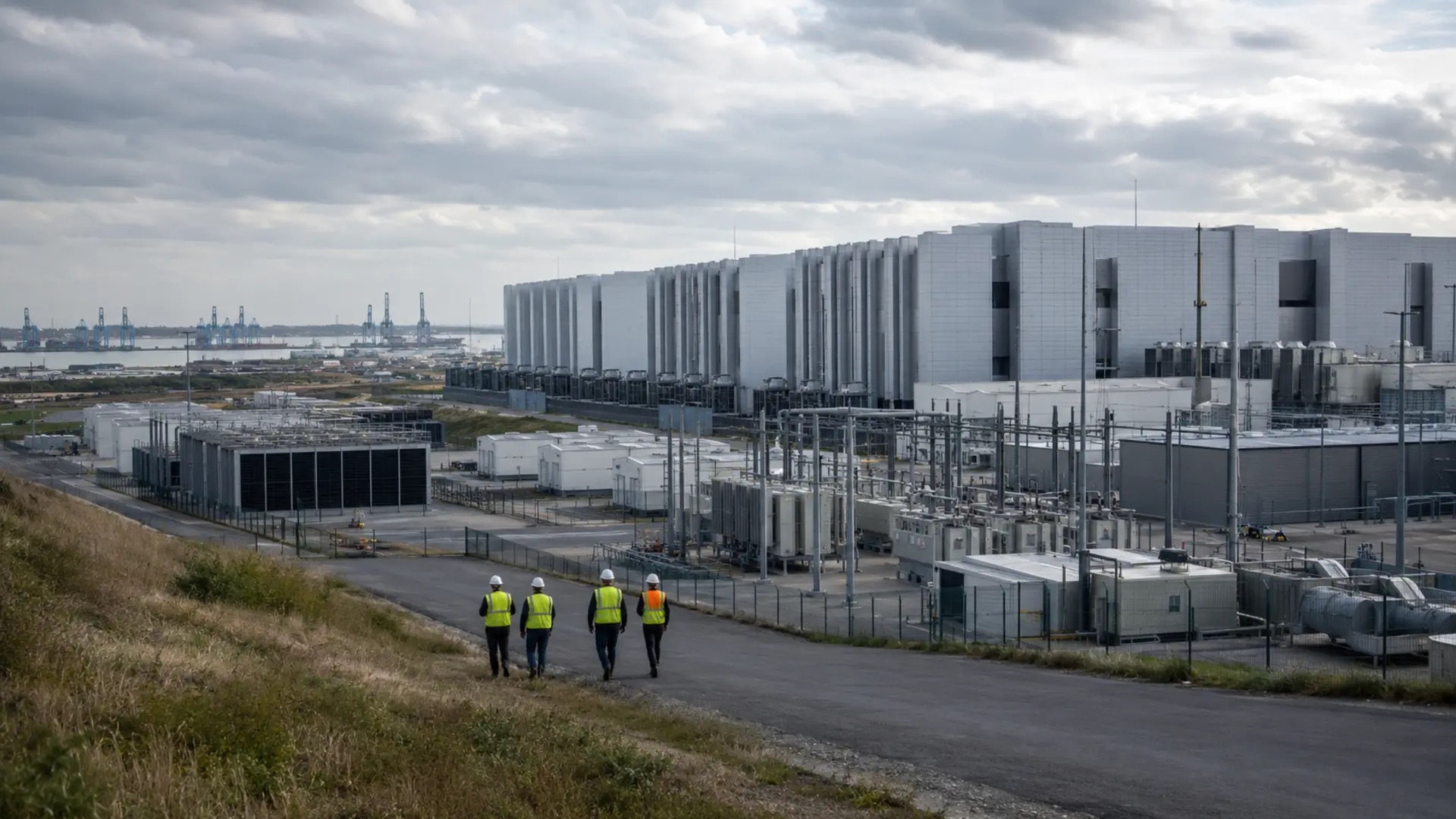
SoftBank’s latest move is not just another large corporate commitment. It is a strategic bet on the future of computing, energy, and industrial power in Europe. According to SoftBank Group’s own announcement, the company plans to develop and operate 5 GW of AI data center capacity in France, with total investment reaching up to €75 billion. The first phase alone will involve €45 billion and 3.1 GW of capacity in Hauts-de-France.
The scale of this SoftBank AI Data Center Investment matters because it arrives at a moment when global demand for artificial intelligence infrastructure is accelerating. France is positioning itself as a hub for AI computing, and the project has been framed around national ambition, low-carbon electricity, and European technological sovereignty. SoftBank says the initiative is its largest AI infrastructure investment in Europe.
Why SoftBank Chose France For A Massive AI Buildout
France is not an accidental choice. President Emmanuel Macron has been actively promoting the country as a destination for high-intensity digital infrastructure, and Reuters reported that the 2026 Choose France summit produced €93 billion in pledged investments, with the largest announcements centered on AI and data centers. France’s nuclear power fleet and low-carbon electricity supply are central to that pitch.
SoftBank’s announcement said the first phase will include data centers in Dunkirk, Bosquel, and Bouchain, all within the Hauts-de-France region. The company also said the project is intended to expand access to high-performance compute capacity and reinforce France’s role as a European AI infrastructure hub. In other words, this is not simply about more servers. It is about building the physical backbone for the next generation of AI workloads.
The timing is also important. Reuters reported that the project is linked to Macron’s effort to make France a global AI leader, while SoftBank Chairman and CEO Masayoshi Son described the investment as part of a broader push to keep Europe from falling behind the United States and China in AI computing capacity. That framing tells you how the market sees this move: not as a local real estate project, but as a geopolitical infrastructure play.
For France, the appeal is obvious. The country can offer large-scale electricity supply, policy support, and industrial land for data center buildouts. For SoftBank, the advantage is equally clear. AI infrastructure is increasingly constrained by power availability, site readiness, and long-term compute demand. France gives SoftBank a chance to build at scale in a market that wants exactly that kind of investment.
What The 5 GW Plan Means For Europe’s AI Infrastructure
A 5 GW commitment is enormous by any standard. SoftBank said the project will be phased, beginning with 3.1 GW by 2031, and Reuters reported that the initial plan could create about 8,600 construction jobs and 900 direct operating jobs. That makes the project one of the largest AI infrastructure undertakings in Europe, both in physical capacity and in labor impact.
This SoftBank AI Data Center Investment also reflects a broader reality in the technology sector: AI is no longer just a software race. It is a capital-intensive infrastructure race. Training and running advanced models requires huge amounts of compute, and compute requires land, power, cooling, grid access, and long-term financing. France is trying to capture that value chain before it migrates elsewhere.
SoftBank’s own language makes that point explicit. The company said the project is designed to support the rapid growth of artificial intelligence by expanding access to high-performance compute capacity in France. That kind of wording is important because it signals a shift from speculative AI enthusiasm to industrial-scale execution. The market is moving from “Who has the best model?” to “Who has the best infrastructure to run the models at scale?”
The competitive implications are significant. Reuters noted that Son argued Europe must catch up with U.S. and Chinese AI capacity, and the French government has repeatedly cast nuclear-powered electricity as a strategic advantage for AI and data centers. If this project advances on schedule, it could help France become a regional anchor for cloud, model training, inference, and enterprise AI services.
There is also an industrial policy angle. SoftBank said it plans to work with SB Energy and other strategic partners, while the announcement referenced advanced data center manufacturing in Dunkirk with Schneider Electric. That suggests the project is not only about where the centers are built, but also about who supplies the electrical, thermal, and operational systems around them.
The Strategic Business Logic Behind SoftBank’s Bet
The logic behind the SoftBank AI Data Center Investment becomes clearer when viewed alongside SoftBank’s wider AI portfolio. Reuters reported that the company has already invested over $30 billion in OpenAI and is helping lead financing for the $500 billion Stargate project in the United States. That means the France plan is part of a broader global push to own a bigger share of AI’s physical and financial stack.
This is classic SoftBank behavior, but at a larger and more infrastructure-heavy scale. The company is not just chasing app-layer returns. It is trying to position itself where the long-term bottlenecks are most valuable. In AI, those bottlenecks are increasingly power, compute, and capacity. By entering France at this scale, SoftBank is effectively placing a bet that Europe will need far more AI infrastructure than it currently has.
The expected benefits are substantial, but the execution risk is equally real. Large data center projects are expensive, energy-sensitive, and dependent on permitting, supply chains, and financing discipline. Reuters reported that the investment could potentially rise from €45 billion in the first phase to €75 billion overall. That range shows ambition, but also reminds readers that the project will evolve over time rather than materialize overnight.
For investors, the key question is whether the market is underestimating the duration of AI infrastructure demand. The answer may be yes. Even if model efficiency improves, enterprise adoption, sovereign AI initiatives, and cloud demand can still support a wave of new data center construction. The France project suggests SoftBank believes the long runway for AI compute will justify enormous upfront capital expenditure.
What This Means For France, Europe, And The AI Market
For France, this could be a landmark win. Reuters reported that Macron is using the country’s nuclear capacity to attract AI and data center investment, and the Choose France summit has become a major stage for proving that strategy. A successful SoftBank buildout would strengthen the case that France can compete for the most energy-intensive digital projects in the world.
For Europe, the project is symbolically powerful. The continent has often been criticized for lagging in compute capacity, cloud scale, and AI infrastructure compared with the U.S. and China. A 5 GW buildout would not solve that gap on its own, but it would signal that Europe is willing to compete on the hard infrastructure layer rather than only on regulation and research.
For the wider market, this is another sign that AI investment is broadening beyond chips and software into power systems, industrial equipment, land development, and grid planning. The SoftBank AI Data Center Investment is therefore not just a company story. It is a signal about where the next cycle of AI capital will flow.
Conclusion
SoftBank’s plan to build 5 GW of AI data center capacity in France marks one of the most ambitious infrastructure bets yet tied to the AI boom. With up to €75 billion on the table, an initial €45 billion phase, and major support from France’s low-carbon power strategy, the project could reshape Europe’s AI landscape if execution stays on track.
The bigger story is that AI competition is becoming physical. Power, land, cooling, and grid access are now central to the race. SoftBank appears to believe France can become one of the continent’s most important AI infrastructure hubs, and the market will now watch whether that vision turns into functioning capacity by 2031.
Read More