





 Tuesday, 26-05-26








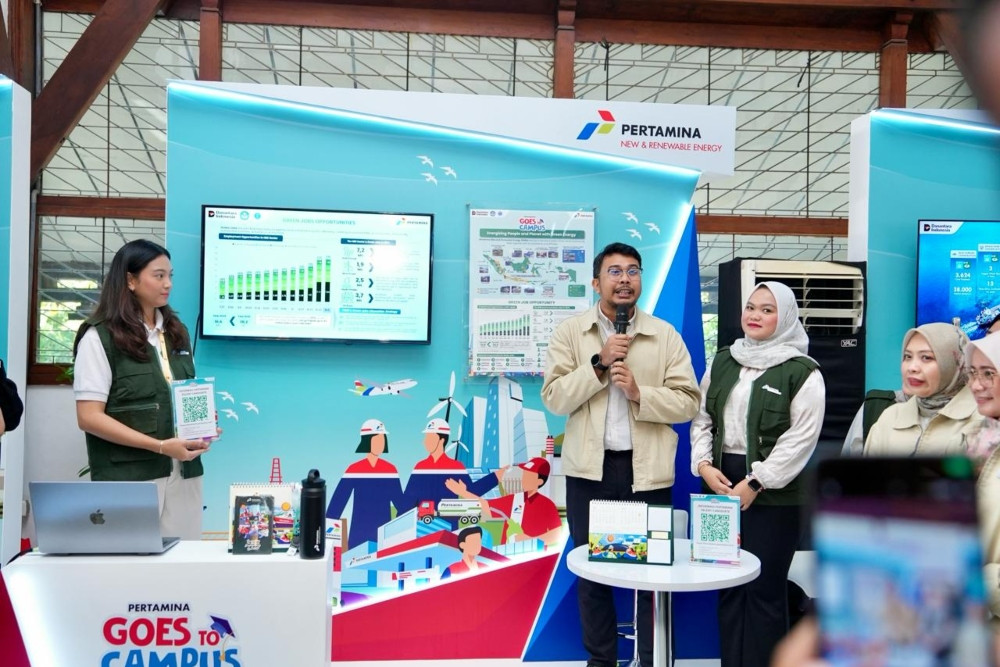
Pertamina New & Renewable Energy is turning campuses into a starting point for climate literacy by introducing carbon trading to university students. The company’s outreach at Pertamina Goes to Campus 2026 in Bandung was designed to help young people understand how carbon markets work, why emission reduction has economic value, and how clean energy careers are evolving alongside Indonesia’s decarbonization agenda.
The timing matters. Carbon trading is no longer a niche policy concept reserved for regulators and energy analysts. It is becoming part of the wider conversation about how Indonesia can reach Net Zero Emission 2060 while also creating new opportunities in green jobs, carbon offset programs, and low-carbon project development. Pertamina NRE’s campus strategy reflects that shift.
The event also shows a broader trend in how companies are approaching sustainability communication. Rather than explaining climate policy only through formal reports or business forums, firms are taking the message directly to students, where future engineers, managers, analysts, and entrepreneurs are already shaping the workforce pipeline for the energy transition.
Why Carbon Trading Education Matters For Students
Carbon trading is easier to understand when it is connected to everyday economics. At its core, the system gives financial value to emission reductions, which means companies or projects that cut pollution more effectively can sell carbon credits to others that still need to offset emissions. That principle was one of the key messages highlighted during Pertamina NRE’s campus outreach.
For students, that makes carbon markets more than just a climate topic. It becomes a business topic, a policy topic, and a technology topic at the same time. A student studying engineering may see how project design affects emissions. A finance student may see how carbon credits create tradable value. A communications student may see how public understanding can shape adoption. That interdisciplinary character is exactly why Carbon Trading Education can be so useful in a university setting.
Pertamina NRE framed its campus presence around that logic. At Pertamina Goes to Campus 2026, the company brought an interactive booth that explained carbon trading, credit mechanisms, emission reduction pathways, and low-carbon project development. The event theme, “Energizing Acceleration for Future Impact,” positioned the discussion within a larger energy transition narrative rather than treating it as an isolated policy lesson.
That approach is important because climate concepts often feel abstract when they are presented only in regulatory language. Campus-based Carbon Trading Education can make the subject more tangible by linking it to real projects, real market incentives, and real job pathways. It also helps students see that emission reduction is not only a moral or environmental goal, but also a measurable economic activity.
PGTC 2026 Shows How Industry Can Reach Future Climate Talent
Pertamina NRE’s appearance at PGTC 2026 was not just a branding exercise. The company used the event to connect directly with students at Institut Teknologi Bandung on 21 May 2026, one of Indonesia’s most prominent technology campuses. According to the reports, the booth drew strong student interest, especially around how carbon trading works in practice and what kinds of careers could emerge from the clean energy transition.
That reaction is revealing. Young people are not merely passive recipients of sustainability messaging. They are looking for concrete pathways into the green economy, especially in a job market where energy, climate, and digital skills increasingly overlap. Pertamina NRE explicitly linked its educational outreach to the rise of green jobs, noting that the global focus on clean energy and sustainability is creating new career opportunities for the next generation.
This is where Carbon Trading Education becomes strategically useful for both students and industry. For students, it provides a framework for understanding where the market is going. For companies, it helps build future talent pipelines that can support carbon project development, emissions accounting, sustainability reporting, and low-carbon investment decisions. Pertamina NRE’s Corporate Secretary, Sri Nur Hidayati, said the company sees carbon trading literacy as essential so young people can understand how the mechanism contributes to emission reduction and supports Indonesia’s decarbonization goals. That message is important because it frames climate action as a skillset, not just a slogan.
The emphasis on campuses also makes practical sense. Universities concentrate curious, technically literate audiences who are still forming their career direction. That makes them one of the most effective venues for Carbon Trading Education, especially when companies want to demystify carbon markets before students enter the workforce.
Carbon Offset, Green Jobs, And Indonesia’s Decarbonization Path
The Bandung event was not the first time Pertamina NRE promoted carbon literacy. The company has also been involved in carbon offset outreach with Livin’ by Mandiri, which introduced the public to the idea of compensating emissions through verified carbon credit purchases tied to emission reduction projects. That broader campaign shows that the company is trying to build awareness not only among students but also among everyday consumers.
Carbon offset and carbon trading are related but distinct concepts, and that distinction matters for public understanding. Carbon trading creates a market where emission reductions can be bought and sold. Carbon offset lets individuals or organizations compensate for emissions by supporting verified reduction projects. When these mechanisms are explained clearly, people are more likely to understand how climate finance works in the real world.
Indonesia’s net zero ambition gives this education work additional weight. The country has publicly committed to long-term decarbonization goals, and companies like Pertamina NRE are positioning themselves as part of that transition through energy literacy, low-carbon project development, and public engagement. In that context, Carbon Trading Education becomes a bridge between policy targets and market behavior.
The green jobs angle is equally important. As clean energy expands, the labor market needs people who can work in carbon accounting, project verification, sustainability reporting, renewable energy operations, climate technology, and carbon market analysis. Students who understand these areas early may be better prepared for the job opportunities that are emerging now. There is also a larger communication lesson here. Climate transitions can stall when people feel the subject is too technical, too distant, or too regulatory. But when Carbon Trading Education is presented in a campus setting, the topic becomes more relatable. Students can ask direct questions, compare career paths, and connect theory with emerging market practice.
For Indonesia, that kind of literacy-building matters because the country’s energy transition is not only about infrastructure. It is also about people. The success of carbon markets, low-carbon investments, and emissions reduction programs will depend on whether the next generation understands how the system works and sees a place for themselves in it. Pertamina NRE’s campus outreach suggests the company is betting that early education will help create that foundation. The bigger picture is that sustainability communication is changing. Companies that used to speak mainly to regulators and investors are now speaking to students, communities, and future employees. That shift may prove crucial in a country where climate policy needs broader public understanding to move from aspiration to execution. Carbon Trading Education is one small but significant part of that transition.
The Campus Approach Could Shape Indonesia’s Climate Workforce
If Indonesia wants a stronger low-carbon economy, it will need a workforce that understands both emissions and markets. That means more students need exposure to carbon trading, carbon offset, and green jobs before they graduate. Pertamina NRE’s campus initiative shows one way industry can help close that gap. The value of Carbon Trading Education is not limited to climate specialists. It gives future professionals in business, engineering, economics, law, and technology a shared language for discussing decarbonization. That shared language matters because the energy transition will require coordination across multiple sectors, not just one.
In the end, the most important outcome of events like PGTC 2026 may not be immediate sales or short-term publicity. It may be the long-term cultural shift that happens when young people begin to see carbon markets as a normal part of the modern economy. That is the kind of awareness that can support Indonesia’s climate goals for years to come.
Read More