





 Friday, 09-10-26








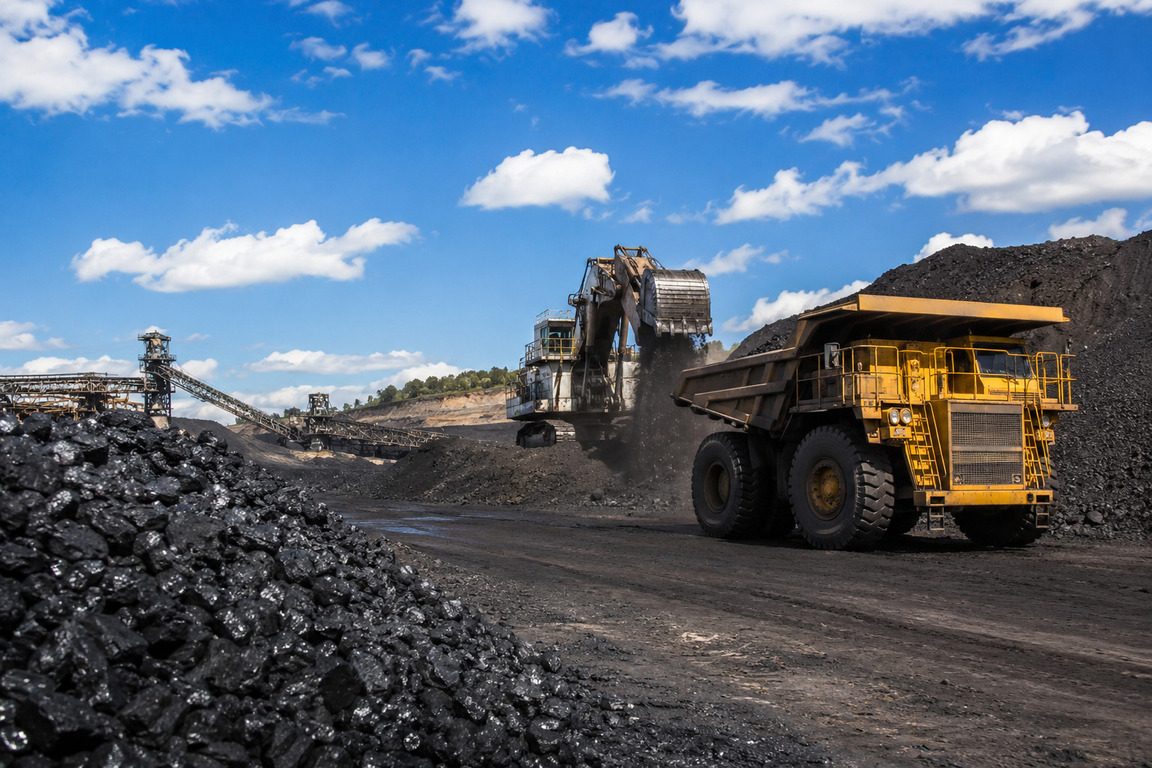
Anglo American’s agreement to sell its Australian coking coal mines to Dhilmar for up to $3.88 billion is more than a big-ticket mining transaction. It is also a signal that the global market for steelmaking coal remains strategically important, even as major producers reposition their portfolios for the energy transition. Reuters reported that the deal includes $2.3 billion in upfront cash and up to $1.58 billion in coal-price-linked payments, with Anglo using the proceeds to reduce debt and simplify its business ahead of a planned merger with Teck Resources.
The sale has drawn attention because it pairs a well-known global miner with a relatively newer buyer, Dhilmar, a UK-registered private mining group led by Alexander Ramlie. For investors, communities, and industry watchers, the Australian coking coal mines deal raises three big questions at once: why Anglo is leaving, why Dhilmar is buying, and what the move says about the near-term future of metallurgical coal.
Why The Australian Coking Coal Mines Sale Matters
Anglo American said the Australian coal sale is part of a broader effort to divest non-core assets and move toward a copper-focused business model as it prepares for its merger with Canada’s Teck Resources. The mines sit in Queensland’s Bowen Basin, widely recognized as one of the world’s most important steelmaking coal regions, which helps explain why the asset attracted so much interest despite the sector’s long-term decarbonization pressure.
That makes the deal especially significant for the Australian coking coal mines market. These are not marginal assets tucked away on the edge of the industry. They are core steelmaking inputs tied to global industrial activity, infrastructure spending, and automotive production. Anglo’s decision to exit the sector entirely, as CEO Duncan Wanblad said, marks the end of a long chapter and shows how aggressively the company is reshaping itself around future-facing commodities like copper.
The structure of the transaction also matters. By pairing a large upfront payment with a price-linked earnout, Anglo can lock in immediate value while retaining some exposure to future coal prices. Reuters noted that this follows the collapse of a previous $3.78 billion bid from Peabody, which fell apart after a mine fire and a disagreement over price reductions. In practical terms, that history helps explain why this sale became possible now and why Anglo appears willing to accept a cleaner exit structure.
For the broader market, the message is straightforward. The Australian coking coal mines remain valuable enough to attract serious capital, but the owners of those assets increasingly see them as portfolio decisions rather than forever businesses. That difference is important. It suggests coal is still investable in the right circumstances, but also that major miners are setting a clear boundary between legacy thermal or metallurgical exposure and the cleaner, copper-heavy future they want to own.
Dhilmar, Alexander Ramlie, And The Capital Behind The Deal
Dhilmar is not a household name, but its background helps explain the scale of its ambition. Reuters reported that the company is privately held and that its flagship asset is the Éléonore gold mine in Canada, which it acquired from Newmont last year. The firm is led by Alexander Ramlie, who has worked for several Indonesian mining companies, including PT Amman Mineral Internasional. Public company records from the UK’s Companies House show Ramlie as a director of Dhilmar Ltd and identify him as Indonesian.
Ramlie’s profile suggests Dhilmar is not making a speculative bet from the sidelines. Amman Mineral’s board page lists him as a commissioner, and the company says he previously served as chief executive of a metallurgical coal mine in Borneo and held other board roles in coal mining. That background gives the Australian coking coal mines acquisition a different flavor from a simple financial flip. It looks more like a calculated industrial expansion by someone who understands mining operations, capital cycles, and the demands of hard assets.
There is also a broader strategic logic at work. Dhilmar’s move into Australian coking coal mines places it in a business with established infrastructure, strong export relevance, and deep institutional knowledge requirements. That is a more demanding proposition than buying a small exploration asset, but it is also potentially more durable. If Ramlie and his team believe they can operate large-scale underground and open-pit assets effectively, this deal gives them a meaningful foothold in one of the world’s most important steel feedstock regions.
The market took notice because Dhilmar’s rise has been unusually fast. The company is still relatively new as a global mining buyer, yet it has already moved from gold into major metallurgical coal. That kind of portfolio jump only happens when management believes it can access financing, operate across jurisdictions, and absorb the social and technical complexity that comes with big mining assets. The Australian coking coal mines deal therefore says as much about Dhilmar’s confidence as it does about Anglo’s exit strategy.
What The Deal Means For Queensland, Workers, And Community Trust
In Queensland, the deal is being watched as carefully for its social consequences as for its financial ones. ABC News reported that Dhilmar bought five steelmaking coal mines in the Bowen Basin, including Grosvenor and Moranbah North, both of which have not returned to full production after separate safety incidents in 2024 and 2025. That detail matters because it means the Australian coking coal mines transaction is landing in a region already dealing with operational uncertainty and worker anxiety.
ABC also reported that local leaders and residents are worried about what happens next for community infrastructure, housing, childcare, and other services previously tied to Anglo’s long presence in the region. That is a crucial part of the story. In many mining towns, the operator is not just an employer. It is also a quasi- civic institution, supporting services that shape daily life. When a new owner arrives, people do not only ask about production plans. They ask who will look after the town.
That concern is particularly visible in Middlemount and nearby communities, where Anglo’s role has extended well beyond extraction. ABC described the company as a major provider of housing and commercial space, and local officials said they want direct meetings with Dhilmar to understand its appetite for social investment. The Australian coking coal mines sale therefore creates a second transition, not just in ownership but in community expectations.
For workers, the deal may bring both relief and uncertainty. Relief, because the failed Peabody transaction left the future of the assets unclear for a time. Uncertainty, because new ownership always raises questions about mine strategy, capital spending, and safety priorities. In sectors like coal, trust is built slowly and lost quickly. Dhilmar will need to demonstrate that it understands not only the geology and economics of the Australian coking coal mines, but also the social contract attached to them.
Steel Demand Still Supports The Case For Coking Coal
The timing of the acquisition also makes sense when viewed through the lens of steel demand. Worldsteel said in April 2026 that global steel demand is expected to grow by 0.3% in 2026 to 1.724 billion tonnes, followed by stronger growth of 2.2% in 2027. That is not a boom, but it is enough to support a market for metallurgical coal, especially if industrial output remains uneven and infrastructure spending continues in key regions.
At the same time, the International Energy Agency sees a longer-term structural headwind. The IEA’s Coal 2025 analysis says global metallurgical coal demand is projected to fall by 53 million tonnes between 2025 and 2030. That means the Australian coking coal mines sit inside a market that still has near-term relevance, but faces a gradual long-term decline as steelmaking technologies evolve and regions shift their industrial mix.
That tension explains why the deal is so interesting. On one side, Dhilmar is buying assets that still generate real cash flow and remain essential to global steelmaking. On the other side, it is buying into a business where time horizon matters enormously. If steel demand stays resilient enough over the next several years, the Australian coking coal mines could prove to be a valuable platform. If decarbonization accelerates faster than expected, the assets may become harder to maximize over the medium term.
For now, the transaction looks like a calculated bet on the intersection of industrial demand and mining expertise. Anglo gets a cleaner portfolio, Dhilmar gets scale and strategic reach, and Queensland communities get a new owner whose intentions will be judged quickly. The Australian coking coal mines sale is therefore not only a transaction about coal. It is a test of whether experienced capital can still find opportunity in one of the world’s most controversial, but still economically powerful, commodities.
Read More