





 Wednesday, 14-10-26








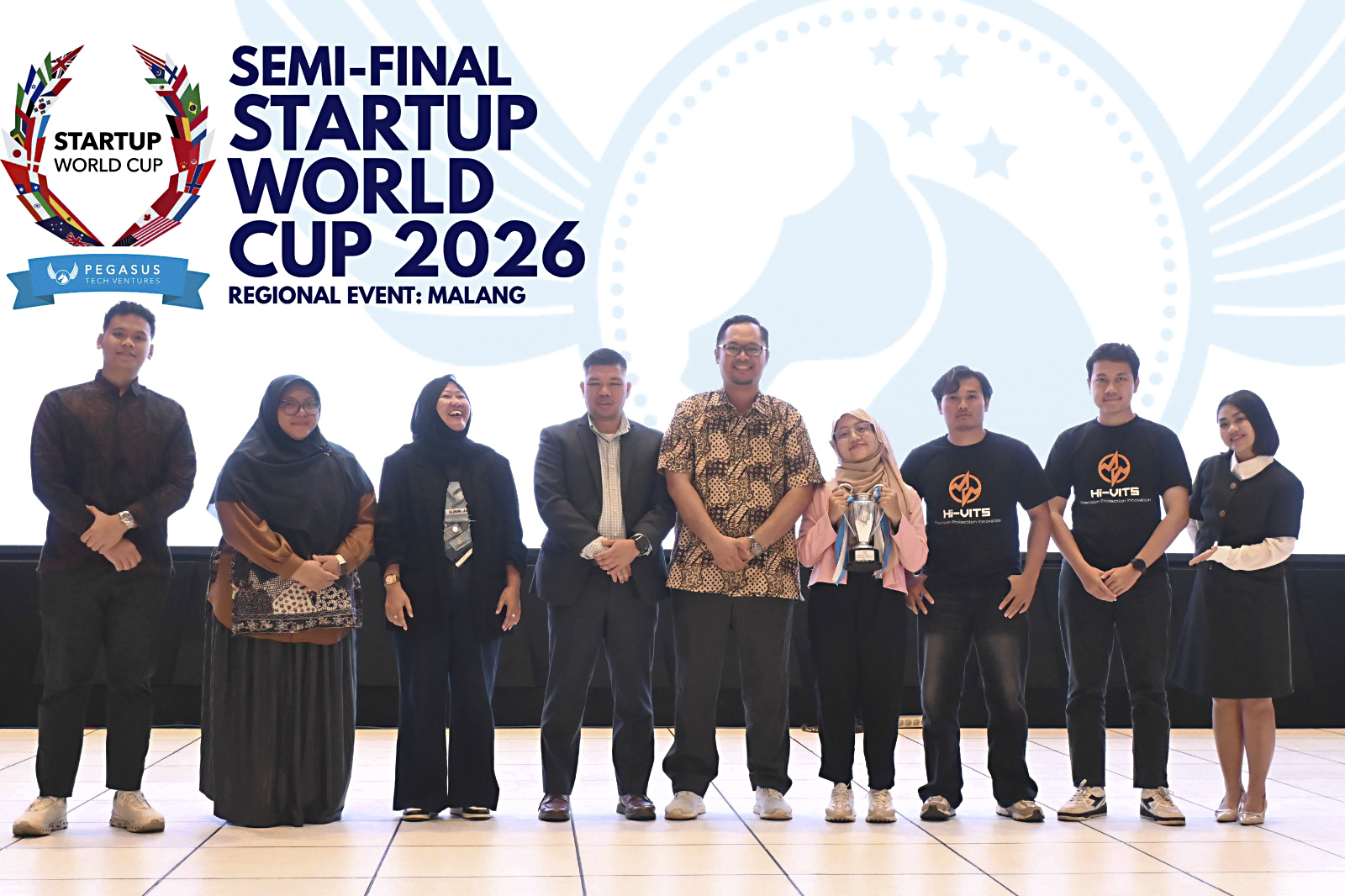
Hi-VITS has emerged as the winner of the Startup World Cup 2026 Regional Event in Malang and will represent Indonesia at the grand finale in San Francisco. The result was reported by Prasetya UB, which said the startup came out on top after a pitching and judging process in a competitive field. The report also noted that the event featured 10 startups, underscoring how selective the regional stage was.
That makes the latest Startup World Cup Malang result more than a local startup headline. It is a signal that Indonesia’s startup ecosystem continues to produce founders capable of surviving a rigorous pitch format and advancing onto a global stage. The competition itself is part of the larger Startup World Cup network, a global conference and pitch competition that brings together startups, venture capital firms, entrepreneurs, and technology leaders. Its grand finale is held in San Francisco, where the winning team receives a USD 1 million investment prize.
Why Startup World Cup Malang Matters For Indonesian Founders
The Startup World Cup Malang event matters because it sits inside a much bigger international pipeline. According to the competition’s official site, Startup World Cup hosts more than 100 regional startup competitions across six continents, creating a direct path from local pitch stages to Silicon Valley. For founders, that structure is valuable because it turns a city-level win into global visibility almost immediately.
For Indonesia, the Malang regional event is especially important because it gives founders outside Jakarta a credible route into the national and international spotlight. The official Malang event page says the competition is designed to help startups in Indonesia become the country’s representative in Silicon Valley and compete for the USD 1 million grand prize. It also frames the event as a platform for exposure, investor access, and global networking.
That is why the Startup World Cup Malang result should be read as ecosystem development, not just contest coverage. When founders enter a pitch event with real stakes, they are forced to sharpen their problem statement, business model, market strategy, and storytelling. In practice, that improves startup quality across the board. The best teams do not just present an idea. They prove that the idea can survive scrutiny from judges, investors, and an audience that expects clarity. The official competition structure supports that kind of pressure test.
The fact that the Malang event featured 10 startups also matters. A smaller final field usually means the winner had to stand out in a tightly judged room, which raises the credibility of the result. In Startup World Cup terms, a regional win is not symbolic. It is a selection mechanism that sends the strongest teams forward.
What Hi-VITS Victory Says About The Quality Of Indonesian Startups
Hi-VITS winning the Malang regional competition suggests that Indonesian startups are not only numerous, but increasingly pitch-ready. The report states that the startup advanced through pitching and assessment before being named the winner. That is an important distinction because competitions like this reward more than enthusiasm. They reward clarity, execution, and the ability to convince judges under time pressure.
In startup ecosystems, this kind of win often reflects a few things at once. First, the team has likely identified a real problem that resonates with judges. Second, the founders have probably developed enough traction or technical credibility to support their claim. Third, they can communicate the business in a way that makes sense to both investors and operators. Those are not minor strengths. They are often the difference between a startup that looks promising on paper and one that can actually scale. The competitive format of Startup World Cup Malang is built to identify exactly that difference.
It also says something about the maturity of the local founder community. When a regional event can produce a winner ready for San Francisco, it implies that founders are learning how to compete in global formats, not only local ones. That matters because global capital expects global storytelling. Investors outside Indonesia will want to know whether a product solves a repeatable problem, whether the market is large enough, and whether the team can execute beyond its home city. A regional win helps answer those questions before the founder even reaches the international stage. This is an inference, but it is consistent with the competition’s design and its emphasis on investor exposure and global networking.
Another useful lens is the symbolic value of Malang itself. The city is not usually the first place global audiences mention when discussing Southeast Asian startups, yet competitions like this help decentralize innovation. That is good for Indonesia. Innovation should not depend on a single metro area. When regional hubs produce finalists and champions, the country builds a wider pipeline of founders, mentors, and support systems. The Startup World Cup Malang result fits that pattern well.
What The San Francisco Stage Could Mean For Hi-VITS
Advancing to San Francisco changes the conversation for Hi-VITS in a material way. The competition’s grand finale is not just a ceremonial event. The official Startup World Cup platform presents it as a gathering point for top startups, VCs, entrepreneurs, and technology leaders. That means the winner is not merely competing for prize money. It is competing for access, credibility, and relationships that can shape a company’s next phase.
This matters because startup growth often depends on more than capital. Strategic introductions can lead to pilots, partnerships, distribution deals, or technical mentorship. For many early and growth stage companies, those opportunities are just as important as funding. The Malang event page explicitly highlights global exposure, valuable investor connections, and a broader innovation network. Those are the kinds of outcomes that can accelerate a startup long before a major financing round closes.
The grand finale also creates a useful accountability moment. Once a startup reaches a global stage, it has to present itself against top teams from many countries and sectors. That can sharpen execution. Even if Hi-VITS does not win in San Francisco, the experience itself can improve the company’s positioning, investor narrative, and long term strategy. In many startup journeys, that is where real value begins.
For Indonesia, having a representative in the Startup World Cup grand finale also helps build national confidence in the startup ecosystem. It shows that local founders are not operating in isolation. They are capable of entering the same competitive arena as global peers. That visibility can influence future founders, university innovators, angel investors, and corporate partners who are looking for signals that the ecosystem is moving forward. The Startup World Cup Malang win therefore has a multiplier effect well beyond one event.
Why This Win Matters Beyond One Competition
The broader lesson from Startup World Cup Malang is that Indonesia’s startup story is becoming more regional, more competitive, and more internationally connected. A local event in Malang can now produce a champion that moves directly into a global pipeline in San Francisco. That is a meaningful upgrade in how startup opportunity flows through the country.
It also shows the importance of pitch competitions as ecosystem infrastructure. They are not just stage events. They are filters, classrooms, and market signals at the same time. A strong performance can validate a business, attract attention, and force a team to refine its narrative. For founders, that discipline is valuable even before the prize is considered. For investors, it is a fast way to identify teams that can handle pressure. The Startup World Cup Malang format appears designed to do exactly that.
Hi-VITS now carries that responsibility forward as Indonesia’s representative. Whether the company ultimately wins in San Francisco or not, the regional victory already marks a significant milestone. It places the startup in a more visible conversation, gives it access to a broader network, and reinforces the idea that serious innovation is coming from across Indonesia, not only from its biggest commercial centers.
Read More