





 Monday, 25-05-26








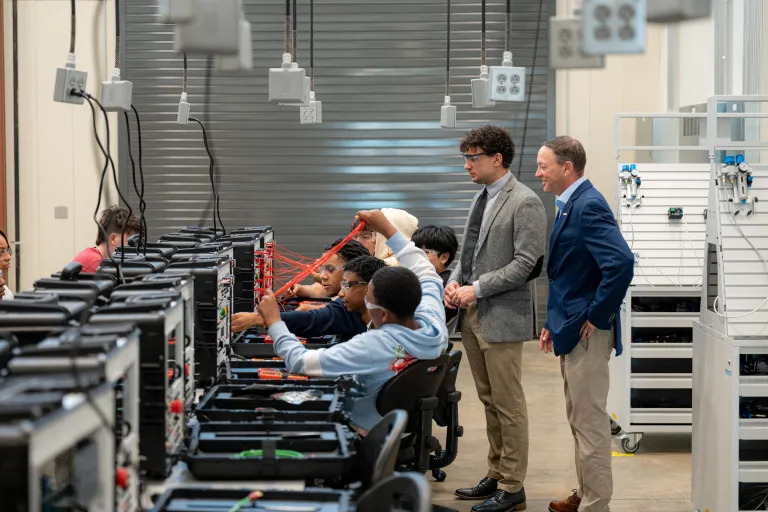
As artificial intelligence and automation continue transforming industries worldwide, a growing number of educators, manufacturers, and policymakers are rethinking the future of workforce development. In the United States, the conversation is increasingly shifting toward Skilled Trades Education as industries struggle to find workers capable of operating, maintaining, and managing advanced manufacturing systems.
A recent report from Toyota Motor Corporation supported initiatives in Huntsville, Alabama highlighted how technical schools and workforce training programs are becoming central to the modern industrial economy. While much public attention remains focused on software engineering and AI development, many manufacturers now face an urgent shortage of skilled technicians, mechanics, machinists, and industrial specialists.
The rise of automation is not eliminating every job inside factories. Instead, it is changing the type of skills workers need to succeed. Advanced robotics, AI driven production systems, and smart manufacturing technologies require employees with specialized technical expertise capable of working alongside increasingly intelligent machines. This shift is making Skilled Trades Education one of the most important workforce trends shaping the future economy.
Why Skilled Trades Education Is Becoming More Important
For decades, four year university degrees were widely promoted as the primary pathway to career success. However, labor market realities are changing rapidly. Manufacturers across sectors including automotive, aerospace, logistics, energy, and industrial technology are facing growing shortages of skilled workers. At the same time, automation is reshaping traditional factory jobs. Modern production facilities increasingly depend on robotics, sensors, predictive maintenance systems, and AI powered machinery. These systems require workers who understand both physical equipment and digital technologies.
This is where Skilled Trades Education becomes critical. Technical schools and vocational training programs are helping prepare students for careers involving industrial automation, robotics maintenance, electrical systems, welding, advanced manufacturing, and machine operations.
Unlike outdated stereotypes surrounding vocational careers, today’s skilled trades often involve sophisticated technologies and highly specialized expertise. Workers in these fields may interact directly with robotics systems, industrial software, programmable logic controllers, and AI assisted production tools.
The Huntsville initiative highlighted in the Fortune report reflects a broader trend in which companies are partnering with educational institutions to build workforce pipelines tailored to future manufacturing needs. Businesses increasingly recognize that labor shortages could become one of the biggest barriers to industrial expansion and technological modernization.
AI and Automation Are Reshaping Manufacturing Jobs
The growing relevance of Skilled Trades Education is closely tied to the rise of artificial intelligence and automation in manufacturing environments. Modern factories are becoming highly digitized ecosystems. Robotics systems can now perform repetitive assembly tasks, while AI powered analytics monitor equipment performance and predict maintenance needs before failures occur.
However, automated systems still require human oversight, maintenance, troubleshooting, and optimization. This means workers are not disappearing from factories entirely. Instead, their responsibilities are evolving. For example, technicians today may need to diagnose robotic system failures, program industrial machines, manage sensor networks, or analyze manufacturing data generated by AI systems.
As a result, employers increasingly seek hybrid skill sets that combine mechanical knowledge with digital literacy. Workers capable of understanding both physical equipment and software systems are becoming highly valuable. The importance of Skilled Trades Education therefore extends beyond traditional blue collar labor. It is becoming part of the broader technology workforce ecosystem.
Industrial automation also creates pressure for continuous reskilling. Workers who previously handled manual production tasks may need additional technical training to adapt to AI integrated workplaces. Educational institutions are responding by modernizing curricula to include robotics systems, automation engineering, industrial coding, and advanced manufacturing technologies.
Huntsville Emerges as a Manufacturing and Technology Hub
The focus on Skilled Trades Education in Huntsville, Alabama is particularly significant because the city has evolved into a major center for aerospace, defense, manufacturing, and technology industries. Historically associated with the United States space program and aerospace research, Huntsville has increasingly attracted advanced manufacturing investments and industrial technology companies.
Companies operating in the region require workers capable of supporting highly technical production environments. This demand has strengthened partnerships between manufacturers, technical schools, and workforce development organizations.
Toyota’s involvement reflects how major manufacturers are investing directly in workforce training ecosystems. Companies recognize that building future talent pipelines is essential for maintaining operational competitiveness. In many cases, employers are now collaborating with educational institutions to design specialized programs aligned with real industry needs. Students may receive hands on training using industrial robotics systems, advanced manufacturing equipment, and smart factory technologies before entering the workforce.
This approach helps reduce the gap between education and employment by ensuring graduates possess practical skills immediately relevant to industrial operations. The emphasis on Skilled Trades Education also supports regional economic development. Cities capable of producing technically skilled workers may attract greater industrial investment as manufacturers search for reliable talent pools.
Skilled Trades Offer Alternative Career Pathways
Another reason Skilled Trades Education is attracting attention is the growing debate surrounding traditional higher education costs and career outcomes. Many students face rising tuition expenses and long term student debt associated with four year university degrees. Meanwhile, some industries continue experiencing labor shortages despite large numbers of college graduates entering the workforce.
Technical education programs often provide faster and more affordable pathways into stable careers with strong income potential. Skilled trade careers can offer competitive salaries, career advancement opportunities, and long term job demand.
Electricians, industrial technicians, welders, automation specialists, and robotics maintenance experts are increasingly valuable in technology driven industries. This changing economic landscape is gradually reshaping public perceptions of vocational education. Technical careers are no longer viewed solely as secondary alternatives to university education. Instead, they are becoming strategic career choices linked to advanced industries and future technologies.
The rise of AI and automation may accelerate this trend further. As industries digitize operations, demand for technically trained workers capable of maintaining complex systems will likely continue growing. Skilled Trades Education therefore represents not only an employment strategy but also a broader adaptation to changing technological realities.
The Future Workforce Will Need Technical Adaptability
One of the most important lessons emerging from current workforce trends is that adaptability may become the defining skill of the future labor market. Technological change is occurring rapidly across manufacturing, logistics, transportation, healthcare, and energy sectors. Artificial intelligence, robotics, and automation are transforming workflows faster than many educational systems were originally designed to handle.
This means workers will likely need ongoing learning and technical training throughout their careers. Skilled Trades Education programs are increasingly evolving toward flexible models focused on practical competencies rather than static qualifications. Shorter certification programs, employer partnerships, apprenticeships, and modular technical training may become more common. The workforce of the future may require workers who can continuously adapt to new technologies rather than rely solely on one time educational credentials.
For governments and businesses, investing in workforce development will become essential for maintaining economic competitiveness. Countries unable to produce technically capable workers may struggle to support advanced manufacturing growth and industrial modernization. At the same time, education systems must avoid framing automation purely as a threat to employment. While certain repetitive jobs may disappear, new technical roles are also emerging around robotics management, system maintenance, industrial software, and AI integration. The challenge is ensuring workers have access to the training necessary to transition into these new opportunities.
Skilled Trades Education Could Shape the Next Industrial Era
The renewed focus on Skilled Trades Education reflects a deeper transformation occurring across the global economy. Artificial intelligence and automation are changing not only how products are made, but also what kinds of workers industries need most.
Manufacturers increasingly require employees capable of operating within technologically advanced production environments where digital systems and physical machinery are deeply interconnected.
Technical schools, vocational programs, and workforce partnerships are therefore becoming strategic infrastructure for future economic growth. The Huntsville example demonstrates how collaboration between education providers and major manufacturers can help address workforce shortages while preparing workers for emerging industrial realities.
As AI and automation continue expanding, Skilled Trades Education may become one of the most important pillars supporting the next generation of manufacturing, infrastructure, and industrial innovation. Rather than disappearing in the age of automation, skilled trades are evolving into highly technical careers that sit at the intersection of engineering, digital technology, and industrial operations. The future workforce will likely depend not only on software developers and AI researchers, but also on the technicians, mechanics, and industrial specialists capable of keeping increasingly automated systems running efficiently.
Read More