





 Monday, 12-10-26








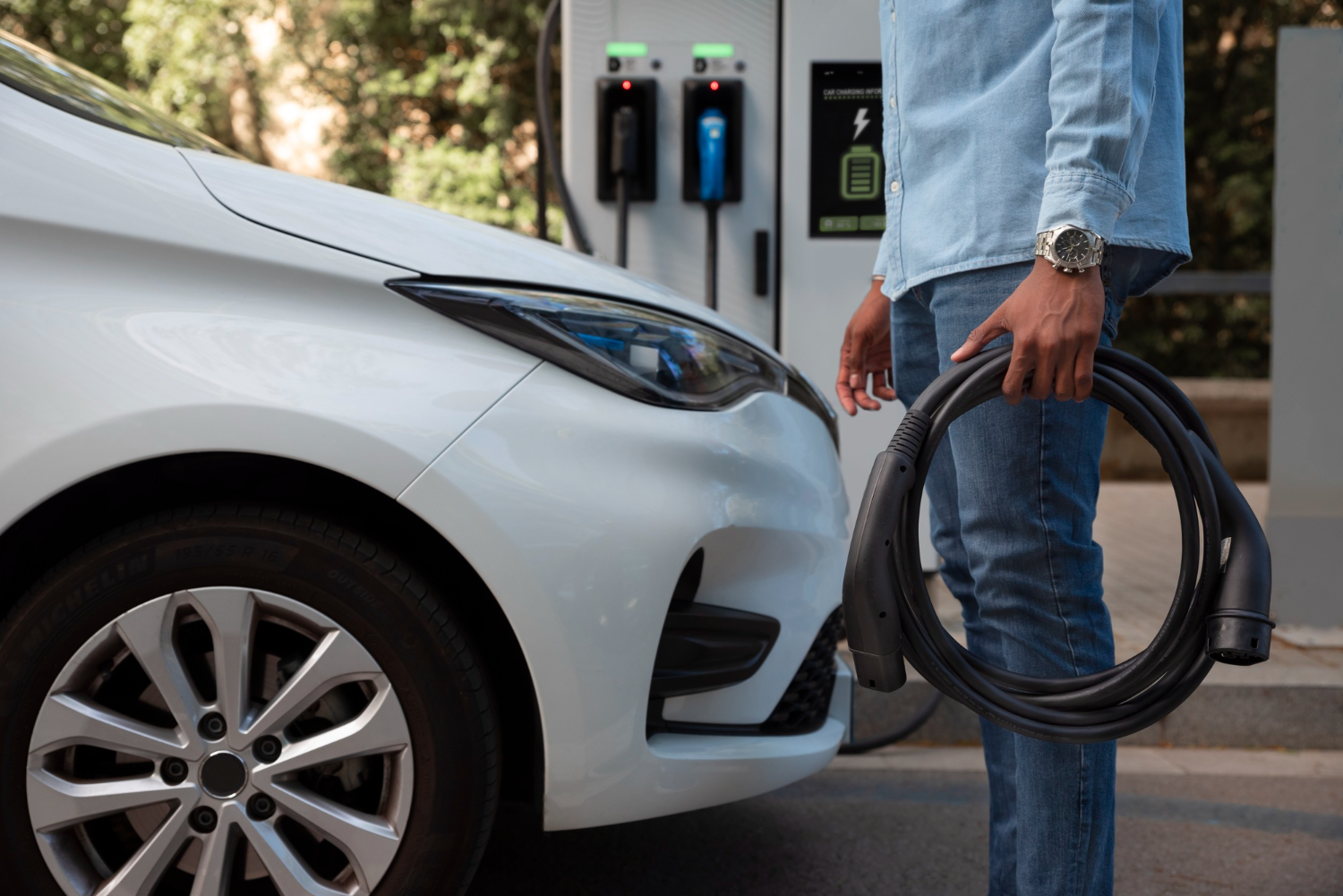
Rising geopolitical tensions in the Middle East have renewed concerns over global oil supply stability. This situation is creating expectations of higher fuel prices and increasing pressure on household transportation costs.
The article explains that this uncertainty is influencing consumer behavior, as more people begin to reconsider fuel-based mobility options. As operating costs become less predictable, electric vehicle (EV) adoption in Indonesia is increasingly seen as an alternative that offers more stable long-term costs compared to conventional vehicles.
This shift is also part of a broader global pattern, where energy instability is accelerating interest in electric mobility across multiple markets.
Indonesia EV Sales Growth Surpasses Fivefold Increase in Three Years
According to data from GAIKINDO (Gabungan Industri Kendaraan Bermotor Indonesia) and reported by GoodStats, Indonesia’s electric vehicle market has recorded strong and consistent growth between 2022 and 2025.
In 2022, EV sales were recorded at 10,327 units. In 2023, this figure increased to 17,051 units, reflecting a 65% rise. In 2024, sales climbed sharply to 43,188 units, marking a 153% year-on-year increase.
The upward trend continued in 2025, when EV sales reached 103,931 units, representing a 141% increase compared to 2024. Overall, Indonesia’s electric vehicle sales growth has expanded more than five times within just three years.
This rapid acceleration indicates that the Indonesian EV market is moving from early adoption toward a stronger growth phase.
EV Market Share Reaches 15% of Total Car Sales in Early 2026
The article further highlights that Indonesia’s EV market share reached approximately 15% of total vehicle sales during January–February 2026.
This milestone suggests that electric vehicles are no longer a niche segment in the automotive industry. Instead, they are becoming an increasingly significant part of Indonesia’s overall car market.
The growth is supported by rising consumer interest, which is closely linked to fuel price volatility and the search for more efficient transportation options.
Global EV Adoption Strengthens Amid Rising Fuel Costs
The shift toward electric vehicles is not limited to Indonesia. The article notes similar developments in other countries, including the United States and Australia.
In the United States, demand for electric vehicles has increased alongside rising fuel prices. Meanwhile, in Australia, demand for Chinese EV brands has surged during periods of higher fuel costs.
These patterns show that global EV adoption is increasingly influenced by energy price fluctuations. The article highlights that rising fuel prices are acting as a catalyst for consumers to shift toward electric mobility as part of a broader response to global energy uncertainty.
Corporate Sector Accelerates Electric Vehicle Integration in Operations
Beyond consumer behavior, the corporate sector in Indonesia is also beginning to adopt electric vehicles for operational efficiency.
The article highlights PT Primarajuli Sukses (PRS), a subsidiary of PT Ever Shine Tex Tbk (ESTI), which has started using electric trucks for distribution operations in Jakarta and Bandung.
This initiative is supported by Kalista, part of the Indika Energy Group, which provides electric vehicle ecosystem solutions, including fleet management integration.
According to statements cited in the article, initial trials showed fuel cost savings of up to 40%. Kalista also reported that operational efficiency improvements reached around 27% per month, along with emissions reductions of approximately 30%.
The EV fleet used in this operation includes Foton E-Miller trucks with 81.14 kWh battery capacity and 4-ton payload capability, as well as Foton E-Aumark units with 63.75 kWh capacity and 2.5-ton payload capability.
Indonesia EV Ecosystem Still Faces Infrastructure and Transition Challenges
Despite rapid growth in electric vehicle adoption in Indonesia, the ecosystem still faces several structural challenges.
The article notes that public charging infrastructure (SPKLU) remains unevenly distributed, particularly outside major urban centers. This creates concerns for consumers regarding long-distance travel and charging accessibility.
There are also ongoing perceptions that electric vehicles are not yet fully practical for all daily usage conditions, especially in terms of charging time and availability.
However, the article also highlights that government and industry collaboration is increasing. Efforts include developing domestic battery production, expanding SPKLU networks, encouraging investment in EV manufacturing, and implementing regulatory support such as increasing domestic component levels (TKDN) to at least 60%.
This article is a summary of several original articles. The full versions can be read at the following links:
https://www.technologyreview.com/2026/03/26/1134677/gas-prices-electric-vehicles/
PHOTO: FREEPIK
This article was created with AI assistance.
We make every effort to ensure the accuracy of our content, some information may be incorrect or outdated. Please let us know of any corrections at [email protected]
Read More