





 Monday, 21-09-26








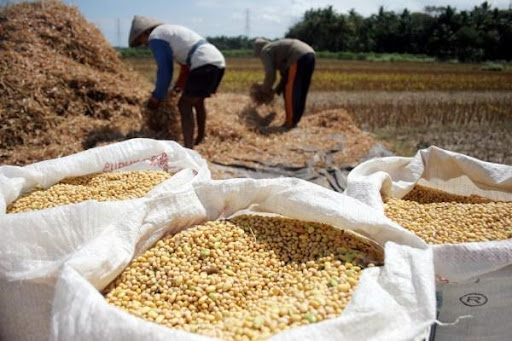
Indonesia is facing renewed pressure on its food supply chain as the soybean price increase continues to accelerate, driven by a combination of global market dynamics and a weakening rupiah. The situation is becoming increasingly critical for industries that rely heavily on imported soybeans, particularly tofu and tempeh producers, which form a vital part of the country’s daily consumption.
The soybean price increase is not an isolated phenomenon. It reflects a broader trend in global commodity markets, where supply disruptions, geopolitical tensions, and currency volatility intersect. For Indonesia, which imports the majority of its soybean needs, these external pressures are translating into real economic challenges domestically.
As the rupiah weakens against the US dollar, import costs rise, amplifying the impact of global price movements. This dual pressure is now being felt across multiple layers of the economy, from small-scale producers to large food manufacturers.
Global Supply Disruptions Drive Soybean Price Increase
One of the primary drivers behind the soybean price increase is the tightening global supply. Major soybean-producing countries such as the United States, Brazil, and Argentina have experienced production uncertainties due to adverse weather conditions and shifting agricultural priorities.
In recent months, unpredictable climate patterns have affected harvest yields, reducing overall supply in the global market. At the same time, rising demand from large economies, particularly China, has intensified competition for available stock. This imbalance between supply and demand has pushed global soybean prices upward.
Additionally, logistical disruptions in global trade routes have further complicated the situation. Shipping delays and higher freight costs have added another layer of expense, making imported soybeans even more costly for countries like Indonesia.
The soybean price increase is also influenced by speculative trading in commodity markets. Investors seeking to hedge against inflation often turn to agricultural commodities, driving prices higher in the process. This financialization of commodities adds volatility, making prices more unpredictable and difficult to manage for importing nations.
For Indonesia, which depends on imports for more than 80 percent of its soybean consumption, these global dynamics create significant vulnerability. Domestic production has not been sufficient to offset import reliance, leaving the country exposed to external shocks.
Weak Rupiah Amplifies Domestic Impact of Soybean Price Increase
While global factors set the stage, the depreciation of the rupiah has intensified the soybean price increase domestically. Since soybeans are traded internationally in US dollars, any weakening of the local currency directly increases import costs.
The rupiah’s depreciation is influenced by several macroeconomic factors, including global interest rate trends, capital outflows, and domestic economic conditions. As the US Federal Reserve maintains higher interest rates, capital tends to flow out of emerging markets like Indonesia, putting downward pressure on the rupiah.
This currency dynamic has a multiplier effect. Even if global soybean prices remain stable, a weaker rupiah would still result in higher domestic prices. Combined with rising global prices, the impact becomes even more severe.
For importers and distributors, this means higher procurement costs. These costs are eventually passed down the supply chain, affecting producers and consumers alike. Small and medium enterprises, particularly tofu and tempeh producers, are among the hardest hit.
Many of these producers operate on thin margins and have limited ability to absorb cost increases. As a result, they are forced to either raise prices or reduce production, both of which have broader economic implications.
The soybean price increase is therefore not just a trade issue but a macroeconomic concern that intersects with currency stability and inflation management.
Impact on Food Industry and Inflation Concerns
The soybean price increase is having a direct impact on Indonesia’s food industry, particularly in the production of staple foods like tofu and tempeh. These products are essential sources of affordable protein for millions of Indonesians, making price stability crucial.
As soybean prices rise, producers are faced with difficult decisions. Some have reduced production volumes, while others have increased retail prices. In certain cases, temporary shutdowns have been reported, highlighting the severity of the situation.
For consumers, this translates into higher food prices and reduced purchasing power. The impact is especially significant for lower-income households, which rely heavily on tofu and tempeh as primary protein sources.
The soybean price increase also contributes to broader inflationary pressures. Food inflation is a key component of overall inflation, and sustained increases in staple food prices can have cascading effects across the economy.
Policymakers are therefore closely monitoring the situation. Maintaining food price stability is a critical priority, not only for economic reasons but also for social stability. Sudden spikes in food prices can lead to public dissatisfaction and increased economic vulnerability.
In response, the government may consider a range of policy measures, including import subsidies, price controls, or efforts to boost domestic production. However, each of these options comes with its own set of challenges and trade-offs.
Long-Term Strategy to Mitigate Soybean Price Increase Risks
The recurring soybean price increase highlights the need for a more sustainable long-term strategy. Indonesia’s heavy reliance on imports exposes it to external shocks that are beyond its control.
One potential solution is to increase domestic soybean production. This would require significant investment in agricultural infrastructure, improved seed varieties, and farmer incentives. However, achieving self-sufficiency is a complex and time-consuming process.
Another approach is diversification. By reducing dependence on a single source or supplier, Indonesia can mitigate the risks associated with global supply disruptions. Exploring alternative protein sources could also be part of the strategy.
Currency stabilization is equally important. Strengthening the rupiah through sound macroeconomic policies can help reduce the impact of global price fluctuations. This includes maintaining fiscal discipline, attracting foreign investment, and ensuring economic resilience.
The soybean price increase also underscores the importance of supply chain efficiency. Improving logistics, storage, and distribution systems can help reduce costs and enhance resilience against external shocks.
Ultimately, addressing the soybean price increase requires a coordinated effort involving government, industry, and stakeholders across the supply chain. Short-term measures may provide relief, but long-term solutions are essential to ensure sustainable food security.
Conclusion
The soybean price increase is a multifaceted issue driven by global supply constraints and domestic currency weakness. Its impact is being felt across Indonesia’s economy, from food producers to consumers, highlighting the interconnected nature of global and local markets.
As Indonesia navigates this challenge, the focus must be on balancing immediate relief measures with long-term structural reforms. Strengthening domestic production, stabilizing the currency, and enhancing supply chain resilience will be key to mitigating future risks.
In an increasingly volatile global environment, the soybean price increase serves as a reminder of the importance of economic adaptability and strategic planning. For Indonesia, the path forward will require both policy innovation and sustained commitment to food security.
Read More