





 Saturday, 13-06-26








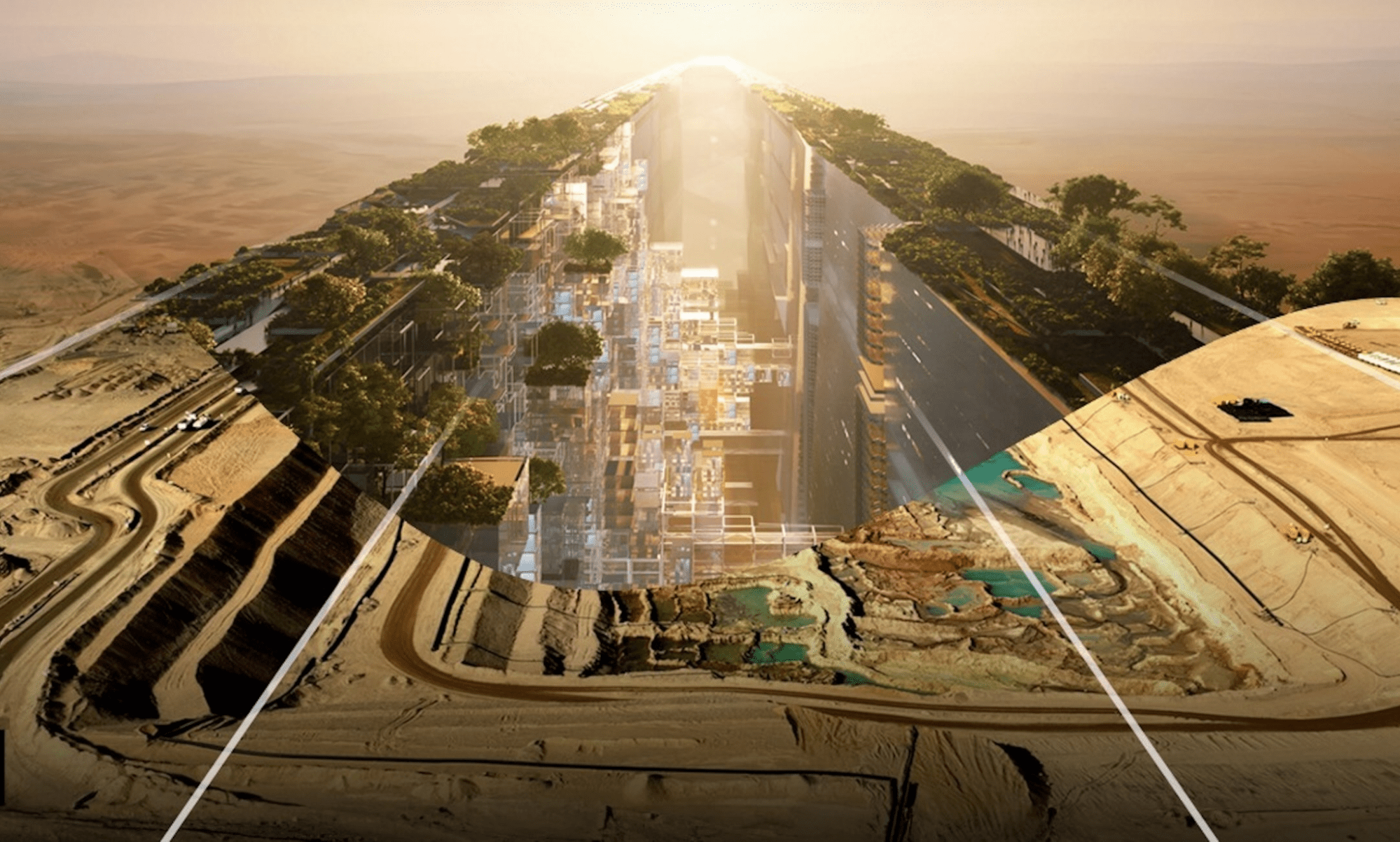
Saudi Arabia’s ambitious megacity project known as NEOM has long captured global attention as one of the most futuristic urban experiments ever conceived. At the heart of the initiative stood The Line, a 170 kilometer mirrored megastructure envisioned as a car free city for nine million residents stretching across the desert. However, mounting financial pressures, construction challenges, and shifting technological priorities have forced the kingdom to rethink its strategy.
Instead of pushing forward with the original megacity concept, Saudi Arabia is increasingly repositioning the NEOM development toward becoming a major AI data center hub. The shift reflects broader economic and technological trends, as countries worldwide compete to build the infrastructure needed for artificial intelligence. The emergence of AI data center ecosystems is rapidly becoming a cornerstone of global digital competitiveness, and Saudi Arabia intends to be part of that race.
The Rise and Reassessment of The Line
When Saudi Crown Prince Mohammed bin Salman first introduced NEOM in 2017, the project was framed as a cornerstone of the country’s Vision 2030 plan to diversify the economy beyond oil. The Line was designed as the centerpiece of this vision.
The futuristic city would feature two parallel mirrored skyscrapers stretching 170 kilometers across the Saudi desert. With a width of about 200 meters and a height of 500 meters, the structure aimed to house millions of residents while eliminating roads and cars entirely. Transportation inside the city would rely on high speed underground transit capable of moving residents across the entire structure in under twenty minutes.
The design was intended to represent a new model of urban development powered entirely by renewable energy. Advocates claimed the city could dramatically reduce carbon emissions while supporting high density living in a controlled environment.
However, translating this futuristic vision into reality proved far more complicated than expected. Construction costs ballooned, and progress on the massive infrastructure project slowed significantly. By 2025, Saudi authorities began conducting a strategic review of the NEOM initiative after billions of dollars had already been invested.
Reports indicate that around 50 billion dollars had been spent on early construction stages, yet only limited sections of the project had been completed. Workforce reductions and restructuring within the NEOM development organization signaled growing concerns about the long term feasibility of the project.
Financial pressures also played a role. Lower oil prices reduced government revenue and placed additional strain on Saudi Arabia’s Public Investment Fund, the sovereign wealth fund responsible for financing many of the kingdom’s megaprojects. As a result, authorities decided to pause major construction activities related to The Line while reconsidering the project’s long term direction.
From Futuristic City to AI Data Center Hub
The outcome of the strategic review marked a major turning point for the NEOM project. Rather than continuing to prioritize residential megacity development, Saudi Arabia began pivoting toward building a large scale AI data center ecosystem within the region.
In early 2026, NEOM announced a partnership with DataVolt, a company specializing in sustainable data center infrastructure. The agreement involves an investment of approximately 5 billion dollars to develop a major AI data center campus in the Oxagon district of NEOM.
Oxagon is envisioned as the industrial and innovation hub of the broader NEOM region, strategically located along the Red Sea coast. The location offers several advantages for building energy intensive computing infrastructure.
The new facilities are being designed as what industry experts call an AI factory. These specialized data centers are optimized for training and running large scale artificial intelligence models, including large language models and advanced machine learning systems. Unlike traditional cloud infrastructure, AI data center facilities require enormous computing power supported by dense clusters of GPUs.
The project is expected to become operational around 2028 and will focus specifically on supporting high performance AI workloads. The initiative also aligns with Saudi Arabia’s broader push to establish domestic AI capabilities and reduce dependence on foreign digital infrastructure.
One key advantage of the NEOM location lies in its proximity to the Red Sea. Data centers generate enormous amounts of heat, making cooling one of the most critical operational challenges. By utilizing seawater cooling systems, the new AI data center facilities can maintain energy efficient operations while avoiding heavy reliance on scarce freshwater resources.
In addition, the region’s growing renewable energy capacity, including solar and wind installations, could provide sustainable power for the data centers. This combination of renewable electricity and seawater cooling gives Saudi Arabia a competitive advantage in developing environmentally efficient AI infrastructure.
Why AI Data Centers Are Becoming Strategic Infrastructure
Saudi Arabia’s pivot reflects a broader global transformation in the digital economy. Artificial intelligence is rapidly becoming a core driver of economic growth, national security, and technological leadership. As a result, governments around the world are investing heavily in AI data center infrastructure.
Training modern AI models requires massive computing capacity. Advanced models can require tens of thousands of GPUs operating simultaneously for weeks or even months. This demand has created a global shortage of data center capacity specifically designed for AI workloads.
Countries that can build large scale AI data center ecosystems stand to gain several strategic advantages. These include attracting global technology companies, hosting regional cloud infrastructure, and supporting domestic innovation in areas such as robotics, autonomous systems, and advanced manufacturing.
Saudi Arabia has recognized this opportunity and is investing aggressively in AI infrastructure. The kingdom has also secured major technology partnerships with global semiconductor and computing companies. These collaborations aim to supply the advanced hardware required for next generation AI data center facilities.
Another key factor is geographic positioning. Located between Europe, Asia, and Africa, Saudi Arabia could serve as a regional data hub capable of providing low latency computing services across multiple continents. This geographic advantage makes NEOM an attractive location for hyperscale AI data center development.
Furthermore, large scale AI infrastructure supports broader economic diversification goals. Instead of relying primarily on oil exports, Saudi Arabia hopes to build a technology driven economy centered around digital services, advanced computing, and high value innovation sectors.
In this context, investing billions into AI data center infrastructure may ultimately produce greater long term economic returns than constructing highly experimental urban megastructures.
What the Future Holds for NEOM
Although The Line may not disappear entirely, its original vision is being significantly scaled back. Instead of building a 170 kilometer residential megacity, Saudi authorities are expected to develop a smaller and more practical urban area focused on industrial and commercial activity.
The revised timeline for portions of the project has also shifted far into the future, with some projections extending toward 2045 or beyond. Meanwhile, the AI data center initiative represents a near term priority that could deliver measurable economic impact sooner.
NEOM itself remains one of the most ambitious development zones in the world. The broader project still includes industrial districts, research centers, renewable energy infrastructure, and tourism developments.
However, the strategic emphasis is clearly shifting from symbolic megaprojects toward digital infrastructure capable of supporting emerging technologies.
The transformation of The Line into an AI data center hub illustrates how rapidly global priorities are changing in the era of artificial intelligence. For Saudi Arabia, the pivot reflects a pragmatic recognition that the real cities of the future may not be defined by architecture alone, but by the computing power that drives the digital economy.
If the strategy succeeds, NEOM could evolve from a futuristic city concept into one of the world’s most important AI data center ecosystems.
Read More