





 Saturday, 20-06-26








Indonesia Introduces Strict Social Media Age Restriction Policy
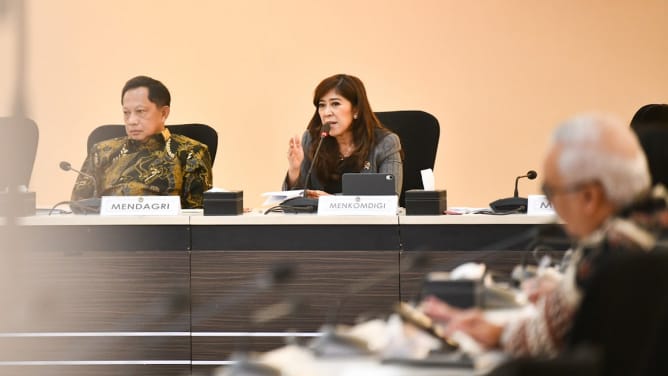
Indonesia is entering a new phase of digital governance as the government introduces a nationwide social media age restriction policy aimed at protecting children and teenagers online. The regulation, announced by the Ministry of Communication and Digital Affairs, marks one of the most assertive moves in Southeast Asia to regulate youth access to digital platforms. Beginning March 28, 2026, social media platforms operating in Indonesia will be required to comply with stricter rules regarding the age of users. Accounts belonging to children under the age of 16 will face deactivation or restrictions if platforms fail to verify age eligibility.
The policy reflects growing global concern about the psychological, social, and developmental impact of digital platforms on minors. Governments worldwide are increasingly pushing for stronger protections as studies continue to link excessive social media use among children to anxiety, cyberbullying exposure, and declining attention spans. For Indonesia, the social media age restriction rule is expected to affect millions of young users across popular platforms such as Instagram, TikTok, Facebook, and X. Authorities believe the policy will encourage safer digital environments while forcing technology companies to adopt stronger verification systems.The new regulation is not merely advisory. Platforms will face regulatory consequences if they fail to enforce the rule, signaling the government's intent to ensure real compliance rather than symbolic commitments.
Government Targets Underage Accounts and Strengthens Platform Responsibility
The newly announced social media age restriction framework places direct responsibility on digital platforms to ensure their users meet the minimum age requirement. According to the Ministry of Communication and Digital Affairs, the policy requires social media companies to actively monitor and verify the age of their users. If an account is found to belong to a user younger than 16, the platform must take corrective action such as limiting features, suspending the account, or fully deactivating it. Authorities have identified several categories of accounts that may be targeted under the enforcement program. These include accounts clearly operated by children, accounts using school related identities indicating underage users, and accounts that show behavioral patterns typical of minors.
The government is also urging parents and guardians to play a more active role in supervising their children's digital activities. Officials emphasize that the regulation is not designed to eliminate children's internet access entirely, but rather to ensure safer and more age appropriate digital engagement.
The social media age restriction rule will also require platforms to improve identity verification processes. While Indonesia has not yet mandated a specific verification method, discussions include the possibility of integrating national digital identity systems or stronger account authentication procedures. Digital policy observers say this could trigger significant technological adjustments among major social media companies operating in Indonesia. Age detection technologies, artificial intelligence based moderation systems, and parental control tools may become essential components of compliance strategies. The policy therefore signals a shift in regulatory expectations. Social media platforms are no longer viewed simply as communication tools but as digital ecosystems responsible for protecting vulnerable users.
Rising Concerns Over Children’s Mental Health and Online Safety
The push for a social media age restriction policy in Indonesia is closely tied to mounting concerns about children's mental health and online safety. Over the past decade, Indonesia has become one of the most active social media markets in the world. Data from global digital research firms consistently ranks the country among the top users of social networking platforms in Asia. A significant portion of this user base includes teenagers and younger children who often gain access to platforms well before official minimum age requirements. Experts warn that early exposure to social media environments can have serious psychological consequences. Children may encounter cyberbullying, harmful content, online predators, and unrealistic social comparisons that influence self esteem and emotional development.
Studies conducted by international health institutions have highlighted correlations between heavy social media usage and rising cases of anxiety, depression, and sleep disruption among adolescents. While social media can offer educational opportunities and social connections, unmanaged exposure at young ages can create developmental risks. Indonesia's social media age restriction initiative aims to address these concerns by setting a clearer boundary for platform access. Officials believe that restricting unsupervised use among children under 16 will help reduce harmful online exposure while giving parents more control over their children's digital habits.
The regulation also reflects a broader recognition that digital literacy alone is not sufficient to address risks in modern social media ecosystems. Structural safeguards within the platforms themselves are increasingly seen as necessary to ensure safe user experiences. As a result, the social media age restriction rule forms part of a larger conversation about digital well being, responsible platform design, and the long term social effects of algorithm driven content consumption.
Implementation Challenges and Industry Response
Despite its clear objectives, implementing Indonesia's social media age restriction policy will not be without challenges.
One of the biggest difficulties lies in verifying the true age of users. Many children already bypass age restrictions by registering accounts with false birth dates. Without reliable verification mechanisms, enforcement may rely heavily on platform level detection technologies. Technology companies will need to adapt their systems to comply with the new regulation. This could involve deploying machine learning tools capable of identifying underage users based on behavior patterns, language use, or facial age estimation technologies.
However, such technologies also raise privacy concerns. Civil society groups have warned that aggressive identity verification requirements could potentially expose users to data misuse or surveillance risks if not properly regulated. Social media platforms may also face operational complexities when implementing the policy across Indonesia's vast user base. With hundreds of millions of digital users, monitoring underage accounts at scale will require significant investment in moderation infrastructure. Nevertheless, industry analysts believe most major platforms will ultimately comply with the social media age restriction rule in order to maintain access to Indonesia's lucrative digital market. The country represents one of the fastest growing internet economies in Southeast Asia, making regulatory compliance a strategic necessity.
Some technology firms are already exploring solutions such as parental permission systems, youth specific platform versions, and educational digital spaces designed specifically for minors. In the long run, the policy could push the global social media industry toward more responsible platform design, particularly in emerging digital markets.
Indonesia Joins Global Movement Regulating Youth Social Media Access
Indonesia's decision to enforce a social media age restriction policy reflects a growing international trend. Governments across the world are introducing regulations aimed at limiting social media exposure among children and teenagers. Countries such as the United Kingdom, Australia, and several members of the European Union have already explored similar measures. These initiatives range from stricter age verification rules to limits on targeted advertising for minors. By implementing the social media age restriction rule, Indonesia positions itself among nations seeking to balance digital innovation with public welfare. The policy acknowledges that while social media platforms provide valuable communication tools, they also carry significant societal responsibilities. For Indonesia's rapidly expanding digital economy, the regulation could reshape how platforms operate and interact with younger audiences. Technology companies may need to rethink product design, content moderation strategies, and youth engagement policies.
Ultimately, the success of the social media age restriction initiative will depend on collaboration between regulators, technology companies, parents, and educators. Ensuring safe digital environments for younger generations requires not only legal frameworks but also cultural awareness and shared responsibility. As the March 2026 implementation date approaches, Indonesia's digital ecosystem will be closely watched by policymakers and industry leaders worldwide. The country's approach may become an important reference point for other emerging markets grappling with the complex relationship between youth, technology, and social media.
Read More