





 Sunday, 18-10-26








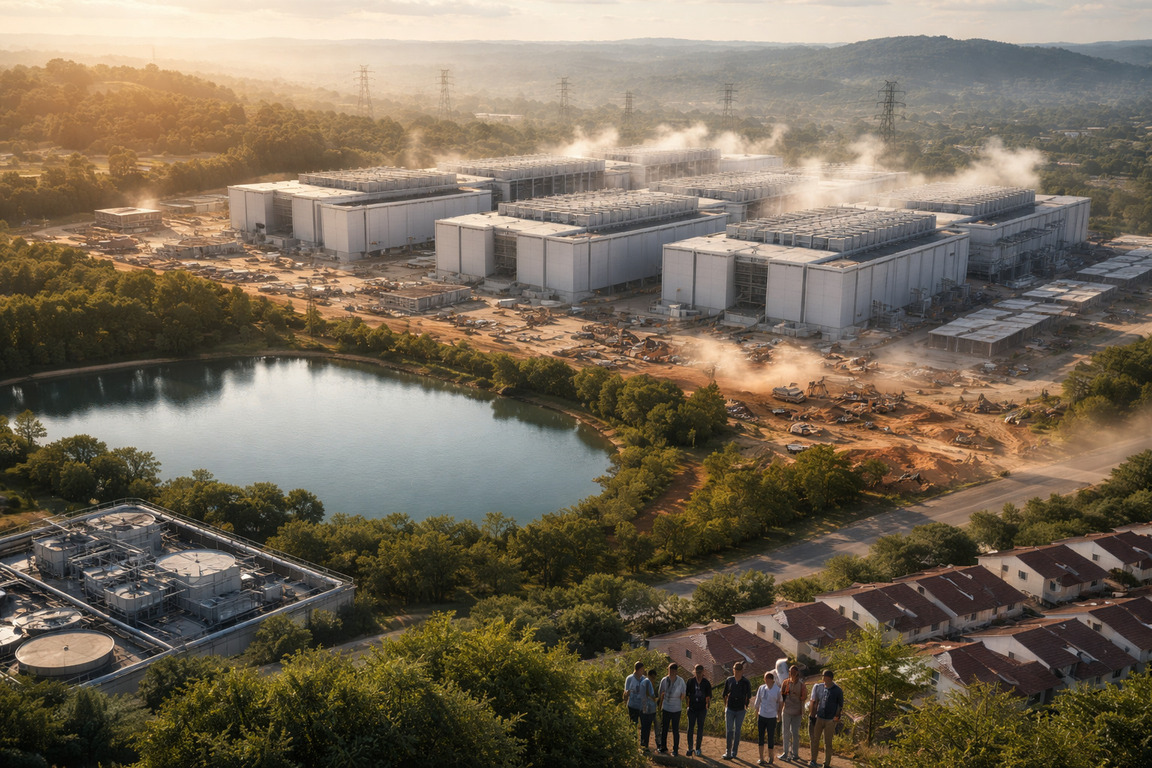
At first glance, Malaysia’s digital infrastructure story reads like a regional success: within a few short years, the southern state of Johor has emerged as one of Southeast Asia’s fastest-growing data centre hubs. Its proximity to Singapore, combined with competitive energy costs and abundant land, made it a magnet for global tech investment, especially at a time when Singapore’s own development moratorium redirected demand across the border.
Yet behind this growth narrative lies an increasingly acute paradox: as data centres proliferate, a simmering conflict is emerging between economic ambitions and environmental sustainability, particularly around water resources and community well-being.
The Scale of the Data Centre Boom
Over the past several years, Malaysia has vaulted into the front ranks of Southeast Asian digital infrastructure, buoyed by demand for cloud computing, digital services, and especially artificial intelligence (AI) development.
Prime Minister Datuk Seri Anwar Ibrahim recently revealed that Malaysia has restricted approvals for new data centres not tied to AI, a move that acknowledged the soaring energy and water demands of such facilities. While AI-linked facilities continue to be prioritised, conventional data centre applications have essentially been halted for nearly two years due to resource concerns.
Market intelligence firm DC Byte estimates Malaysia now accounts for more than half of all under-construction data centre capacity among major Southeast Asian markets, including Indonesia, Thailand, the Philippines, and Vietnam.
In Johor, the most active market in the nation, more than a dozen large facilities are in various stages of construction, with billions of ringgit in investment. However, the pace and scale of these developments have begun to outstrip the capacity of local infrastructure, particularly water and power supplies.
Water: The Invisible Constraint
For all their digital promise, data centres are remarkably physical in their resource use. Beyond racks of servers and miles of fibre, they require significant quantities of water for cooling systems, especially in tropical climates like Malaysia’s.
Estimates widely cited in industry and technical circles indicate that data centres can consume millions of litres of water per day to support evaporative cooling systems. While precise figures vary by design and scale, some older designs can draw between 40–50 million litres per day, volumes that rival industrial and municipal water demands.
In Johor, this reality has translated into real stress on the local water supply network. The state government has taken the notable step of halting approvals for Tier 1 and Tier 2 data centres, the older, less water-efficient designs, because of extreme water consumption concerns.
State officials have pointed out that water usage for some data centres could be so intensive that it would significantly strain treated water supplies, resources that must also serve households, agriculture, and essential industries. This has led to stricter permitting and environmental assessments for new projects.
In parallel, Johor has established a technical committee focused on data centre water management that evaluates projects’ long-term sustainability and encourages the adoption of advanced cooling technologies, including treated wastewater use and closed-loop recycling systems.
Yet even with regulatory oversight, infrastructure lags behind demand. One investment research note noted that Johor’s current water network could supply just a fraction of the potential daily water requirements of existing proposals, necessitating new storage, treatment, and distribution solutions.
Supply Constraints and Infrastructure Bottlenecks
Part of the paradox facing Johor is that while Malaysia enjoys high rainfall and multiple water sources, including rivers, reservoirs, and aquifers, these resources are not always easily mobilised to meet sudden spikes in industrial demand without significant investment.
Experts warn that without strategic upgrades to water infrastructure, such as reservoirs, treatment plants, and distribution networks, a supply shortfall could materialise well before 2030. Some of the key water projects designed to ease these pressures, including off-river storage schemes and treatment plant expansions, are only expected to complete by the end of the decade.
Meanwhile, inefficiencies in the existing network, particularly high non-revenue water losses due to aging pipelines, further complicate the balancing act between industrial supply and residential needs. Reductions in water loss could alleviate stress, but such infrastructure upgrades require substantial capital and time.
These pressures have sparked debate among policymakers and technocrats alike: how to balance rapid digital growth with the sustainability of water systems that underpin daily life for millions of Malaysians.
The First Backlash: Residents Take a Stand
While much of the data centre boom has moved forward smoothly, late 2025 and early 2026 have seen the first organised community protests against developments perceived as threats to local utilities and quality of life.
In early February 2026, more than 50 residents staged a protest outside a data centre construction site in Johor, raising concerns about construction dust, noise, and the potential for water shortages, the first public demonstration of its kind in Malaysia.
Residents and civic activists pointed to the fact that construction and operational demand for water and energy was shifting focus away from community needs, a narrative that resonates with global trends in resource-intensive industries.
Some local social media discussions highlighted fears that communities could be asked to ration water usage to keep data centres operationa, reflecting a broader anxiety about priority setting between private infrastructure and public welfare.
Additionally, complaints about construction dust pollution and extended work hours, sometimes past permitted limits, have amplified the sense that data centre growth was proceeding without sufficient attention to neighbourhood impacts.
Though currently not widespread, these local tensions mark a potential turning point: where once data centre projects were seen as purely economic opportunities, bringing jobs, foreign capital, and prestige, they are increasingly viewed through the lens of resource equity and environmental justice.
Economic Stakes and Sustainability Trade-offs
From an economic perspective, Johor’s data centre boom has undeniable appeal. These facilities anchor global tech supply chains, create construction and limited operational employment, and produce long-term property and corporate tax revenue. They also position Malaysia as a strategic gateway for digital services across ASEAN.
Yet the sustainability challenges cannot be ignored. Data centres are not just power-hungry, they are water-sensitive, particularly in tropical regions with high ambient temperatures that put pressure on cooling systems.
Industry analysts warn that unless water consumption is managed through innovative cooling technologies and alternative water sources, the sector could face a reputational and operational backlash. This could slow investment or even prompt companies to explore alternative markets with more predictable utility access.
In response, some in industry argue that river water and reclaimed sources, rather than treated potable water, should be prioritised for cooling needs, preserving drinking-quality water for households. This approach would require regulatory adjustments, utility collaboration, and capital investment in new intake infrastructure.
Yet such solutions come with their own trade-offs, including ecological impacts on river systems and the need for advanced treatment technologies.
The Path Forward
Johor’s paradox highlights a broader truth about the data centre economy: digital infrastructure, for all its intangible benefits, is anchored in real-world natural resources. Electricity and water must be delivered physically, reliably, and sustainably, and at scale.
For Malaysia, the path forward will likely hinge on several strategic pillars:
- Water Infrastructure Investment - Expanding reservoir capacity, treatment plants, and distribution networks to ensure resilience against industrial demand spikes.
- Cooling Innovation - Encouraging air-cooled systems, closed-loop water reuse, and treated wastewater solutions to reduce dependence on potable water.
- Regulatory Balancing Acts - Aligning economic incentives with environmental safeguards, such as requiring sustainable water usage plans for project approval.
- Community Engagement - Proactively involving residents and local stakeholders to address concerns about health, water access, and quality of life.
Crucially, Malaysia’s policymakers - from federal ministries to state governments, must bridge the informational gap between macro investors seeking digital infrastructure returns and the communities who live with the bottom-line impacts.
If successful, Johor could pioneer a model where digital growth and water sustainability coexist, an attractive proposition for investors increasingly attuned to environmental, social, and governance (ESG) criteria.
If not, the state’s experience may serve as a cautionary tale for emerging digital hubs around the world: that infrastructure growth without resource equilibrium is ultimately unsustainable.
Sources:
- Malaysia restricts non-AI data centre approvals over energy and water concerns - Malay Mail, Feb 2026.
- “Nod only for data centres that benefit us” - The Star, Feb 25, 2026.
- Johor forms technical committee for data centre water management - The Sun, Aug 18, 2025.
- Johor snubbed 30% of data centre bids for sustainability - Daily Express Malaysia, Nov 2024.
- Malaysia curbs non-AI data centres as power squeeze looms - CNA, Feb 2026.
- Data centre investment and water risk analysis - Mahersaham blog, Mar 2026.
- Local protests and resident concerns - The Sun / The Strait Times, Feb 2026.
- Dust, noise, and construction impact discussions - Lowyat.NET, Feb 2026.
- Reddit community insights on water and protest concerns.
