





 Saturday, 30-05-26








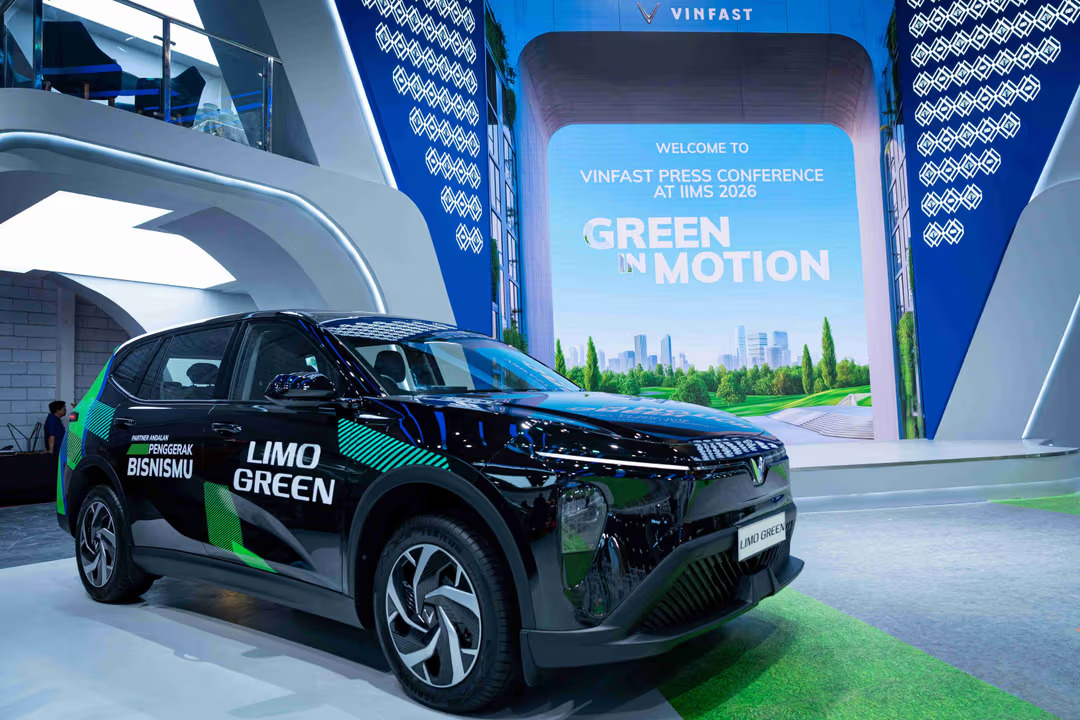
The launch of VinFast Limo Green Indonesia marks another milestone in the country’s accelerating shift toward electric mobility. As Indonesia pushes to reduce emissions, strengthen domestic manufacturing, and modernize its transportation sector, the arrival of new electric vehicle models is becoming central to the national strategy.
Developed by VinFast, the Limo Green is positioned as a practical and scalable solution for Indonesia’s urban and fleet mobility needs. Rather than focusing solely on premium consumer segments, the VinFast Limo Green Indonesia initiative emphasizes affordability, operational efficiency, and suitability for commercial transportation.
Indonesia, Southeast Asia’s largest automotive market, is navigating a complex vehicle transition. While internal combustion engine cars still dominate roads, government policy, infrastructure investment, and rising consumer awareness are gradually reshaping the landscape. In this context, the VinFast Limo Green Indonesia model is designed to align with both regulatory incentives and market realities.
Why VinFast Limo Green Indonesia Matters For The EV Ecosystem
Indonesia has articulated clear ambitions to become a regional electric vehicle hub. The country’s vast nickel reserves, essential for lithium battery production, provide a strong foundation for domestic EV manufacturing. Policymakers aim to integrate upstream mineral processing with downstream vehicle assembly.
The VinFast Limo Green Indonesia rollout contributes to this broader ecosystem development. By introducing a model tailored for local usage patterns, VinFast signals long term commitment rather than short term market testing.
One of the biggest barriers to EV adoption in Indonesia is cost sensitivity. Many consumers and fleet operators remain cautious about upfront vehicle prices despite lower operational costs. The VinFast Limo Green Indonesia strategy appears to address this concern by positioning the vehicle as an economically viable option for ride hailing services, corporate fleets, and urban mobility providers.
Fleet electrification plays a crucial role in accelerating EV penetration. Commercial vehicles typically log higher daily mileage than private cars, amplifying fuel savings and emission reductions. If widely adopted, the VinFast Limo Green Indonesia platform could significantly influence fleet transition dynamics.
Beyond economics, visibility matters. When consumers regularly encounter electric vehicles in public transport or ride sharing fleets, familiarity increases and skepticism declines. This indirect effect strengthens the overall EV ecosystem.
Technical Features And Market Positioning
While specifications may vary by configuration, the VinFast Limo Green Indonesia model is designed to prioritize range efficiency, passenger comfort, and practicality. As an electric multi purpose vehicle, it aligns with Indonesia’s strong demand for family oriented and commercial transport vehicles.
Battery performance remains central to EV acceptance. Indonesian consumers are particularly attentive to driving range and charging infrastructure availability. The VinFast Limo Green Indonesia concept emphasizes adequate range for urban and intercity travel, helping alleviate range anxiety concerns.
Charging infrastructure expansion is progressing, though unevenly distributed across regions. Major cities such as Jakarta and Surabaya are seeing more charging stations, but nationwide coverage remains a work in progress. Introducing vehicles optimized for predictable urban routes supports smoother adoption during this infrastructure build out phase.
Another important aspect is maintenance cost. Electric vehicles generally have fewer moving parts compared to conventional cars, reducing routine servicing needs. The VinFast Limo Green Indonesia proposition highlights long term operational savings, an attractive feature for fleet operators calculating total cost of ownership.
By combining competitive pricing with lower maintenance and energy costs, the VinFast Limo Green Indonesia initiative strengthens the business case for electrification.
Indonesia’s Policy Environment And EV Ambitions
Indonesia’s government has introduced fiscal incentives, tax benefits, and regulatory frameworks to stimulate EV adoption. These measures include import duty adjustments, value added tax incentives, and support for local assembly.
The VinFast Limo Green Indonesia entry occurs within this supportive policy environment. As authorities seek to accelerate vehicle transition, collaboration between global manufacturers and domestic stakeholders becomes increasingly important.
Indonesia’s ambition to reduce carbon emissions aligns with its commitments under international climate agreements. The transportation sector represents a significant share of urban emissions. Electrification of passenger vehicles and fleets is therefore a strategic priority.
In addition, EV adoption supports energy diversification. Reducing dependence on imported petroleum enhances energy security while creating new industrial value chains in battery production and vehicle assembly.
The VinFast Limo Green Indonesia model fits within this policy framework, potentially contributing to both environmental and economic objectives.
Competitive Landscape In The Indonesian EV Market
The Indonesian EV market is becoming more competitive as regional and global manufacturers introduce new models. Chinese brands have gained visibility with competitively priced offerings, while Japanese automakers are gradually expanding hybrid and electric lineups.
VinFast’s differentiation strategy centers on its full electric commitment and rapid product rollout. The VinFast Limo Green Indonesia model strengthens its portfolio presence in a segment that combines practicality with sustainability.
Brand trust remains a crucial factor. As a relatively new entrant compared to long established Japanese brands, VinFast must build consumer confidence through after sales support, warranty coverage, and service network expansion.
Strategic partnerships with local distributors and service providers will determine long term success. If the VinFast Limo Green Indonesia deployment is accompanied by robust customer support infrastructure, it could accelerate market acceptance.
Economic And Industrial Implications
Indonesia aims to move beyond being merely a consumer market. It seeks to become an EV production hub for Southeast Asia. Encouraging global manufacturers to invest locally supports job creation, technology transfer, and supply chain development.
The VinFast Limo Green Indonesia strategy may include local assembly or component sourcing in the future. Integrating domestic suppliers into production networks enhances industrial resilience.
Battery supply chain development is particularly strategic. Indonesia’s nickel reserves position it as a key player in global battery manufacturing. Aligning EV production with domestic battery capacity strengthens vertical integration.
If successful, the VinFast Limo Green Indonesia initiative could contribute to Indonesia’s broader ambition of exporting electric vehicles regionally.
Consumer Perception And Behavioral Shift
Transitioning from conventional cars to electric vehicles involves behavioral change. Concerns about charging time, resale value, and battery durability persist among many consumers.
Demonstration projects and fleet usage can help address these concerns. When consumers observe electric vehicles operating reliably in daily service, confidence increases.
The VinFast Limo Green Indonesia rollout represents part of this normalization process. As more electric vehicles appear on Indonesian roads, EV adoption may shift from niche to mainstream.
Public education campaigns, transparent cost comparisons, and visible infrastructure expansion will complement product launches.
Long Term Outlook For Indonesia’s Vehicle Transition
Indonesia’s automotive future will likely be multi layered, combining hybrid, battery electric, and potentially hydrogen technologies. However, battery electric vehicles are expected to dominate near term transition efforts due to technological maturity and cost trajectory.
The VinFast Limo Green Indonesia initiative reflects the growing momentum behind full electrification. As battery prices decline and charging networks expand, EV adoption barriers will gradually erode.
Urban congestion, air pollution, and fuel subsidy pressures add urgency to vehicle transition policies. Electric mobility offers a pathway toward cleaner cities and reduced fiscal burdens associated with fossil fuel imports.
The success of the VinFast Limo Green Indonesia model will depend on pricing strategy, service reliability, and infrastructure alignment. Yet its introduction signals confidence in Indonesia’s EV trajectory.
In the coming years, competition will intensify and innovation cycles will accelerate. For Indonesia, balancing consumer affordability, industrial ambition, and environmental responsibility remains the central challenge.
The VinFast Limo Green Indonesia entry into the market therefore represents more than a product launch. It embodies the evolving dynamics of Southeast Asia’s largest automotive economy as it moves steadily toward an electric future.
Read More