





 Monday, 12-10-26








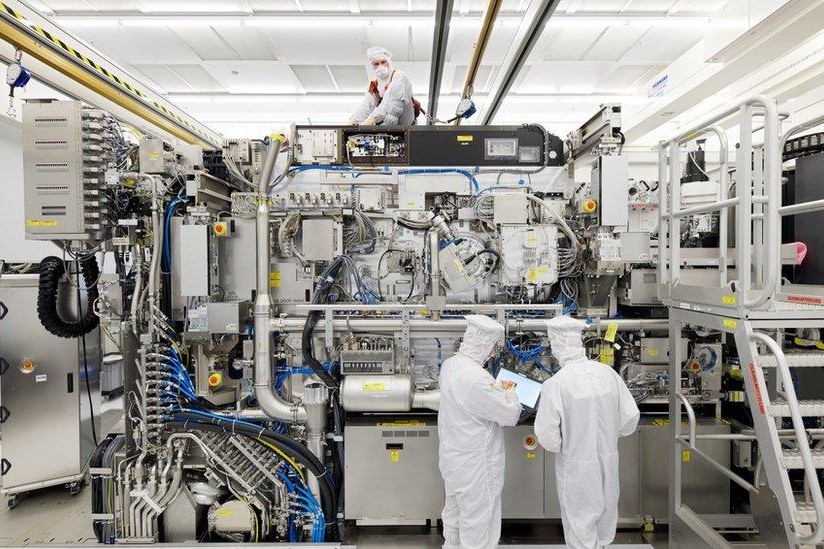
In a remote area just 30 minutes north of Phoenix, more than 30 cranes stand over a vast construction site (24/2). This site, more than 2½ times the size of New York City’s Central Park, is home to one of the largest chip-manufacturing facilities being built in the U.S., as part of the nation’s push to revitalize its semiconductor industry.
The $165 billion project, led by Taiwan Semiconductor Manufacturing Company (TSMC), aims to build six chip plants and other related facilities. Apple, which is TSMC’s largest customer for the site, is helping drive this effort, using its buying power to secure chips and reduce reliance on foreign suppliers. This move aligns with Apple’s broader strategy to diversify its supply chain and reduce dependency on overseas sources for crucial technology.
Apple’s Support for U.S. Chip Production
Apple is committing to buying more than 100 million chips from TSMC’s Arizona facility this year, a part of its long-term goal to support domestic manufacturing. Though Apple’s chip purchases are still a small fraction of its global demand, its push to reshore its supply chain shows the company’s effort to bolster U.S.-based chip production.
“We’re buying as much of the output of this fab as we can,” said David Tom, Apple’s global head of procurement. While the scale of the construction may appear modest in comparison to the global chip market, Apple’s financial support and purchasing agreements help to accelerate the development of U.S. chip production capabilities.
TSMC’s Arizona Plant and Future Expansion
TSMC’s Arizona plant represents the beginning of a major U.S. manufacturing footprint. The company plans to build six chip plants over the next decade, with the first facility already operational and two more expected to be up and running by next year. Ultimately, TSMC aims to turn the site into a company town, spanning more than 2,000 acres and including apartments, office buildings, and retail centers.
Despite the scale of the operation, TSMC’s Arizona plant will not match its Taiwan facilities in volume or technological advancements for years. The Taiwan site currently produces over 100,000 chip wafers per month, far surpassing the output expected from the Arizona facility, which will reach full capacity by 2030.
The U.S. Push to Secure Its Chip Supply Chain
This significant push for domestic chip production is also fueled by rising geopolitical tensions. The ongoing conflict between the U.S. and China, especially over Taiwan—where the world’s most advanced chips are made—has increased the urgency for securing U.S.-based chip manufacturing. Taiwan is seen as a vulnerable location, as China has threatened to take control of the island, further complicating the global chip supply chain.
The U.S. government has been offering financial incentives to encourage domestic production, aiming to reduce the country’s reliance on Taiwan and other foreign suppliers, who may be affected by geopolitical or natural disasters like earthquakes. The global chip shortage, which impacted various industries, including automotive manufacturing, during the pandemic, has underscored the importance of rebuilding the U.S. chip manufacturing infrastructure.
Apple’s Broader Investment in U.S. Manufacturing
In addition to its partnership with TSMC, Apple is also investing in other parts of the U.S. chip supply chain. For instance, GlobalWafers, a Taiwanese company that manufactures raw silicon wafers, opened a new plant in Sherman, Texas, last year. Apple has helped drive demand for GlobalWafers’ products by encouraging TSMC and other suppliers to use the company’s wafers in the chip-making process.
Apple is also making investments in other manufacturing projects across the U.S., including facilities that produce device glass in Kentucky, rare-earth magnet recycling in California, and silicon components in Texas. These efforts are part of Apple’s broader strategy to reduce reliance on foreign suppliers and strengthen its domestic manufacturing capabilities.
Foxconn and AI Server Production in Texas
Apple’s investment in U.S. manufacturing also extends to its AI server production in Houston, Texas. In partnership with Foxconn, Apple is expanding its assembly line to manufacture more AI servers, which will power advanced features in Apple devices. The company is converting a large warehouse into more than 200,000 square feet of manufacturing space by the end of this year.
Despite these efforts, Apple has not yet reshored iPhone assembly operations to the U.S., as the company remains focused on more manageable goals such as the reshoring of components, sub-assemblies, and advanced silicon. However, its commitment to reshoring critical technology, like AI servers and semiconductors, marks a significant shift in its supply chain strategy.
PHOTO: GETTY IMAGES/BBC
This article was created with AI assistance.
We make every effort to ensure the accuracy of our content, some information may be incorrect or outdated. Please let us know of any corrections at [email protected].
Read More