





 Tuesday, 22-09-26








Indonesia continues to advance its green transition as a key national strategy to strengthen economic independence and global competitiveness, in line with the Asta Cita vision.
The country aims to reduce greenhouse gas emissions by 31.89% by 2030 through domestic efforts and up to 43.20% with international support.
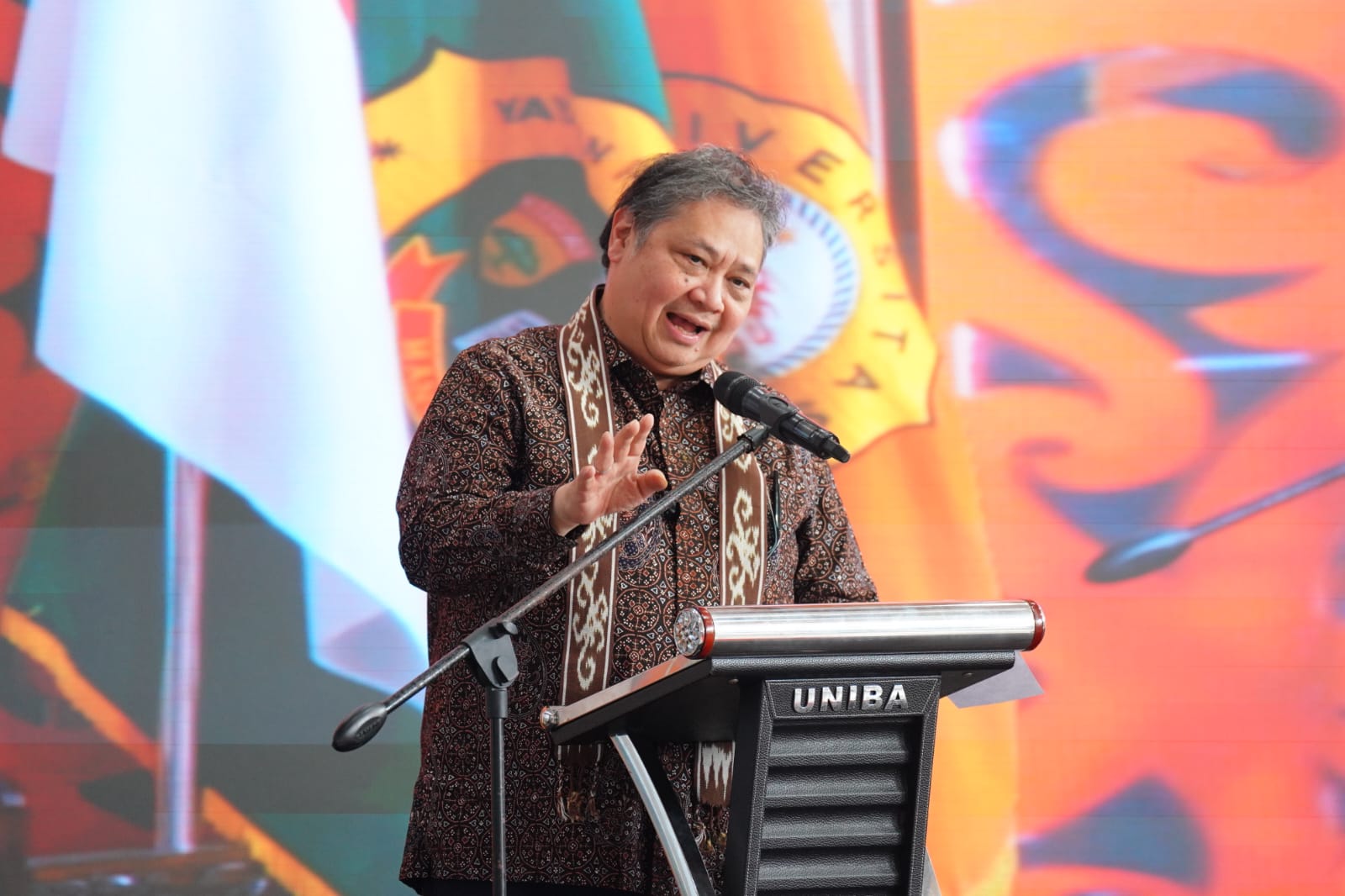
“The ambitious goal requires a strong macroeconomic foundation to ensure sustainable transformation,” said Coordinating Minister for Economic Affairs Airlangga Hartarto during the National Seminar on Fair Energy Transition, Green Jobs, and Green Economy at Universitas Balikpapan, East Kalimantan (27/1).
Strong Macroeconomic Indicators Support the Transition
Indonesia’s economy demonstrates resilience, with Q3-2025 growth reaching 5.04% year-on-year and inflation controlled at 2.92% in December 2025.
Growth is projected at 5.2% in 2025 and 5.4% in 2026. Key economic indicators such as the Jakarta Composite Index, Manufacturing PMI of 51.2, and Consumer Confidence Index at 123.5 reflect positive domestic sentiment.
Externally, Indonesia recorded a trade surplus of USD 2.66 billion in November 2025, with cumulative surplus from January–November reaching USD 38.54 billion over 67 consecutive months.
Foreign and domestic investment totaled IDR 1,931 trillion in 2025, up 12.7% year-on-year, while foreign exchange reserves remained strong at USD 156.5 billion in December.
Credit growth of 9.3% year-on-year, driven mainly by investment loans, provides a solid foundation for economic stability and fiscal space.
Renewable Energy and Green Technology Initiatives
Accelerating the energy transition positions Indonesia for energy sovereignty and sustainable economic growth.
The country’s renewable energy potential reaches 3,686 GW, with East Kalimantan contributing 517 GW, predominantly solar energy.
Government initiatives include building a 70,000-kilometer green super grid, developing B40–B50 biofuel, and eco-friendly aviation fuels.
Hydrogen, nuclear energy, green ammonia, and Carbon Capture and Storage/Carbon Capture, Utilization, and Storage (CCS/CCUS) technologies are also being deployed to reduce industrial emissions.
Green Jobs Creation and Workforce Preparedness
The green economy promotes not only environmental preservation but also large-scale job creation.
The transition is expected to generate around 4.4 million new jobs by 2029, with green workers making up about 3% of the national workforce.
Opportunities span renewable energy technicians, environmental management, and smart city operations.
“To support human resources readiness, the government runs a National Internship Program for 100,000 university graduates with stipends equivalent to the minimum wage. Students are encouraged to prepare for strategic roles in the economy of the future,” emphasized Minister Airlangga.
Policy and Industry Collaboration for Sustainable Growth
Key stakeholders attended the seminar, including the Expert Staff for Regional Development from Kemenko Perekonomian, Universitas Balikpapan leadership, Chair of the Governing Board of Yayasan Mitra Hijau, and representatives from Action Network South East Asia.
The collaboration reflects a multi-sectoral effort to advance Indonesia’s green economy.
PHOTO: COORDINATING MINISTRY FOR ECONOMIC AFFAIRS
This article was created with AI assistance.
We make every effort to ensure the accuracy of our content, some information may be incorrect or outdated. Please let us know of any corrections at [email protected].
Read More