





 Thursday, 17-09-26








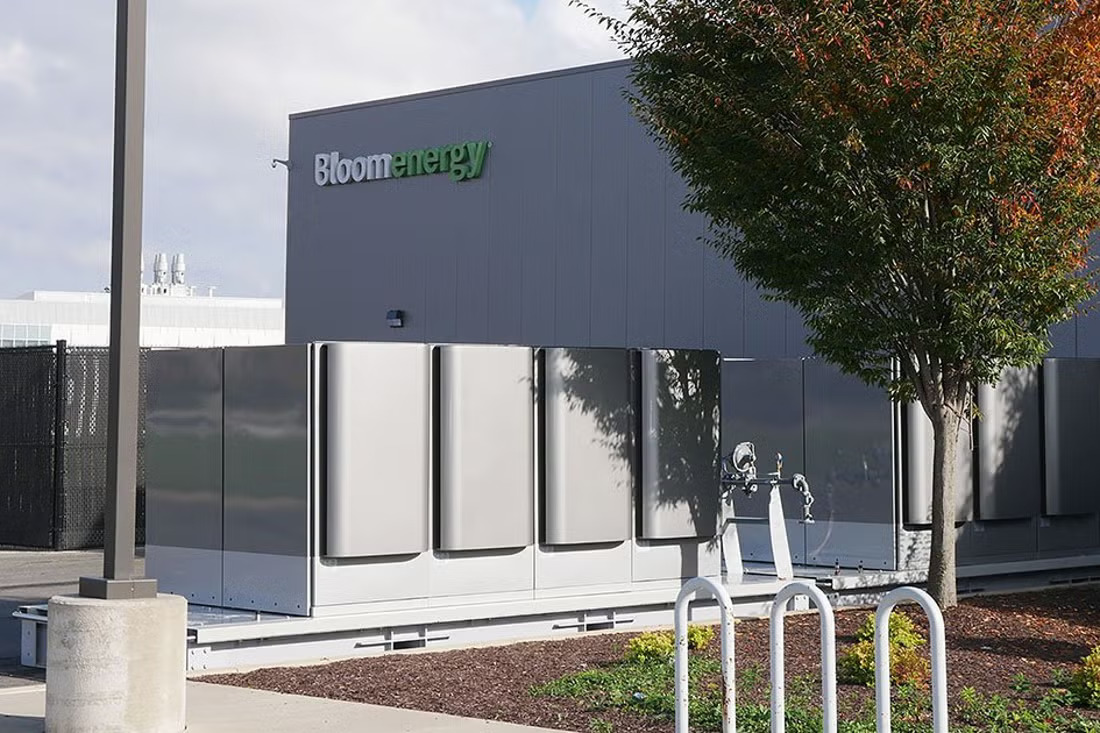
In early 2026, Bloom Energy AI power solutions have captured investor and industry attention by outperforming some of the most well-known technology stocks, including NVIDIA, as demand for powerful, reliable, and clean energy options surges alongside the global expansion of artificial intelligence workloads. Bloomberg reports indicate a significant surge in Bloom Energy’s stock, with gains far exceeding many tech peers, propelled by increasing adoption of its advanced fuel cell systems in AI data center deployments and strategic partnerships across the energy sector.
This article explains why Bloom Energy has become a standout performer, explores the company’s strategic position in the evolving AI and energy landscape, highlights major growth drivers, and examines both opportunities and challenges facing the company moving forward.
The Rising Importance of Clean Power for AI Data Centers
As artificial intelligence workloads scale, the demand placed on global data infrastructure increases exponentially. AI models, especially those used in large-scale training and inference, require intensive computational resources that translate directly into massive power consumption. Bloomberg intelligence suggests that the growth of AI workloads will significantly boost global data center power demand over the coming decade. Analysts from institutions such as Goldman Sachs forecast electricity demand from data centers to increase dramatically by 2030, with a significant portion attributed directly to AI workloads — far greater than traditional compute tasks.
This context is critical because traditional grid infrastructure and existing energy generation models are struggling to keep up with this surge in demand. Power shortages, grid interconnection delays, and reliability constraints are major bottlenecks for new data center projects. In response, the industry is increasingly adopting onsite power solutions that can be deployed quickly and provide reliable, clean, and scalable electricity without overloading existing grid systems.
Bloom Energy’s fuel cell systems have emerged as a key solution to these challenges, offering distributed energy systems that can be installed rapidly and operate independently of local grid constraints.
Why Bloom Energy AI Power Solutions Are Gaining Traction
Solid Oxide Fuel Cells as a Competitive Advantage
At the heart of Bloom Energy’s technological edge is its proprietary solid oxide fuel cell (SOFC) technology. Unlike conventional power generation systems that depend on combustion, fuel cells generate electricity by converting fuels such as natural gas, hydrogen, or biogas into electricity through an electrochemical process with fewer emissions and high efficiency. This makes them attractive to AI data centers that require continuous, dependable power with minimal environmental impact.
Solid oxide fuel cells provide multiple advantages:
- Rapid deployment: Unlike grid upgrades or large turbine installations that can take years, Bloom’s systems can be deployed in weeks, providing immediate solutions for time-sensitive data center projects.
- Modularity and scalability: Fuel cell systems can be scaled based on data center size and power requirements, enabling bespoke solutions for clients.
- Lower emissions footprint: While not fully zero carbon when operating on natural gas, Bloom’s fuel cells emit less CO2 than many traditional power sources, with cleaner performance when paired with green hydrogen or biogas.
These technical strengths have positioned Bloom Energy as a viable long-term partner for enterprise and hyperscale data centers that seek reliable power without sacrificing sustainability goals.
Strategic Partnerships and Global Deployments
Bloom Energy’s rapid growth is also tied to a series of high-profile strategic partnerships that reinforce its relevance in the expanding AI infrastructure field:
- Brookfield Asset Management collaboration: A $5 billion strategic pact to build AI infrastructure that integrates power, data, and compute facilities worldwide highlights Bloom’s relevance in next-generation data center design.
- Oracle Cloud Infrastructure deployment: Bloom Energy’s fuel cells have been selected to power AI data center operations for OCI, demonstrating confidence from major cloud service providers in Bloom’s capacity to support mission-critical compute environments.
- American Electric Power (AEP) installations: Agreements for gigawatt-scale deployments of fuel cells with utilities like AEP signal a move beyond niche markets toward broad infrastructure adoption.
These relationships underscore that Bloom Energy’s AI power solutions are not speculative thesis plays but solutions already demonstrating real commercial uptake.
Financial Performance and Market Momentum
Bloom Energy’s stock performance reflects investor enthusiasm for its role in the AI power ecosystem. Shares surged over 300 percent in 2025 and continued upward momentum in early 2026, outperforming traditional AI and technology indices. Analysts have recognized this outperformance, with several major financial institutions maintaining strong ratings on the stock amid rapid revenue growth and expanding contracts.
Key financial indicators supporting optimism around Bloom include:
- Record revenue growth: Reports indicate substantial year-over-year revenue increases, with quarters of consecutive records driven largely by fuel cell orders and installations linked to data center demand.
- Expanding production capacity: The company is actively scaling manufacturing to meet anticipated demand, with plans to double capacity to 2 gigawatts by the end of 2026.
- Improving gross margins: Operational improvements and scaling efforts are yielding positive margin trends, evident in improved non-GAAP figures.
This combination of revenue momentum, expanding deployment, and improving financial metrics underpins Bloom Energy’s narrative as a long-term energy infrastructure play tied closely to the growth of AI.
Challenges and Market Risks
Despite robust growth and strong momentum, Bloom Energy also faces challenges that investors and industry observers must consider:
- Valuation concerns: High multiples relative to traditional energy peers have sparked debate about whether stock prices are pricing in perfect execution and future cash flows, raising questions about sustainability in the absence of continued growth.
- Profitability trajectory: While revenue is growing rapidly, achieving consistent profitability remains an ongoing goal, and market expectations may outpace operational realities in the near term.
- Competitive landscape: Other technologies and energy solutions, including direct renewable generation and alternative onsite systems, may pose long-term competition as markets evolve.
These realities illustrate that while Bloom Energy’s story is compelling, its future performance will depend on sustained execution, technological advances, and broader adoption across diverse sectors.
The Future of AI Power Infrastructure
The explosive growth of AI workloads places unprecedented pressure on global energy systems. This environment has created both opportunities and challenges:
- Demand for always-on power: AI services demand continuous electricity, often preceding grid upgrades, making onsite solutions like fuel cells vital.
- Clean energy expectations: Sustainability commitments from hyperscalers and cloud providers make efficient, low-emission power options increasingly attractive.
- Innovation in deployment: The integration of compute, power, and cooling systems at the design stage signals a new era of AI infrastructure, with Bloom Energy positioned as a key contributor.
As these trends continue, Bloom Energy’s role in the energy systems that power digital transformation will likely remain a core focus for investors, policymakers, and technology leaders alike.
Read More