





 Tuesday, 02-06-26








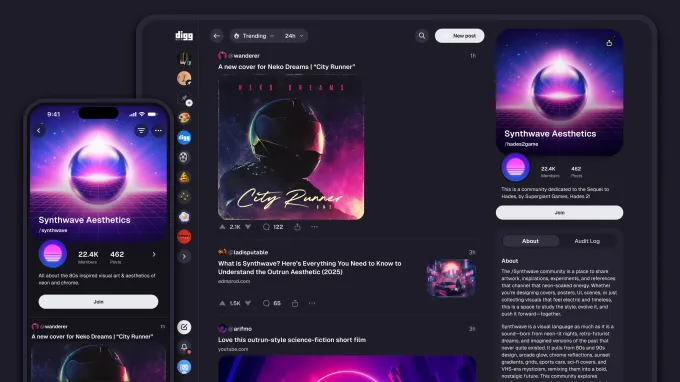
For nearly two decades after its original founding, Digg Reddit rival has reemerged as a renewed competitor in the social news and community platform landscape. On January 14, 2026, the rebooted Digg opened its public beta to all users, positioning itself directly against legacy platforms like Reddit by offering community-centric browsing, posting, commenting, and voting experiences.
This article provides a comprehensive overview of the new Digg’s launch, strategic positioning, feature set, and the broader implications of its reentry into the social platform space. It also examines how emerging technologies such as AI and cryptographic verification methods are being integrated to build trust and differentiate Digg from competitors.
Background: Digg’s Revival and Strategic Positioning
Originally launched in the early 2000s, Digg was one of the web’s pioneering social news aggregators, once valued highly and competing with communities like Reddit for user attention. Over time, however, the platform lost ground and was split into pieces in 2012, with parts acquired by Betaworks, LinkedIn, and The Washington Post. Later acquisitions and ownership changes further diluted the brand’s presence. Meanwhile, Reddit continued to grow and later went public, solidifying its role as a dominant community platform.
In 2025, Digg’s revival was spearheaded by its original founder Kevin Rose in collaboration with Reddit co-founder Alexis Ohanian, and backed by investment firms such as True Ventures and Seven Seven Six. Their shared belief was that advancements in AI and community design could enable Digg to return with a fresh vision for online interaction.
What Makes the New Digg Different
Public Beta Access and Community Creation
With the public beta rollout, Digg Reddit rival officially allows anyone to join and engage in community spaces. Previously, the platform was limited to an invite-only private beta with around 67,000 users participating. Current public beta users can browse a selection of predefined communities across themes such as gaming, technology, entertainment, and more niche topics. Community managers (moderators) are empowered to set their own rules and operate transparent moderation logs, aimed at enhancing accountability within each group.
The ability to create communities on nearly any topic, an oft-requested feature from early testers, underscores Digg’s focus on niche interests and user autonomy. This feature distinguishes it from many legacy social platforms that tightly control sub-forum creation or restrict it to established users.
Trust and Verification via Innovative Technologies
A core pillar of the Digg Reddit rival strategy is increased trustworthiness and reduced bot interference. Rather than relying on conventional “know your customer” (KYC) processes used in financial systems (which can be onerous), Digg is experimenting with a suite of verification technologies. These include zero-knowledge proofs, cryptographic methods that can validate user attributes without exposing sensitive data, and device-based signals that verify user participation in real-world events.
For example, in product-focused groups such as one dedicated to Oura Ring owners, users could be asked to prove ownership of devices before contributing. These layered verification signals aim to establish trust without forcing users into invasive identity validation procedures.
Integrating AI: Balancing Automation and Human Moderation
Artificial intelligence plays another significant role in the new Digg. Founders believe AI can help manage the “messiness and toxicity” often associated with large social platforms, reduce spam, and streamline content management, all without supplanting the human voice. This strategy is designed to allow moderators to concentrate on community quality while automated systems handle routine moderation tasks.
By infusing AI judiciously, Digg hopes to maintain a healthier balance between automation and human judgment, contrasting with platforms where AI systems are perceived to overreach or act as blunt instruments. In future iterations, the team has hinted at leveraging AI more deeply for content summarization, community customization, and helping users manage the structure and tone of their communities, potentially even with interactive AI assistants.
User Experience and Platform Redesign
The public beta launch also coincides with a redesigned interface that places visual elements and community organization at the forefront. Users can pin favorite communities to a dedicated sidebar, creating a streamlined navigation experience. The main feed prioritizes content layouts optimized for modern viewing patterns, reflecting the evolution from text-heavy early web formats to more dynamic social browsing. From a feature perspective, the platform still feels lightweight compared to more mature counterparts like Reddit, but this is part of the strategic approach, inviting continuous iteration and weekly feature rollouts based on user feedback.
Challenges and Community Reception
Despite the excitement around the reboot, user reception has been mixed. Some early commenters on community platforms like Reddit noted that while the open beta is live, certain functionalities, such as full community creation or advanced moderation tools, may still be rolling out. These developments are part of the phased expansion strategy, but they also mean that the platform’s full competitive potential may not yet be realized. Other feedback reflects nostalgia for the original Digg and skepticism about whether the revamped platform can attract users away from entrenched networks such as Reddit, which continues to enjoy broad adoption and deep network effects.
The Road Ahead for Digg
Looking forward, Digg’s leadership acknowledges that the public beta is only the beginning of a long journey toward product-market fit. The company plans to roll out additional tools for customizing community look and feel, integrating third-party content services, and enhancing the moderation experience. The emphasis on frequent releases and responsiveness to community leaders signals an agile development philosophy. If successful, Digg may once again become a relevant destination for topic-centric engagement, appealing to users who value smaller, specialized communities with transparent governance and innovation in trust and verification.
The launch of Digg Reddit rival in public beta represents a strategic effort to reinvigorate a classic platform for the modern era. By combining community empowerment, AI-assisted moderation, and novel trust mechanisms, Digg aims to carve out a differentiated position in the competitive landscape of social platforms. As the platform evolves, the effectiveness of its innovations, and its ability to win users from long-standing competitors, will determine whether this reboot can live up to its ambitious promise.
Read More