





 Tuesday, 13-10-26








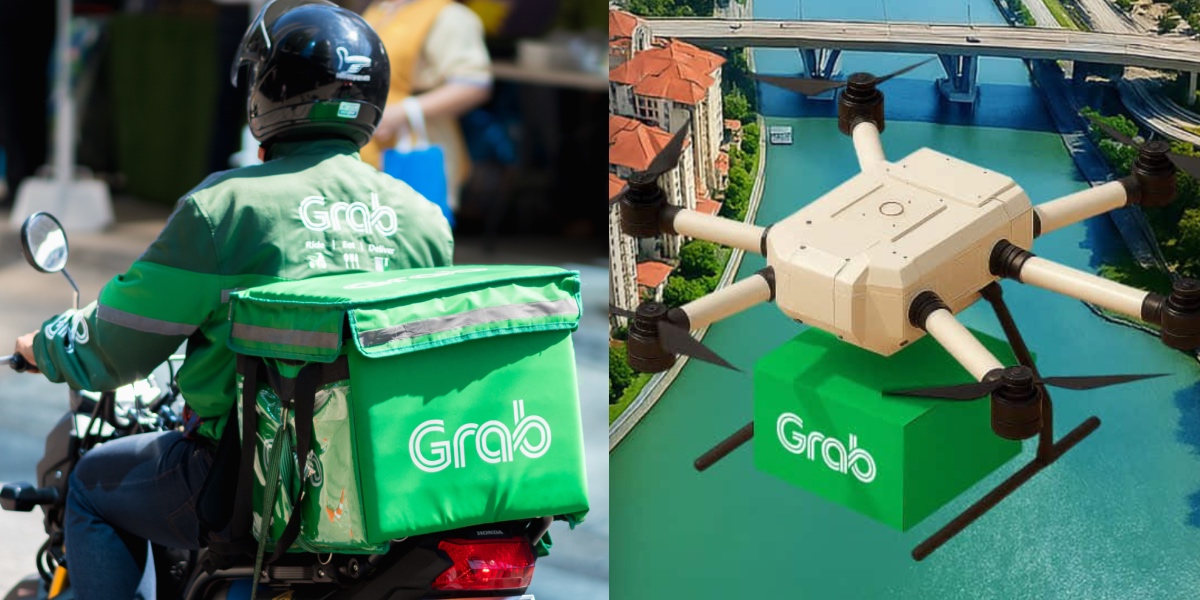
In a bold move toward the future of urban logistics, Grab drone food delivery initiatives are rapidly gaining traction across Southeast Asia. The ride-hailing and delivery giant has embarked on a landmark three-month pilot in Singapore’s Tanjong Rhu neighborhood to explore how autonomous drone technology can complement its existing delivery networks. This trial aims to overcome geographic challenges, streamline delivery operations, and ultimately reduce delivery times compared to conventional routes.
Across fast-paced cities where streets are congested and routes are complex, the demand for quicker, more efficient deliveries is increasing. Food delivery services, in particular, face high customer expectations for rapid fulfillment and freshness. With this backdrop, drone technology is emerging as one of the most promising solutions for the next generation of delivery services. This article explores how Grab drone food delivery works, the benefits and limitations of the technology, its implications for logistics efficiency, and potential future developments.
How Grab Drone Food Delivery Works
The Grab drone food delivery pilot partnership involves Singapore-based technology firm ST Engineering’s Unmanned Air Systems business, which developed the drone platform used in the trial. The process is designed as a hybrid model combining autonomous drone flight with human delivery partners to ensure reliability and safety throughout the delivery chain.
Under this model, a delivery partner first collects a food order from a restaurant and transports it to a designated drone launchpad. Once the order reaches this launch point, Grab staff and a trained ST Engineering drone operator secure the package onto the unmanned aerial vehicle. The drone then traverses a predetermined route, most notably crossing the Kallang River in Singapore’s Tanjong Rhu area, which cuts across slower ground routes and geographic barriers. Upon reaching a landing hub on the opposite side, a second delivery partner receives the package and completes the final leg to the customer’s doorstep.
This collaborative system, where human drivers handle complex ground navigation and handoffs while drones manage the aerial leg, is central to testing how autonomous technology can work in synergy with existing logistics networks. The arrangement also acknowledges limitations in current drone capabilities, such as payload restrictions, regulatory constraints, and safety considerations, while still leveraging aerial advantages.
Efficiency and Time Savings
One of the primary goals of the Grab drone food delivery pilot is to improve delivery efficiency by reducing total trip time. In urban environments, traffic congestion and indirect routes often extend delivery times for traditional couriers. The Tanjong Rhu neighborhood, for example, is geographically constrained by the Kallang River, which forces delivery riders to take longer land routes that contribute to delays. Drones can cut directly over such obstacles, potentially reducing delivery times significantly compared to conventional ground travel. The pilot operates from Tuesday to Sunday, between 10 a.m. and 6 p.m., and supports up to 28 drone flights per day. Each round trip averages approximately eight minutes, showcasing how aerial delivery can be more time-efficient for specific routes when compared to the usual congestion-prone road networks.
Beyond time savings, drones offer consistency. While a rider’s travel time can vary due to unpredictable traffic and road conditions, drones operate on scheduled flight paths. This predictability helps in planning and estimating delivery windows more accurately, which can enhance customer satisfaction and reduce the costs associated with late or failed deliveries.
Operational Considerations and Limitations
Despite the advantages, the Grab drone food delivery system is not without challenges. Regulatory and environmental constraints remain significant factors that influence operational feasibility. For instance, the pilot program pauses during wet weather conditions and observes no flights on certain public holidays to ensure safety. Additionally, the pilot only allows scheduled orders and limits customers to ordering one item per drone delivery, although multiple quantities of that item can be selected. This restriction stems from payload weight limitations and safety guidelines currently governing drone operations in urban airspaces.
Another operational detail involves noise and privacy considerations. Grab notes that its drones operate at noise levels comparable to a normal conversation, and navigation cameras do not retain footage, minimizing privacy concerns for residents. Although these measures mitigate some community objections, widespread drone adoption may still encounter regulatory reviews related to airspace usage, public safety, and privacy protections.
Implications for Urban Logistics
The Grab drone food delivery pilot represents a broader trend within the logistics sector toward integrating autonomous technologies. As cities grow and customer expectations rise, businesses are looking for innovative approaches to maintain service quality while managing operational costs. Drones have the potential to reduce the need for larger delivery fleets on the ground, decrease fuel consumption, and cut long-term delivery expenses. They can also free up human drivers to focus on tasks that require judgment, adaptability, and interpersonal interaction.
In this hybrid model, humans and drones operate as complementary forces. Drivers and riders still play a crucial role in handling complex aspects of delivery, customer interaction, and order verification, while drones handle repetitive, time-sensitive portions of the route more efficiently. This division of labor could improve overall delivery network performance over time.
Future Prospects and Expansion
Although the Singapore pilot is currently limited in scope, restricted to specific neighborhoods and internal testing, its results could inform future expansions into other metropolitan areas across Southeast Asia. Grab has previously explored drone delivery concepts in markets like the Philippines, indicating a broader interest in aerial logistics solutions. If the pilot proves scalable and cost-effective, Grab drone food delivery could extend to larger geographic zones, and potentially serve high-demand urban centers where traditional delivery faces persistent challenges. Collaboration with local authorities, compliance with evolving drone regulations, and ongoing technology improvements will be crucial for long-term deployment.
In the future, we might see fully autonomous e-commerce logistics networks where drones, ground vehicles, and robotics work synergistically to fulfill customer demands quickly, safely, and efficiently. This would mark a significant transformation in last-mile logistics and set new benchmarks for service speed, customer experience, and logistical innovation.
The Grab drone food delivery initiative reflects an innovative step forward in blending autonomous aerial technology with existing delivery infrastructure. By addressing geographic constraints and reducing delivery times, this trial could not only improve operational efficiency but also pave the way for broader applications across logistics networks in Asia and beyond. As the world becomes increasingly urbanized and delivery expectations continue to rise, drone technology may become a key differentiator for companies seeking competitive advantage in the on-demand delivery market.
Read More