





 Tuesday, 29-09-26








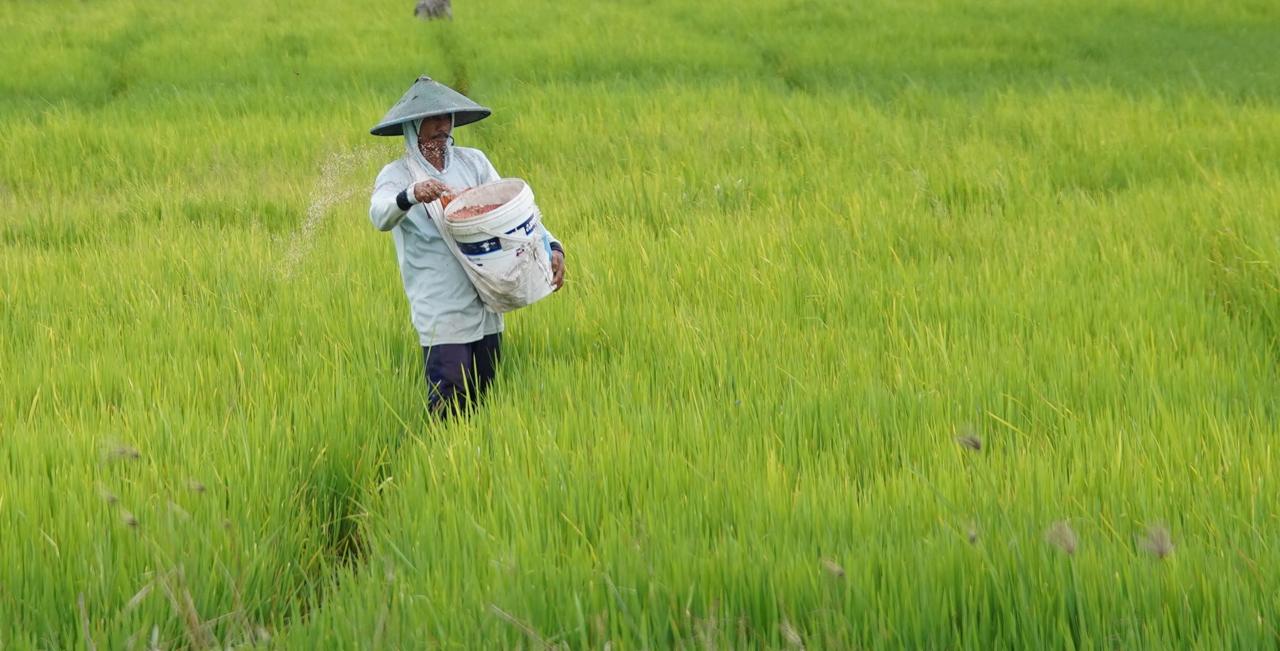
Indonesia’s agricultural sector closed 2025 on a strong note, reinforcing its role as a key pillar of national economic stability. One of the most important indicators of this progress is the Indonesia farmer welfare index, as reflected in the Farmers’ Terms of Trade, or Nilai Tukar Petani (NTP). In December 2025, NTP reached 125.35, marking a monthly increase of 1.05 percent and signaling a tangible improvement in the purchasing power and economic resilience of farming households across the country.
This positive performance was driven by stronger commodity prices, improved farmer bargaining power, and controlled cost pressures. Data released by Statistics Indonesia or Badan Pusat Statistik (BPS) confirms that farmers benefited from a faster rise in the prices they received compared to the prices they paid for production inputs and household consumption. As a result, the agricultural sector once again demonstrated its ability to deliver inclusive growth, even amid ongoing global economic uncertainties.
Understanding NTP And Its Importance For Indonesia Farmer Welfare
The Farmers’ Terms of Trade is widely regarded as a core indicator of Indonesia farmer welfare. It measures the ratio between the Price Index Received by Farmers and the Price Index Paid by Farmers. When NTP rises above 100, it indicates that farmers’ income growth outpaces their expenditure growth, allowing them to improve living standards and reinvest in production.
In December 2025, the Price Index Received by Farmers rose by 2.08 percent, significantly higher than the 1.02 percent increase in the Price Index Paid by Farmers. This widening gap explains the upward movement in NTP and highlights an increasingly favorable economic position for agricultural producers.
The improvement also reflects better price transmission from markets to farmers, suggesting that policy interventions aimed at stabilizing agricultural prices and strengthening supply chains are delivering measurable results. For farming households, higher NTP translates into greater financial security, improved consumption capacity, and stronger incentives to maintain or expand agricultural activity.
Subsector Performance Driving Agricultural Growth
A major contributor to the December 2025 NTP surge was the horticulture subsector, which recorded a remarkable increase of 14.48 percent. This performance underscores the growing importance of high value crops in supporting Indonesia farmer welfare, particularly in regions where horticulture plays a dominant role in rural livelihoods.
Several key commodities were identified as the main drivers behind the rise in the Price Index Received by Farmers. These include rice in the form of unhusked paddy, bird’s eye chili, cocoa beans, and broiler chicken. Strong demand, favorable seasonal conditions, and stable distribution channels helped support prices for these commodities toward the end of the year.
The livestock subsector also contributed positively, especially through broiler chicken production, which benefited from steady consumer demand and improved market access. Meanwhile, plantation crops such as cocoa continued to show resilience, reinforcing their role as export oriented income sources for farmers.
Together, these subsector gains reflect a more diversified agricultural growth pattern. Rather than relying on a single commodity, Indonesia’s farm economy is increasingly supported by a mix of food crops, horticulture, livestock, and plantation outputs.
Regional Distribution Of Farmer Welfare Gains
The improvement in Indonesia farmer welfare was not confined to a single region. According to BPS data, 22 out of 38 provinces recorded an increase in NTP in December 2025, demonstrating that agricultural progress was geographically widespread.
Gorontalo emerged as the top performing province, with NTP rising by 5.60 percent during the month. This strong performance highlights the effectiveness of localized agricultural development strategies, particularly in supporting smallholder farmers and strengthening regional supply chains.
Other provinces also benefited from improved commodity prices and better cost management, indicating that national level policy frameworks are being translated into tangible gains at the regional level. This broad based improvement is essential for reducing rural inequality and ensuring that economic growth reaches farming communities across Indonesia.
Regional diversity remains a defining feature of Indonesian agriculture, with different provinces specializing in different commodities. The December 2025 NTP data suggests that this diversity, when supported by stable pricing and infrastructure, can be a strength rather than a vulnerability.
Annual Performance And Long Term Trends
Beyond monthly gains, the cumulative performance of NTP throughout 2025 provides a clearer picture of sustained progress in Indonesia farmer welfare. Over the January to December 2025 period, national NTP averaged 123.26, representing a 3.04 percent increase compared to the same period in 2024.
This annual improvement reflects consistent income growth for farmers and underscores the resilience of the agricultural sector. Despite challenges such as climate variability, global commodity price fluctuations, and rising input costs, Indonesian agriculture managed to deliver steady welfare gains.
The long term upward trend in NTP also suggests structural improvements, including better access to markets, increased adoption of technology, and stronger institutional support. These factors contribute to more efficient production systems and improved value capture for farmers.
From a macroeconomic perspective, rising farmer welfare supports domestic consumption and strengthens food security. As rural incomes grow, demand for goods and services increases, creating positive spillover effects for the broader economy.
Policy Support And Institutional Role
Government policy has played a central role in sustaining improvements in Indonesia farmer welfare. Price stabilization measures, input subsidies, and programs aimed at boosting productivity have helped reduce farmers’ vulnerability to market volatility.
The Ministry of Agriculture continues to focus on ensuring fair pricing, improving productivity, and strengthening food supply resilience. Efforts to modernize irrigation systems, promote mechanization, and expand access to financing are designed to enhance long term competitiveness while maintaining farmer welfare.
Coordination between central and regional governments has also improved, enabling more targeted interventions that reflect local conditions. This alignment is critical for translating national strategies into real outcomes at the farm level.
Institutional support from agencies such as BPS ensures transparency and data driven policymaking. By regularly monitoring indicators like NTP, policymakers can respond more effectively to emerging challenges and opportunities within the agricultural sector.
Outlook For Indonesia Farmer Welfare In 2026
Looking ahead, the positive momentum in Indonesia farmer welfare provides a strong foundation for 2026. Continued focus on productivity gains, value added processing, and market access will be essential for sustaining NTP growth.
However, risks remain. Climate change, global economic uncertainty, and geopolitical tensions could affect commodity prices and input costs. Managing these risks will require adaptive policies, investment in climate resilient agriculture, and stronger farmer institutions.
If current trends continue, agriculture will remain a cornerstone of Indonesia’s economic and social stability. Improved farmer welfare not only enhances rural livelihoods but also supports national food security and inclusive growth.
Conclusion
The rise in NTP to 125.35 in December 2025 stands as clear evidence that Indonesia farmer welfare is on an upward trajectory. Supported by strong commodity prices, controlled cost pressures, and effective policy interventions, farmers across the country are experiencing improved purchasing power and economic resilience.
With consistent annual gains and broad regional participation, the agricultural sector has reaffirmed its role as a vital engine of national development. As Indonesia enters 2026, maintaining this momentum will be crucial to ensuring that agriculture continues to deliver prosperity, stability, and food security for the nation.
Read More