





 Thursday, 28-05-26








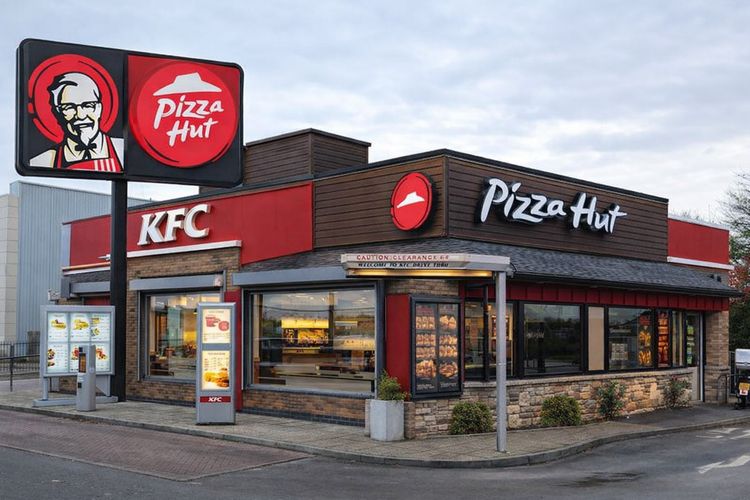
The KFC Pizza Hut merger India marks a defining moment for the country’s fast-growing but increasingly competitive quick service restaurant industry. In early 2026, Devyani International and Sapphire Foods India, two of the largest franchise operators of Yum! Brands in the region, announced a merger that will consolidate KFC and Pizza Hut operations under a single corporate umbrella. Valued at approximately $931 million, the transaction is expected to reshape competitive dynamics in India’s branded food service market.
At a time when inflationary pressures, shifting consumer behavior, and rising operational costs are challenging restaurant operators, the KFC Pizza Hut merger India is being positioned as a strategic response to restore profitability through scale, operational efficiency, and long-term growth. The deal also reflects a broader consolidation trend within the global QSR sector, where size and execution capability are increasingly critical to survival.
This article examines the structure of the transaction, its strategic rationale, financial implications, competitive impact, and what it signals for the future of India’s QSR landscape.
Overview of the KFC Pizza Hut Merger India Deal Structure
Under the agreed structure, Devyani International will absorb Sapphire Foods India through a share-swap arrangement. Shareholders of Sapphire will receive 177 shares of Devyani for every 100 shares held, resulting in Devyani emerging as the combined listed entity. The transaction requires regulatory approvals and shareholder consent but is designed to ensure continuity of operations across all existing outlets.
Post-merger, the combined company will operate more than 3,000 KFC, Pizza Hut, and Costa Coffee stores across India and select international markets. This scale positions the merged entity as one of the largest QSR operators in South Asia, significantly strengthening its negotiating leverage with suppliers, landlords, and logistics partners.
Importantly, the merger does not alter Yum! Brands’ ownership of KFC or Pizza Hut. Instead, it consolidates franchise operations, allowing for centralized execution while maintaining brand-specific strategies.
Strategic Rationale Behind the KFC Pizza Hut Merger India
The primary driver behind the KFC Pizza Hut merger India is operational scale. Both Devyani and Sapphire have expanded aggressively over the past decade, but rapid growth has also exposed vulnerabilities, particularly in cost control and margin sustainability.
Management from both companies has highlighted synergy potential of approximately ₹2.1 to ₹2.25 billion annually once integration is complete. These synergies are expected to arise from shared procurement, unified supply chains, consolidated corporate functions, and optimized store-level operations.
In addition to cost efficiencies, the merger allows the combined entity to allocate capital more strategically. Instead of competing internally for resources, KFC and Pizza Hut investments can be prioritized based on market demand, regional performance, and format innovation.
The KFC Pizza Hut merger India also strengthens the group’s ability to invest in technology, including digital ordering platforms, delivery partnerships, data analytics, and loyalty programs, areas where scale significantly improves returns on investment.
Financial Performance and Margin Pressures in India’s QSR Industry
Leading up to the merger, both Devyani International and Sapphire Foods reported financial stress. Rising food input costs, higher employee expenses, and moderation in discretionary consumer spending impacted profitability across the sector.
While revenue growth remained positive due to store expansion, margins were under pressure, and both companies reported net losses in recent quarters. Analysts have noted that standalone growth was no longer sufficient to offset structural cost challenges.
The KFC Pizza Hut merger India is therefore as much a defensive move as it is a growth strategy. By consolidating operations, the combined entity aims to stabilize margins, improve unit economics, and create a more resilient cost structure capable of withstanding cyclical downturns.
Competitive Impact of the KFC Pizza Hut Merger India
India’s QSR market is highly competitive, with Domino’s, McDonald’s, Burger King, and local brands vying for consumer attention. Prior to the merger, KFC and Pizza Hut operated under separate franchise groups, limiting their ability to coordinate expansion and marketing strategies.
With the KFC Pizza Hut merger India, the combined operator gains scale comparable to Domino’s India franchisee Jubilant FoodWorks. This alters competitive dynamics by enabling faster rollout of stores, more aggressive pricing strategies, and integrated brand campaigns.
However, scale alone does not guarantee success. Consumer preferences in India are evolving toward value offerings, localized menus, and convenience-driven dining. The merged entity will need to balance cost optimization with continued menu innovation and brand differentiation to defend and grow market share.
Operational Integration Risks and Execution Challenges
While the strategic rationale is compelling, the KFC Pizza Hut merger India carries execution risks. Integrating two large organizations involves aligning leadership teams, harmonizing IT systems, standardizing processes, and managing cultural differences.
Operational complexity is heightened by the need to preserve brand identity for KFC and Pizza Hut while consolidating back-end functions. Missteps in integration could disrupt store operations, impact service quality, or delay synergy realization.
Another challenge lies in managing workforce expectations. The combined entity employs tens of thousands of staff across corporate and store-level roles. Transparent communication and careful change management will be critical to maintaining morale and minimizing attrition.
Regulatory and Franchise Considerations in the Merger
From a regulatory perspective, the KFC Pizza Hut merger India must comply with Indian corporate, competition, and securities regulations. While the transaction does not reduce the number of competing brands, regulators will review its potential impact on market concentration and consumer choice.
Franchise governance is another important factor. Yum! Brands must approve the consolidation of franchise operations, ensuring that brand standards, growth commitments, and development obligations remain intact.
The merger may also influence future franchise negotiations, as a larger and more integrated operator gains greater bargaining power in discussions related to royalties, development rights, and territorial expansion.
Long-Term Growth Outlook After the KFC Pizza Hut Merger India
Looking ahead, the combined entity created by the KFC Pizza Hut merger India has several growth levers at its disposal. Store expansion remains a priority, particularly in Tier II and Tier III cities where branded QSR penetration is still relatively low.
The group can also experiment with smaller store formats, delivery-only kitchens, and co-located outlets to improve capital efficiency. With a stronger balance sheet, the merged company may explore selective international expansion or bolt-on acquisitions in adjacent food service categories.
Digital transformation will be another critical growth area. Unified customer data, integrated loyalty programs, and improved last-mile delivery partnerships can drive higher repeat purchases and average order values.
What the KFC Pizza Hut Merger India Signals for the Industry
Beyond the immediate implications for Devyani and Sapphire, the KFC Pizza Hut merger India sends a broader signal to the industry. India’s QSR market is entering a phase where scale, operational discipline, and financial resilience are more important than rapid store expansion alone.
Smaller operators may face increased pressure as large, consolidated players leverage efficiencies to compete more aggressively on pricing and convenience. At the same time, investors may favor platforms that demonstrate sustainable unit economics rather than growth at any cost.
The merger underscores a maturing market where consolidation becomes a rational response to rising competition and tighter margins.
Conclusion: A Defining Moment for India’s QSR Market
The KFC Pizza Hut merger India represents a strategic consolidation aimed at strengthening profitability, improving operational efficiency, and positioning the combined entity for long-term growth. While execution risks remain, the logic of scale and synergy is clear in an industry facing structural challenges.
If successfully integrated, the merger could redefine how global QSR brands operate in India, setting a benchmark for efficiency and strategic alignment. For the broader market, it marks a transition toward consolidation-driven growth, signaling that the next phase of India’s food service evolution will be shaped by fewer but stronger players.
Read More