





 Friday, 09-10-26








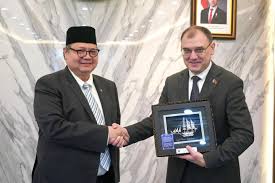
The emerging Indonesia Belarus cooperation agriculture technology partnership marks a significant development in Jakarta’s strategy to strengthen national food security while advancing technological capacity in farming and related sectors. Indonesia and Belarus recently held high-level discussions in Jakarta, emphasizing the potential for collaboration in modern agricultural machinery, joint ventures, and the digital transformation of farming, all designed to bolster Indonesia’s agricultural productivity and long-term resilience.
At the core of this cooperation is Indonesia’s urgent need to elevate food production through innovation and technology integration. Under President Prabowo Subianto’s leadership, fortifying food security has been identified as a national priority, leading to initiatives that blend traditional agricultural practice with mechanization and advanced digital tools. Partnering with Belarus presents a strategic opportunity to leverage Belarus’s industrial and agricultural expertise, particularly in areas where Indonesia is still developing capabilities.
Governments of both countries have made clear their intentions to move beyond conventional trade relations, aiming to establish long-term collaboration frameworks that promote mutual benefits. This article analyzes how the Indonesia Belarus cooperation agriculture technology agenda is structured, the potential advantages for both countries, and the broader implications for regional agricultural markets.
Fundamentals of Bilateral Cooperation
Diplomatic and economic ties between Indonesia and Belarus have strengthened over recent years, culminating in the December 2025 discussions in Jakarta. Indonesian Coordinating Minister for Economic Affairs Airlangga Hartarto and Belarusian Deputy Prime Minister Viktor Karankevich led the talks, reaffirming a shared commitment to collaboration. Their agenda centered on expanding cooperation in agriculture and technology, sectors seen as critical for food security and sustainable economic growth.
Indonesia’s agricultural sector faces multifaceted challenges, including fragmented farm operations, aging infrastructure, and limited technological integration. Modernizing this sector is crucial if Indonesia is to meet the needs of its growing population, reduce dependency on food imports, and stabilize domestic supply chains. Belarus, with its extensive agricultural experience, particularly in mechanization and fertilizer production, is positioned as a strategic partner capable of providing relevant support.
The Indonesia Belarus cooperation agriculture technology initiative emphasizes several key pillars:
1. Mechanization and Modern Machinery
Indonesia’s push toward agricultural mechanization is a centerpiece of cooperation. The country seeks access to advanced machinery that can accelerate harvest cycles, improve efficiencies, and reduce operational costs. Belarusian machinery, including tractors, harvesters, and heavy equipment like dump trucks — was identified as a key area of interest for Indonesia.
2. Investment and Joint Venture Opportunities
Both governments support investment collaboration through joint ventures that could see Belarusian firms participating directly in Indonesia’s agricultural value chain. These ventures may involve local manufacturing, technology transfer agreements, or shared ownership in projects that serve both domestic and export markets.
3. Digital Transformation and Youth Engagement
A noteworthy focus of the cooperation is digital transformation. Indonesia’s agriculture sector, traditionally characterized by manual labor and limited technology use, is undergoing gradual digitization. The partnership with Belarus aims to integrate digital farming tools, such as data analytics for crop management or precision agriculture solutions, to attract younger generations into agriculture and improve overall productivity.
4. Education, Research, and STEM Development
Beyond immediate agricultural technologies, both countries are exploring deeper ties in education, particularly in science, technology, engineering, and mathematics (STEM). This cooperation includes academic exchanges, research initiatives, and specialized training that can support the future workforce needed to implement cutting-edge agricultural technologies.
Strategic Economic Benefits for Indonesia
The Indonesia Belarus cooperation agriculture technology program aligns closely with Indonesia’s national development priorities, where securing stable food production is a critical component of economic resilience. This cooperation is expected to deliver tangible benefits:
Enhancing Food Security Through Innovation
Modern agricultural technology can significantly expand productivity and harvest reliability. In a country as vast and geographically diverse as Indonesia, localized challenges, such as slow technology adoption and fragmented land use, have historically hindered consistent food production. Strategic cooperation with Belarus enhances Indonesia’s ability to implement technology solutions tailored to local conditions, improving yields and reducing post-harvest losses.
Reducing Import Dependency
Indonesia imports substantial quantities of agricultural products, including fertilizer and other essential inputs. Strengthening partnerships with countries like Belarus could decrease reliance on external markets, especially for key agricultural chemicals and machinery parts. By increasing domestic access to critical inputs, the country fortifies its food ecosystem against global supply disruptions.
Stimulating Local Industry and Job Creation
Joint ventures and investment programs under this cooperation framework have the potential to stimulate local industry growth. From assembling modern agricultural equipment to producing high-value exports such as fertilizer products and milk derivatives, expanding industrial capacity can create employment opportunities and enhance value export chains.
Belarus’s Role and Strategic Interests
Belarus brings decades of experience in agricultural and industrial technologies to the partnership. The country has developed efficient mechanisms for food production in challenging climates and is an established exporter of agricultural commodities. Its interest in cooperating with Indonesia reflects a strategic intent to diversify its economic partnerships and enter Southeast Asian markets with an expanded portfolio of goods and services.
Belarus’s commitment includes providing fertilizer supplies, agricultural machinery, and expanded access to its expertise in mechanized farming. Additionally, Belarus has expressed readiness to support negotiations associated with a potential Free Trade Agreement with the Eurasian Economic Union, which may further reduce trade barriers for Uzbekistan’s agricultural exports.
The suggested formation of joint working groups composed of experts from both countries is a strategic approach to ensure continuity in collaboration. These groups can support specific initiatives, conduct comparative studies, and manage technical challenges, forming a foundation for sustained bilateral cooperation.
Implications for Southeast Asian Agriculture
The Indonesia Belarus cooperation agriculture technology pact reverberates beyond bilateral ties and may influence broader regional agricultural strategies. As Southeast Asia confronts climate shifts and food security challenges, the adoption of mechanized and digital agricultural practices becomes increasingly important.
Indonesia’s efforts to modernize its agriculture sector through international cooperation may inspire similar frameworks with other countries possessing complementary expertise. In this context, Belarus’s participation could attract further interest from both ASEAN member states and major agricultural economies, accelerating technological dissemination and regional supply chain resilience.
Furthermore, by coupling agricultural collaboration with educational and research exchanges, this initiative strengthens human capital — an essential factor for sustainable technological adoption across the region. Young talent trained in advanced agricultural systems can contribute to not only Indonesia’s food security but also to innovations that benefit neighboring countries.
Challenges and Considerations
Despite the optimistic outlook, several challenges require careful consideration:
Implementation and Integration
Bridging gaps between advanced technology and local farming practices requires tailored strategies. Technology transfer is complex, often demanding significant adaptations to suit local environments and socio-economic conditions.
Institutional Coordination
Cooperation between two sovereign governments involves coordination across ministries, regulatory frameworks, and private stakeholders. Effective communication and streamlined processes are essential to create concrete outcomes from high-level agreements.
Sustainability and Equity
Ensuring that agricultural modernization benefits smallholder farmers and does not disproportionately advantage large agribusinesses is crucial. Policies must ensure inclusive access and training opportunities so that advances in agriculture technology support equitable growth.
Conclusion
The Indonesia Belarus cooperation agriculture technology collaboration represents a forward-looking partnership aimed at addressing Indonesia’s food security needs through innovation, mechanization, and strategic investment. While the path to full implementation is complex, the framework of cooperation — encompassing joint ventures, digital transformation, education, and industry expansion — offers a comprehensive and sustainable approach to agricultural modernization.
As Indonesia moves ahead with this partnership, it stands to not only strengthen its domestic agricultural sector but also to position itself as a regional leader in integrating technology with traditional farming practices. This cooperation could serve as a model for how emerging economies build resilient food systems that are both productive and adaptive to global challenges.
Read More