





 Monday, 12-10-26








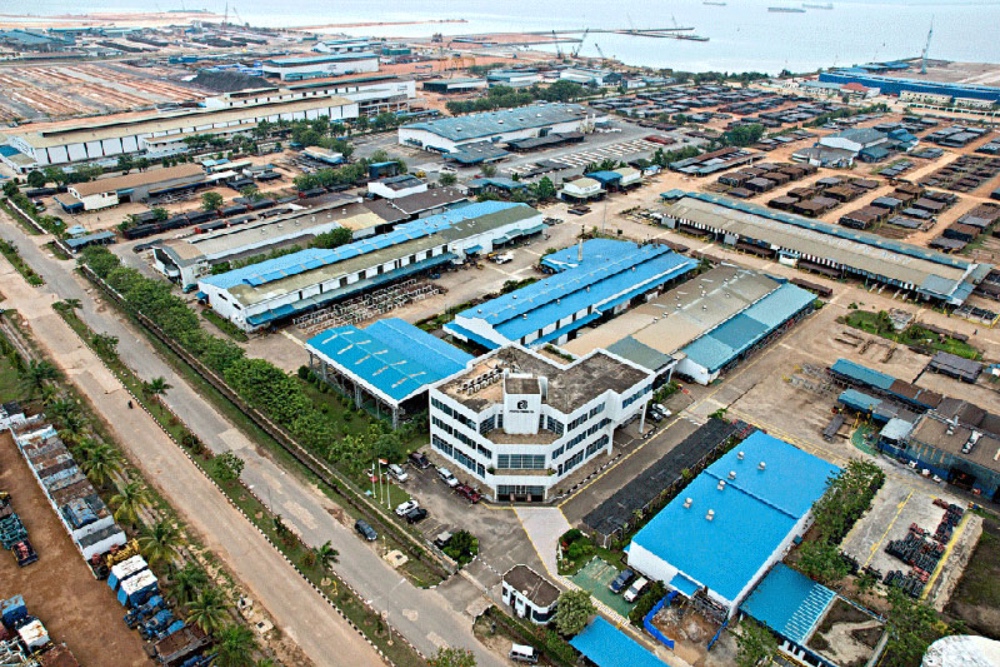
Indonesia is intensifying its push to strengthen industrial competitiveness, and Batam is emerging as a critical focal point of this strategy. Positioned at the crossroads of Southeast Asian trade routes and directly adjacent to Singapore, Batam is rapidly transforming into a high speed execution center for industrial investment. The ambition is clear: to position the Batam industrial hub as the fastest industrial execution engine in ASEAN, capable of converting investment commitments into operational factories in record time.
This momentum reflects a structural shift in Indonesia’s industrial policy, where speed, regulatory certainty, and regional collaboration are prioritized to attract global manufacturers. With Singapore signaling readiness to deepen collaboration, Batam’s role within ASEAN’s manufacturing ecosystem is entering a new phase, one that blends Indonesia’s scale with Singapore’s efficiency and capital networks.
Batam’s Strategic Role In Indonesia’s Industrial Acceleration
The rise of the Batam industrial hub is closely tied to Indonesia’s broader effort to decentralize industrial growth beyond Java. Batam offers a unique value proposition that few locations in Southeast Asia can match. It combines proximity to global shipping lanes, access to international markets, and special economic zone incentives designed to simplify investment processes.
Government authorities have emphasized Batam’s role as an execution platform rather than merely a planning zone. The focus is on reducing bureaucratic friction, accelerating licensing, and ensuring that land, utilities, and labor readiness align with investor timelines. This execution driven approach distinguishes the Batam industrial hub from traditional industrial estates that often struggle with delays between approval and production.
Infrastructure readiness is a key pillar of this strategy. Batam continues to upgrade ports, logistics facilities, power supply, and digital connectivity. These improvements are essential for industries that depend on just in time production models and regional supply chains. By prioritizing infrastructure alongside regulatory reform, Batam aims to deliver a predictable and efficient environment for manufacturers seeking rapid market entry.
Singapore Collaboration Strengthens Regional Integration
Singapore’s readiness to collaborate with Batam adds a critical regional dimension to the Batam industrial hub. Rather than competing directly, the two locations are increasingly positioned as complementary nodes within a shared industrial ecosystem. Singapore offers capital access, financial services, and advanced management capabilities, while Batam provides land availability, competitive costs, and manufacturing capacity.
This collaboration reflects a pragmatic response to shifting global supply chains. As multinational companies diversify production bases to mitigate geopolitical and logistical risks, integrated cross border industrial zones become more attractive. Batam’s proximity to Singapore allows companies to maintain headquarters, research functions, or regional coordination in Singapore while deploying large scale manufacturing operations in Batam.
From a policy perspective, this cooperation also signals a maturing approach to ASEAN economic integration. Instead of fragmented competition, countries are exploring models that leverage comparative advantages across borders. The Batam industrial hub stands to benefit significantly from this framework, positioning itself as Indonesia’s gateway to regional industrial networks anchored in Singapore.
Fast Execution As Competitive Advantage
Speed is emerging as one of the most decisive factors in global industrial investment decisions. Investors increasingly prioritize locations that can move from project approval to factory operation within months rather than years. The Batam industrial hub is explicitly designed to meet this expectation.
Authorities in Batam are streamlining permitting processes, consolidating decision making, and implementing digital systems to reduce administrative delays. The objective is to create a single integrated workflow where land allocation, licensing, construction approvals, and utility connections progress in parallel. This execution focused model is intended to eliminate bottlenecks that have historically undermined Indonesia’s industrial competitiveness.
This emphasis on speed is particularly relevant for industries undergoing rapid technological change, such as electronics, renewable energy components, and advanced manufacturing. Delays can erode first mover advantages and disrupt supply commitments. By branding itself as ASEAN’s fastest industrial execution center, the Batam industrial hub is targeting investors who value agility as much as cost efficiency.
Sectoral Opportunities And Industrial Focus
The Batam industrial hub is not pursuing growth indiscriminately. Instead, it is aligning its development priorities with sectors that offer long term value and integration into global supply chains. Electronics manufacturing remains a core focus, given Batam’s existing industrial base and proximity to Singapore’s technology ecosystem.
In addition, Batam is positioning itself as a manufacturing base for renewable energy components, including solar panels, energy storage systems, and supporting infrastructure. This aligns with Indonesia’s energy transition goals and rising regional demand for clean technology. The industrial hub also sees opportunities in precision engineering, shipbuilding, and logistics related manufacturing.
By concentrating on targeted sectors, the Batam industrial hub aims to build depth rather than breadth. Industrial clustering enables shared infrastructure, specialized labor pools, and knowledge spillovers that enhance competitiveness. This approach also supports higher value added activities, moving Batam beyond basic assembly toward more sophisticated manufacturing roles.
Labor, Skills, And Workforce Readiness
A critical element of Batam’s industrial strategy is workforce readiness. The success of the Batam industrial hub depends not only on infrastructure and regulation but also on the availability of skilled labor capable of meeting industry requirements.
Batam benefits from a relatively young workforce and proximity to major population centers in Sumatra and Java. However, authorities recognize the need for continuous skills upgrading, particularly in technical and engineering disciplines. Partnerships with vocational institutions and industry players are being strengthened to ensure that training programs align with real world manufacturing needs.
Singapore collaboration also plays a role in human capital development. Knowledge transfer, management training, and exposure to international best practices can elevate productivity and operational standards within the Batam industrial hub. Over time, this could help Batam transition from a cost based manufacturing location to a capability driven industrial center.
Investment Climate And Policy Certainty
Policy certainty remains a decisive factor for industrial investors. The Batam industrial hub benefits from special economic zone frameworks that offer fiscal incentives, simplified customs procedures, and regulatory clarity. These mechanisms are designed to reduce risk and improve predictability for long term investments.
Recent policy signals emphasize consistency and continuity, reassuring investors that industrial reforms will be sustained beyond political cycles. This is particularly important for capital intensive industries with long payback periods. Clear governance structures and coordination between central and local authorities further reinforce investor confidence.
The focus on execution also reflects lessons learned from previous industrial initiatives. Rather than announcing ambitious targets without delivery mechanisms, Batam’s current approach prioritizes measurable outcomes such as factory completion timelines, operational readiness, and export performance.
Batam In The ASEAN Industrial Landscape
Within the broader ASEAN context, the Batam industrial hub represents Indonesia’s most direct response to competition from established manufacturing centers such as Vietnam, Thailand, and Malaysia. Each of these countries has built reputations for industrial efficiency, but Batam’s unique geography and integration with Singapore offer a distinct advantage.
As global manufacturers reassess supply chain strategies, ASEAN is expected to capture a larger share of industrial relocation and expansion. Batam’s ability to execute projects quickly could determine whether Indonesia captures a proportional share of this opportunity. The industrial hub’s success would not only benefit Batam but also contribute to national export growth and technological upgrading.
The transformation of Batam into a high speed industrial execution center marks a pivotal moment in Indonesia’s industrial development strategy. By positioning the Batam industrial hub as the fastest execution engine in ASEAN and leveraging collaboration with Singapore, Indonesia is signaling a shift toward pragmatism, speed, and regional integration.
If execution momentum is sustained, Batam could redefine how industrial zones operate in Southeast Asia. The combination of strategic location, regulatory reform, infrastructure investment, and cross border collaboration places Batam at the forefront of ASEAN’s next industrial wave.
For investors seeking speed, certainty, and regional connectivity, the Batam industrial hub is increasingly difficult to ignore.
Read More