





 Tuesday, 22-09-26








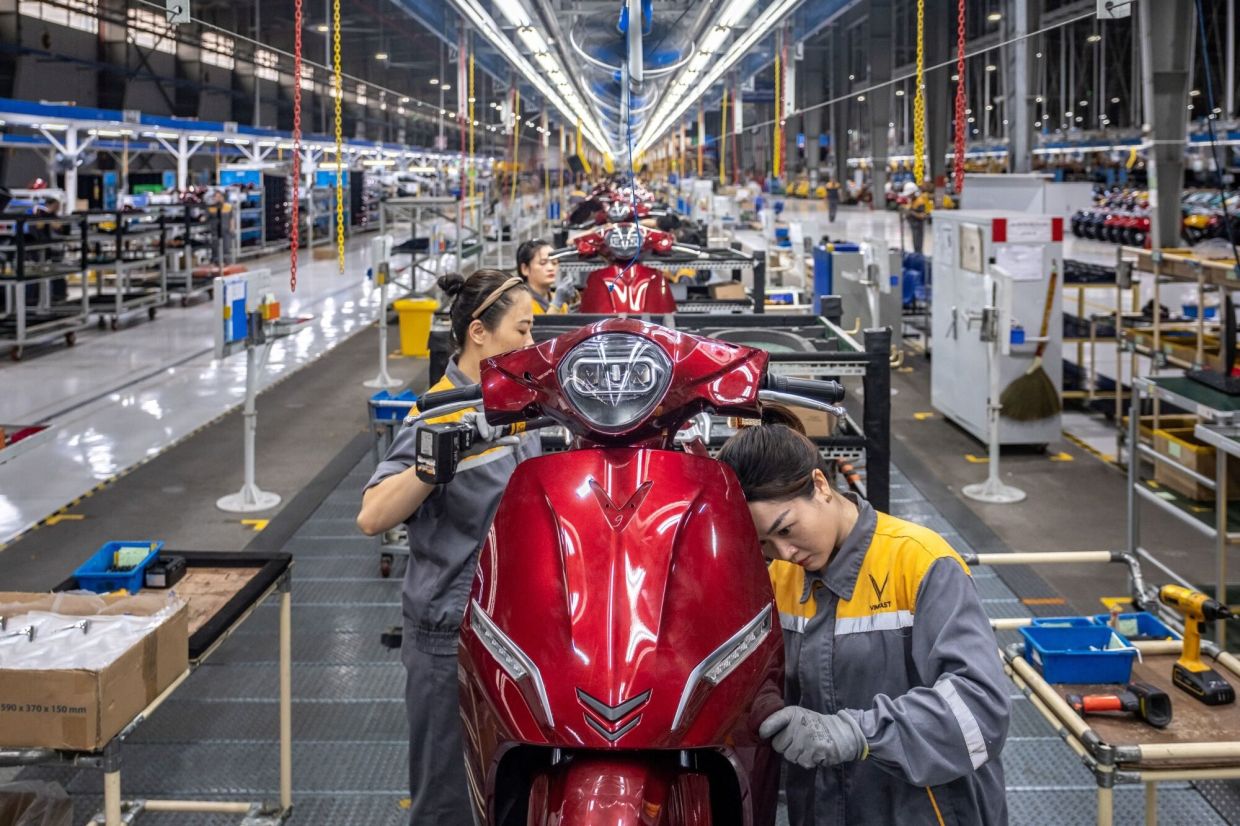
The manufacturing sector in Southeast Asia, collectively tracked under S&P Global’s ASEAN Manufacturing Purchasing Managers’ Index (PMI), has shown renewed vigor as of late 2025. After a period of uneven growth, recent data reveals a robust uptick in output, new orders, and employment across the region. This reflects a broader structural shift in the region’s industrial landscape, driven largely by resilient domestic demand and supply-chain diversification.
In this article, we explore what recent data tells us about the strength of “ASEAN manufacturing expansion,” which economies are leading the surge, and what this could mean for regional economic stability and industrial strategy going forward.
Strong Rebound In October 2025
According to S&P Global, the ASEAN manufacturing PMI rose to 52.7 in October 2025, up from 51.6 in September.
- This reading marks the fourth consecutive month that the PMI stayed above the neutral 50.0 threshold, the line that separates expansion from contraction.
- The 52.7 level equals the highest PMI score the region has seen since April 2023.
The rebound is driven by strong expansions in new orders and output. Domestic demand was particularly robust, helping offset weak export orders. Production volumes rose to their highest in 17 months, signaling that manufacturers ramped up capacity to meet demand. Employment growth also accelerated compared to the previous month, indicating that factories are hiring more workers. Price pressures, a common concern during expansion, showed signs of easing: both input costs and selling price increases moderated in October.
According to economist commentary, if new orders remain strong and pricing pressures stay subdued, the region’s manufacturing sector could sustain this growth through the end of 2025.
Country-Level Drivers: Who’s Leading the Charge
While the PMI reflects a collective regional performance, certain ASEAN economies stood out as key growth engines in 2025 — notably Thailand and Vietnam. Meanwhile, Indonesia showed modest but stable improvement.
Thailand - A Manufacturing Surge
- In October 2025, Thailand’s manufacturing PMI jumped to 56.6, its strongest level since May 2023.
- The surge was driven by a sharp increase in new orders, the fastest in two and a half years, and a sustained growth in output over seven straight months.
- Employment expanded for a second consecutive month, as firms adjusted capacity to meet rising workloads.
- On the cost front, input prices stabilized after months of decline, enabling firms to maintain stable selling prices while planning for expansion.
This strong performance positions Thailand as a regional manufacturing hub benefiting from both domestic strength and supply chain realignment.
Vietnam - Rising Momentum
According to broader ASEAN PMI data and cross-country comparisons, Vietnam contributed to the regional rebound, though not always as sharply as Thailand. Some reports highlight improved conditions in Vietnam’s factories, citing better new orders and improved business sentiment compared to earlier periods of contraction. However, performance remained mixed across months. For instance, mid-2025 data noted contraction or weak readings in certain months, reflecting global demand and export pressures.
Indonesia - Modest Yet Steady Improvement
The latest data for October 2025 indicates that Indonesia’s manufacturing PMI rose to 51.2, up from 50.4 in September, extending a three-month growth streak.
- Growth was driven mainly by domestic demand, as new export orders reportedly fell for a second consecutive month.
- Employment has increased for the third month in a row, the fastest pace in five months, indicating job creation momentum.
- Manufacturers slightly raised purchasing activity and pre-production inventories in response to increasing demand and production needs.
- Despite improving conditions, output remained largely flat, with some firms dipping into existing stocks to fulfill orders.
- Price pressures rose, driven by higher raw material costs; input price inflation hit an eight-month high. However, firms raised selling prices only marginally, presumably to stay competitive.
Authorities in Indonesia appear cautiously optimistic. The rebound in PMI suggests resilience, but they note that PMI, while useful, should be complemented with broader metrics (e.g., industrial confidence indices) to form robust policy.
What’s Fueling the Expansion? Drivers Behind the Surge
Several structural and cyclical drivers help explain why ASEAN manufacturing is picking up momentum:
- Domestic Demand Strength: In several ASEAN economies, including Indonesia and Thailand, growth is being driven more by internal consumption and orders rather than weak export markets.
- Supply-Chain Rebalancing: Amid global trade tensions, rising costs in traditional manufacturing hubs (e.g., China) appear to benefit ASEAN producers, as companies shift part of their production footprints to Southeast Asia.
- Employment Gains and Capacity Expansion: Strong new orders and output have triggered workforce expansion and utilization of idle capacity, important signals for sustained industrial recovery.
- Easing Price Pressures: Slower increases in input costs and selling prices relieve margin pressure on manufacturers, improving sustainability of growth.
- Resilience Amid Global Headwinds: While export demand remains shaky globally, ASEAN’s reliance on domestic orders and regional supply networks cushions the shock, making the region more resilient relative to export-heavy economies.
Risks and Headwinds: Why Expansion May Not Be Linear
Despite the optimistic signals, there remain structural and external risks that could derail or dampen this manufacturing expansion:
- Export Weakness and Global Demand Uncertainty: Many ASEAN economies still face weak external demand, which can limit growth for export-oriented sectors. For example, Indonesia’s recent PMI improvement was driven by domestic orders while export orders reportedly declined.
- Inflationary Pressures on Inputs: Rising raw material costs are putting inflationary pressure on manufacturers. While many firms held off on raising selling prices significantly, persistent input cost inflation may eventually squeeze margins or force price increases.
- Global Economic and Geopolitical Uncertainty: Trade tensions, shifting trade policies (e.g., tariffs), and global macroeconomic slowdown remain a concern. A deterioration abroad could weigh on orders and export demand, indirectly affecting even domestically-oriented manufacturers.
- Capacity Constraints and Supply-Chain Bottlenecks: Rapid expansion may lead to capacity constraints, labour shortages, or supply-chain bottlenecks, especially if demand surges unexpectedly.
- Policy and Structural Limitations: For some ASEAN economies, industrial policy, infrastructure readiness, and regulatory environment may limit how much producers can scale sustainably.
Implications for Stakeholders: What This Means for ASEAN Economies
The observed expansion in ASEAN manufacturing yields several important implications for different stakeholders:
- Governments & Policymakers can view the rebound as an opportunity to deepen industrial policy, encourage downstream value-added activities, and support job creation, but should be vigilant about inflation, supply constraints, and global demand cycles.
- Industries & Manufacturers benefit from increasing domestic demand and could capitalize on shifting supply-chain dynamics. Companies that invest in productivity, diversify supply sources, and maintain cost discipline stand to gain.
- Investors & Financial Community should monitor PMI trends as an early indicator of industrial growth, demand cycle shifts, and potential for capital investment. Rising employment, production, and orders could point to broader economic revival.
- Regional Integration & Trade: ASEAN’s stronger manufacturing performance may accelerate intra-ASEAN trade, reduce dependency on traditional manufacturing hubs, and enhance regional supply-chain resilience.
- Employment & Socio-Economic Impact: Growth in manufacturing output and employment can contribute to job creation, higher wage opportunities, and improved livelihoods, especially crucial for developing economies in the region.
Outlook: Can ASEAN Sustain Its Manufacturing Expansion?
Based on the most recent data and regional dynamics, the short-to medium-term outlook for ASEAN manufacturing remains cautiously optimistic. If domestic demand remains strong and input cost pressures stay manageable, the region could sustain its growth momentum into 2026.
However, much will depend on global economic conditions, trade policies, and the ability of ASEAN economies to upgrade value chains and address structural bottlenecks. Policymakers will need to balance support for growth with measures to ensure competitiveness, sustainability, and resilience against global headwinds.
For Indonesia, given its ambitious industrial and infrastructure agenda, this moment could offer a strategic window to accelerate structural transformation. But success will depend on disciplined macroeconomic management, supply-chain upgrading, and alignment with global demand trends.
In sum, the recent uptick in the ASEAN manufacturing PMI signals more than a cyclical rebound, it suggests a possible reconfiguration of regional industrial capacity, driven by domestic demand, supply-chain reorientation, and rising regional competitiveness.
Read More