





 Monday, 12-10-26








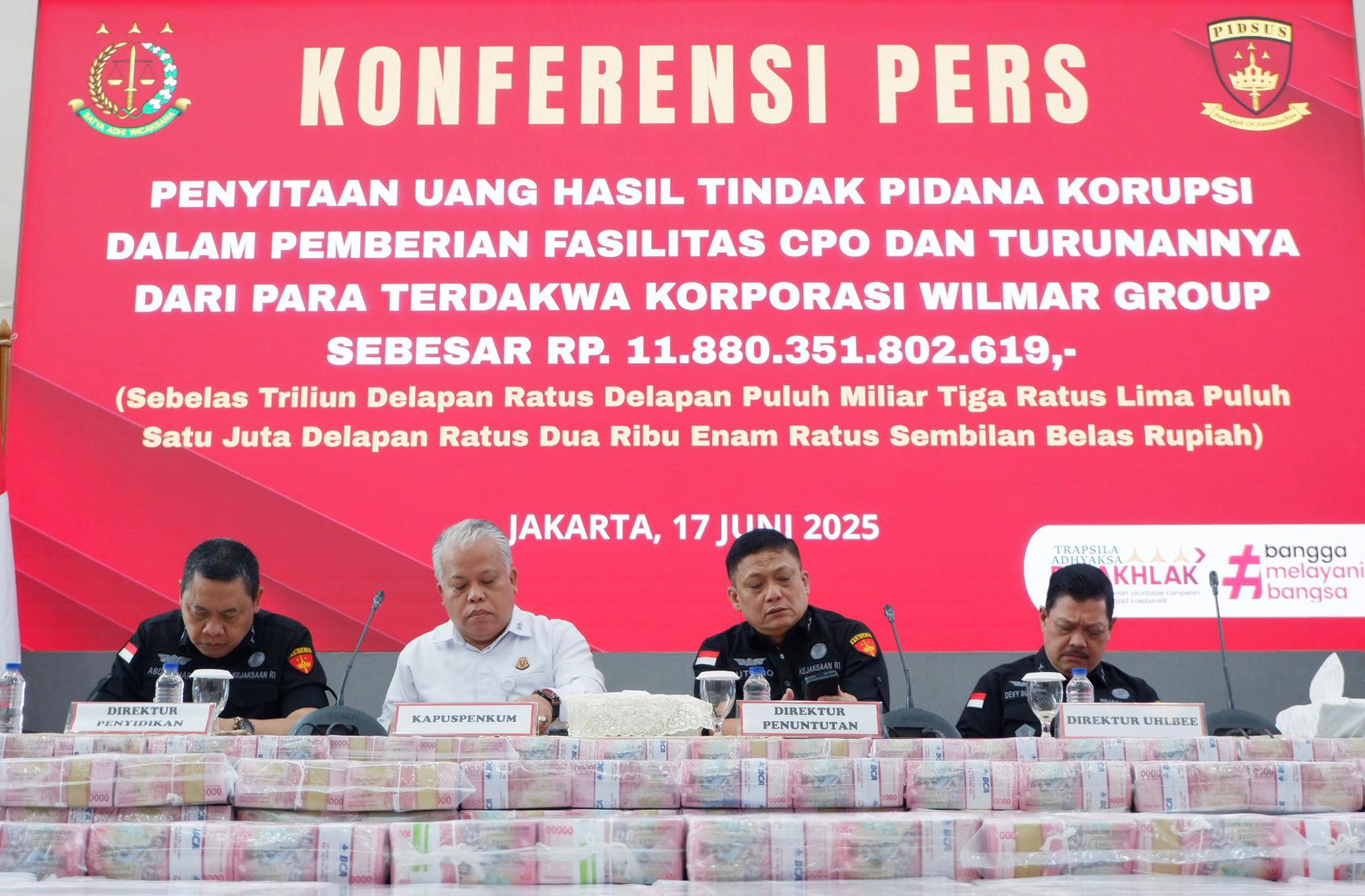
Indonesia recently found itself at the centre of another high-profile investigation as the Kejaksaan Agung (Attorney General’s Office) moved in to search the headquarters of the Direktorat Jenderal Bea dan Cukai (Customs and Excise Directorate General) over alleged wrongdoing in the export of Palm Oil Mill Effluent (POME). This mounting case of POME export corruption underscores persistent governance gaps in Indonesia’s palm oil supply chain and export regulation.
According to several sources, the search was part of a probe into alleged corrupt export practices dating back to around 2022. In this article, we analyse the background of POME export corruption, its regulatory and industry implications, how the investigation unfolded, and what this means for Indonesia’s palm-oil sector, governance framework and export credibility.
What Is POME And Why It Matters
POME stands for Palm Oil Mill Effluent, the liquid waste generated during the processing of fresh fruit bunches into crude palm oil. The effluent contains high levels of organic compounds, oil, fat and other residues. While it is an environmental concern, when untreated it emits methane and can pollute waterways, it also presents a value-creation opportunity: POME can be converted into biogas or bio-CNG under Indonesia’s renewable energy agenda. However, export of POME and other palm-oil related products has not always been straightforward. At points in recent years, Indonesia imposed temporary export bans on POME, Used Cooking Oil and other derivatives to secure domestic supply and control cooking oil prices. These factors set the stage for regulatory complexity, lucrative export channels, and therefore a fertile ground for the type of irregularities alleged in the current investigation of POME export corruption.
How The Investigation Unfolded
The Attorney General’s Office carried out a search at several Customs offices, including the national headquarters, as part of its investigation into suspected corrupt practices in POME exports. The search reportedly occurred on or around 22 October 2025. Investigators are focusing on documents, electronic devices and other material evidence that could reveal collusion, illicit export facilitation or mis-reporting in the export process. One spokesperson confirmed that the probe concerns POME export corruption dating circa 2022.
While the exact scope of the alleged loss to the state is yet to be publicly disclosed, commentators note that export irregularities in the palm oil sector have historically involved billions of dollars in tax, duty and export-levy leakage. The case thus has major potential implications for both industry and state revenue.
Key Allegations And Governance Failures
At the heart of the POME export corruption allegations are several governance failings:
- Weak enforcement of export bans or quotas: Indonesia temporarily banned exports of POME and other palm oil derivatives in 2022 to stabilise domestic cooking oil prices. Some of the irregularities stem from alleged violations of those bans.
- Possible mis-classification or mis-reporting of products: POME is a waste stream, yet by converting or packaging it as a value-added export product, exporters may have side-stepped regulatory scrutiny, duties or levies.
- Collusion or facilitation by regulatory officials: The fact that Customs offices are under investigation raises concerns that export facilitation or duty-evasion may have occurred with internal assistance.
- Lack of transparency and audit trails in export processes: Given the complex nature of palm-oil derivative exports (which include CPO, RBD Olein and POME), tracking and verifying each shipment is highly challenging.
These failings combine to suggest that POME export corruption is not only about individual misconduct but about structural weaknesses in the regulatory-export-supply-chain nexus.
Industry Implications For The Palm Oil Sector
The case of POME export corruption has broader significance for Indonesia’s palm oil industry, which is a major driver of exports and rural livelihoods. Some of the implications include:
- Export credibility risk: If Indonesia is seen as a weak regulator or if its export integrity is questioned, trade partners may impose greater scrutiny, leading to slower approvals, higher compliance costs, or even trade restrictions.
- Domino effect on derivative products: Because palm oil derivatives are highly interconnected, a scandal in POME could spill over into perceptions of CPO (crude palm oil) or other related exports, affecting pricing and demand.
- Revenue leakages and fiscal impact: With exports, duties, levies and taxes are key for state revenue. POME export corruption may mean millions or billions in uncollected funds.
- Pressure on sustainable claims: The palm–oil sector globally is under pressure to demonstrate sustainability (environmental, social, governance). Corruption allegations undermine the credibility of certification schemes and investor confidence.
For stakeholders including palm-oil plantation companies, refineries, exporters and the wider value chain, the POME export corruption investigation is a reminder that compliance and transparency are now strategic imperatives, not just operational responsibilities.
Regulatory And Reform Implications
In light of the POME export corruption case, several regulatory and reform priorities emerge:
- Strengthening export control and traceability - The government may look to implement stronger digital tracking of POME shipments, enhanced audit trails, and stricter verification of export permits and product classification.
- Enhancing inter-agency coordination - The nexus of ministries and agencies (Customs, Trade, Agriculture, Energy & Environment) requires seamless coordination to oversee palm-oil derivative exports. Cases like this show how fragmented oversight can be exploited.
- Improving transparency and disclosure - Public-sector reformers argue for greater transparency of export licensing, volumes, end-users and export destinations, which would reduce opportunities for mis-classification and non-compliance.
- Linking sustainability credentials to export access - As global markets demand ESG-compliant supply chains, the government could tie export eligibility of palm-oil derivatives to robust environmental and audit compliance—including waste-stream management like POME.
- Penalties and deterrence - For corruption to be deterred, investigation alone is insufficient. Clear, enforceable penalties and visible precedent cases reinforce compliance culture.
What This Means For Indonesian Stakeholders
For different actors in the palm-oil value chain and policy ecosystem, the POME export corruption probe signals multiple take-aways:
- For exporters and refiners: The need to review internal compliance protocols, ensure accurate classification of waste streams like POME, and pre-emptively audit export documentation and flows.
- For plantation owners: Even though they may not export derivatives directly, the reputational risk of the supply chain being implicated in export corruption can affect the entire upstream segment.
- For trade partners and buyers: Buyers of Indonesian palm-oil derived products should factor in enhanced due diligence, risk assessment and supply-chain traceability amid regulatory scrutiny.
- For policymakers and regulators: The case provides impetus to reform oversight regimes, allocate resources for monitoring, and prosecute corruption to restore export integrity.
The unfolding POME export corruption case highlights that Indonesia’s palm-oil supply chain, export controls and welfare-oriented regulation must contend with both environmental legacies and export governance vulnerabilities. As the probe deepens, it will test the resilience of regulatory frameworks, the accountability of institutions and the capacity of the industry to safeguard its global trade standing.
If Indonesia applies lessons learned from this investigation, by strengthening traceability, enhancing transparency and aligning export practices with sustainability commitments, the country can turn a governance risk into a reform opportunity. But if the systemic weaknesses persist, the ramifications may extend beyond one case to broader trust, trade and industry-integrity concerns.
Read More