


 Tuesday, 24-11-26


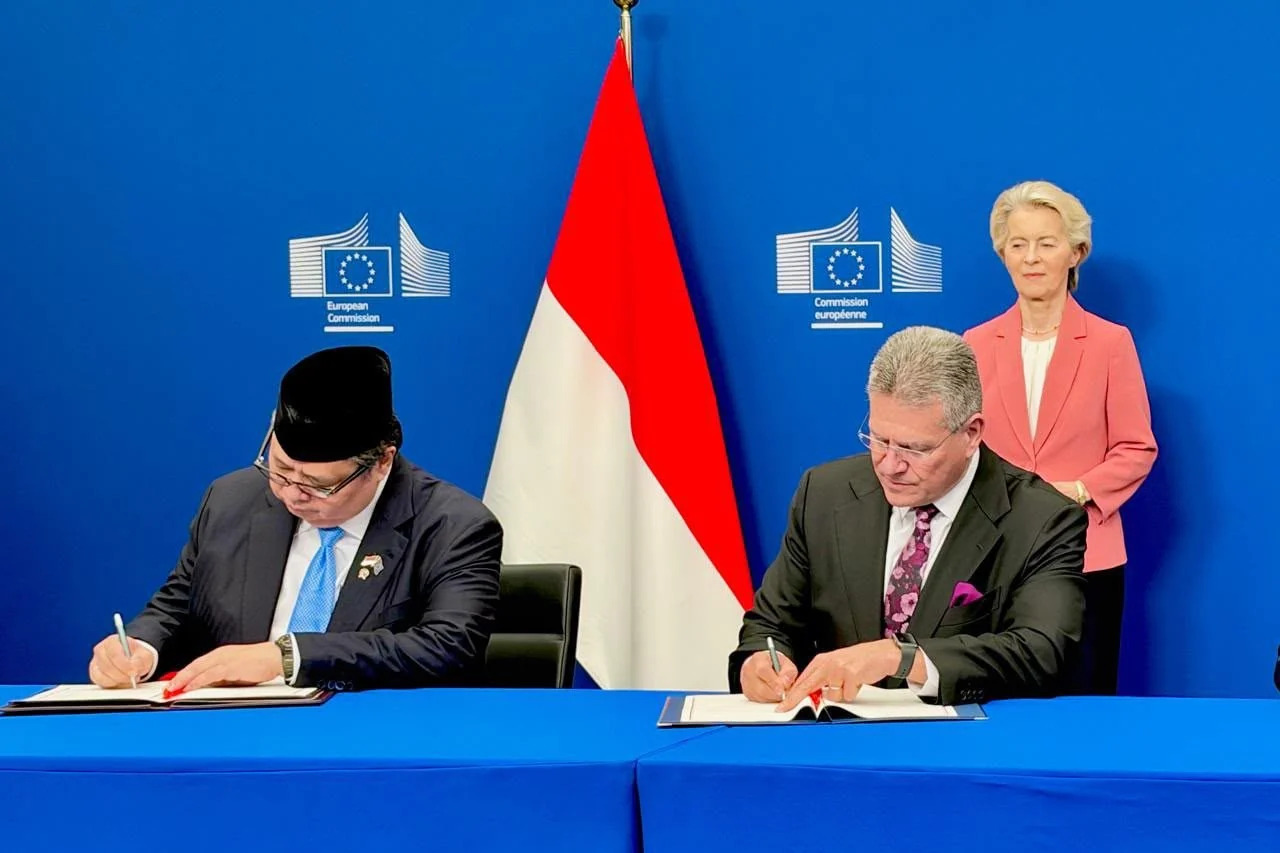
In late November 2026, the international community witnessed a monumental shift in the geopolitical and economic landscape as Indonesia and the European Union officially sealed their long awaited trade pact. After a decade of intense negotiations, diplomatic hurdles, and complex regulatory alignment, the two economic powerhouses formalized the Indonesia European Union Comprehensive Economic Partnership Agreement. Held in Brussels, this historic event was spearheaded by prominent officials, including Indonesia's Coordinating Minister for Economic Affairs, Airlangga Hartarto. While the elimination of trade tariffs dominated the mainstream headlines, another crucial component of the deal quietly took center stage. The signing of the Investment Protection Agreement alongside the broader trade pact marks a transformative moment for foreign direct investment in Southeast Asia. This legally binding framework is designed to safeguard cross border investments, ensuring that European capital can flow into the Indonesian archipelago with unprecedented security and transparency.
The Strategic Importance Of The Investment Protection Agreement
To truly appreciate the magnitude of this bilateral consensus, one must delve into the mechanics of the Investment Protection Agreement and its role in modern international relations. For years, European investors have viewed emerging markets with a mix of optimism and caution. While the potential for rapid growth in Indonesia is undeniable, concerns regarding legal certainty, regulatory consistency, and dispute resolution mechanisms often hindered large scale capital commitments. The newly minted Investment Protection Agreement directly addresses these historical pain points by establishing a robust, transparent, and predictable legal environment for all participating stakeholders.
By guaranteeing fair and equitable treatment, this agreement shields investors from arbitrary regulatory changes and provides a clear mechanism for resolving potential disputes outside of localized jurisdictions. Consequently, this elevated level of legal security is expected to trigger a massive influx of European capital into critical Indonesian sectors. From renewable energy infrastructure and advanced pharmaceutical manufacturing to the burgeoning electric vehicle ecosystem, the foundations laid by the Investment Protection Agreement will serve as a catalyst for sustainable industrialization. Furthermore, this framework actively promotes environmentally friendly investments, aligning with global climate goals while simultaneously facilitating the transfer of green technology to domestic enterprises.
Unprecedented Tariff Reductions And Market Access
Beyond the security provided by the investment framework, the overarching economic partnership introduces sweeping changes to traditional trade barriers. Data from the ratification documents reveals that an astounding 90.4 percent of Indonesian tariff lines entering the European market will immediately benefit from a zero percent import duty. This immediate liberalization is a game changer for local manufacturers and exporters who have historically struggled to remain competitive against rival nations enjoying preferential European access.
For the remaining product categories, the agreement outlines a phased approach. Approximately 8.37 percent of tariff lines will experience gradual duty reductions spread over a transition period of three to fifteen years. In some cases, this will be managed through specific tariff rate quotas. Only a fractional 1.2 percent of highly sensitive products will remain subject to the standard most favored nation rates. As a direct result of these aggressive tariff cuts, Indonesian flagship commodities such as palm oil, footwear, textiles, and processed agricultural goods will gain a massive competitive advantage. On the reciprocal side, Indonesia will gradually eliminate import duties on European automotive products, advanced machinery, and chemical compounds, allowing local industries to source high quality production equipment at a fraction of the previous cost.
The Decade Long Diplomatic Journey Under Airlangga Hartarto
Achieving a consensus of this magnitude was neither swift nor simple. The journey culminating in the 2026 signing ceremony required a decade of meticulous diplomacy, compromise, and strategic foresight. Coordinating Minister for Economic Affairs Airlangga Hartarto played an instrumental role in guiding the Indonesian delegation through highly complex discussions regarding environmental standards, labor rights, and digital trade regulations. The European Union has notoriously strict compliance frameworks, particularly concerning agricultural sustainability and supply chain transparency.
Navigating these stringent requirements without compromising Indonesia's sovereign economic interests required exceptional diplomatic finesse. The inclusion of the Investment Protection Agreement was a strategic masterstroke in these negotiations. By offering European businesses the absolute highest standard of legal security, the Indonesian negotiation team successfully leveraged better terms for domestic exporters. The collaborative press statement released by Minister Hartarto and European Commissioner Maros Sefcovic underscored a mutual commitment to diversifying global supply chains. They emphasized that this partnership transcends simple trade, evolving into a unified strategy to build a more resilient, integrated, and mutually beneficial economic ecosystem.
Stimulating Domestic Industries And Job Creation
The tangible benefits of this bilateral treaty extend far beyond macroeconomic statistics and government press releases. On the ground level, the integration of European capital and domestic potential is poised to reshape the Indonesian labor market. Between 2021 and the end of 2026, the European Union had already channeled approximately 14.8 billion dollars into various Indonesian sectors. With the legal assurances now enshrined within the Investment Protection Agreement, financial analysts project a dramatic acceleration in this capital flow.
When European corporations establish manufacturing facilities, research centers, and processing plants in Indonesia, they bring much more than just financial resources. They introduce cutting edge technologies, modern management philosophies, and rigorous operational standards. This influx of expertise will necessitate the upskilling of the local workforce, creating millions of high paying, specialized jobs for the younger generation. Sectors such as semiconductor manufacturing, artificial intelligence integration, and green energy grid development will see an immediate demand for skilled engineers and technicians. By heavily investing in domestic processing facilities, Indonesia will successfully pivot from being a mere exporter of raw materials to a global hub for high value manufactured goods.
Navigating Digital Trade And Customs Modernization
In an era dominated by global connectivity, a modern economic treaty must address the complexities of the digital landscape. The comprehensive agreement introduces forward thinking regulations concerning electronic commerce, cross border data flows, and consumer privacy. It strictly prohibits mandatory source code transfers as a condition for market entry, thereby protecting the intellectual property of software developers and digital innovators. This progressive stance ensures that both European and Indonesian tech companies can operate freely without the fear of state sponsored intellectual property theft.
Additionally, the partnership mandates a complete overhaul of mutual customs procedures. By implementing self certification schemes for the origin of goods, small and medium enterprises can bypass notoriously sluggish bureaucratic bottlenecks. Improved informational exchange and administrative cooperation will not only expedite the movement of goods across borders but also fortify the system against fraud and document falsification. This streamlined logistical framework ensures that the theoretical benefits of the tariff reductions are fully realized in daily commercial operations.
Preparing For Full Implementation In 2027
With the ink now dry on the foundational documents, the focus shifts entirely to the ratification phase. Both legislative bodies are working diligently to finalize their respective domestic legal procedures before the targeted entry into force date of January 1, 2027. This timeline is incredibly critical for the Indonesian export sector. The existing Generalised Scheme of Preferences, which currently grants Indonesia favorable trading status with Europe, is slated to expire on December 31, 2026.
If the comprehensive partnership and the accompanying Investment Protection Agreement are not ratified and active by the start of 2027, Indonesian exporters would face a devastating disruption, suddenly subjected to standard, uncompetitive tariff rates. Therefore, government agencies and private sector associations are currently engaged in a frantic sprint to prepare the necessary implementing regulations. Educational campaigns are being rolled out nationwide to ensure that local businesses, particularly smaller enterprises, fully understand how to utilize the new preferential tariffs and navigate the updated customs platforms.
Conclusion
The successful execution of the Indonesia European Union Comprehensive Economic Partnership Agreement stands as a testament to the power of persistent, strategic diplomacy. By pairing sweeping tariff eliminations with the structural security of a formal Investment Protection Agreement, Indonesia has effectively secured its position as a premier destination for global capital. As the nation prepares for the official 2027 rollout, the fusion of European technological prowess and Indonesian industrial ambition promises to unlock a new era of unprecedented prosperity. This landmark deal does not merely open new markets; it fundamentally elevates the standard of international cooperation, setting a brilliant benchmark for future bilateral negotiations across the globe.
Read More